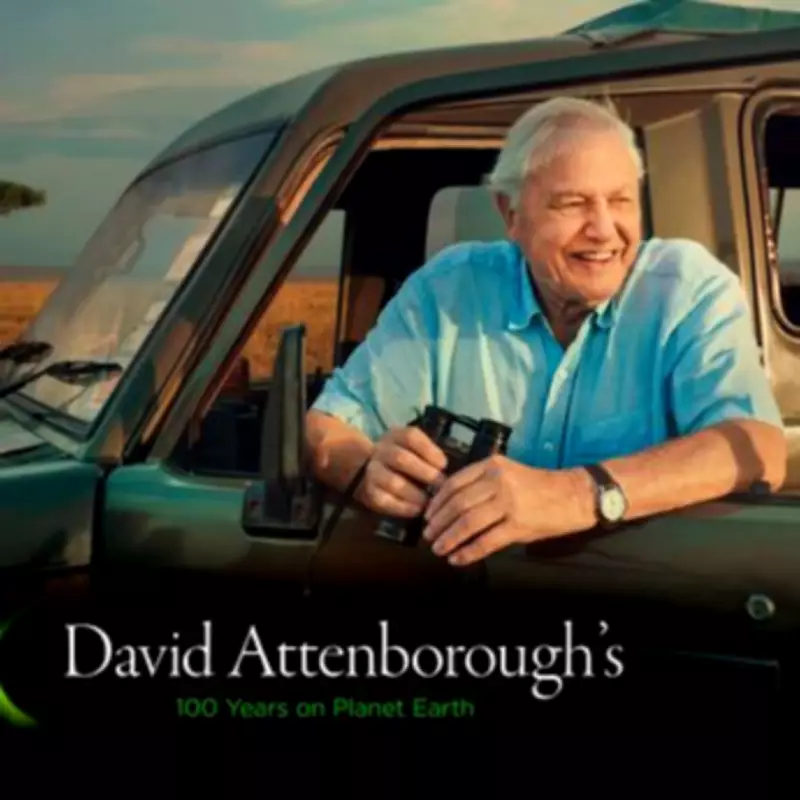
Sir David Attenborough reveals the extraordinary story behind his most iconic TV moment with mountain gorillas in Rwanda, to be featured in a new BBC documentary marking his 100th birthday. The programme uncovers that not only did the crew fear for the presenter's life when young gorillas sat on him, but the footage was nearly lost during a coup when soldiers confiscated film cans.
A Perilous Filming Experience
Sir David recalls: "We had no idea what we were about to witness or how close we would come to losing everything." The footage was among the last shot for his groundbreaking 1979 series Life on Earth, which took three years to produce and covered 600 species to narrate evolution for BBC1.
Filming at 10,000 feet in the mountains required 18 months of coordination with American conservationist Dian Fossey, due to postal delays. Each letter took three weeks to reach her in Africa, followed by another three weeks for a reply.

Sir David says: "She was an extraordinary woman who researched gorillas with enormous patience, sitting alongside them for weeks and months until they became accustomed to her. We couldn't have got anywhere near them without Dian. She introduced us to this group and taught us how to behave in their presence — you don't stare at a gorilla, that's a challenging thing to do, so you keep your head down."
The Iconic Encounter
While sitting with an adult gorilla, Sir David uttered his famous line: "There is more meaning and mutual understanding in exchanging a glance with a gorilla than any other animal I know. We're so similar. We see the world in the same way as they do."
Producer John Sparks recalled in 2017 that he had only expected to film David with gorillas in the background, but suddenly he was "surrounded by them," with two young gorillas sitting on him. "You could only see the top of David's head. My jaw dropped, everyone's jaw dropped, we didn't expect this at all," he explained, admitting: "I thought my God, his head's going to come off and we haven't finished the series yet, which was a very uncharitable thing to think."
Sir David says: "I was just about to start talking about the opposition of the thumb and the forefinger when I felt a hand on my head and it was the adult female and she twisted my head so she could look in my eyes and then she looked in my mouth and put a finger in my mouth." After crawling back through the undergrowth, he was shocked to discover they hadn't filmed the entire moment because the crew was waiting for him to start talking. "I said, 'that was one of the most extraordinary moments of my life — was it wonderful?' And he said 'yes, I think we got a few moments of it.'"
Escaping with the Footage
En route to the airport, quick thinking by cameraman Martin Saunders saved the precious film. Despite having all necessary permissions, the team was stopped at a roadblock and taken into custody. Sir David recalls being surrounded by army personnel in a "very dangerous situation with the crack of rifles firing over our heads." Saunders changed the labels on film cans, making soldiers think they had confiscated the shot footage when it was actually unused film.
Nevertheless, David and John were taken to an army compound. "We were told to stand in the middle of this compound, in the sun, and I thought 'are they going to put us against the wall and shoot us or something?'" John remembers. Eventually, they were allowed to board their plane, and as the runway disappeared, John sighed with relief.
Legacy and Impact
Looking back, Sir David says: "It was one of the most privileged moments of my life, really. When we came to say goodbye I promised Dian I'd do what I could to get funds to support her in what she was doing." The series, watched by 500 million worldwide, significantly boosted conservation efforts.
Assistant producer Mike Salinsbury recalls the challenge of arranging logistics. When ratings rose from 9 million to 15 million by the series' end, the team was thrilled. He remembers walking down a street in London with David after the first episode aired, and a taxi driver shouted, "Nice one Dave!"
Asked about David's success, Mike says: "He has a natural enthusiasm which comes over on screen, he's very knowledgeable and he's a very good looking man as well, which can't be a bad thing."

Documentary maker Victoria Bobin says that revisiting the "fantastic, ground-breaking, pioneering" series was an excellent way to celebrate Sir David's centenary. "It is probably one of the series of which he is most proud, because he was so heavily involved in its creation and in terms of writing the script — telling the story of evolution is very much his passion, so it felt like a nice tribute to his career."
Making Life on Earth: Attenborough's Greatest Adventure, BBC1, Sunday 3rd May, 8pm.