
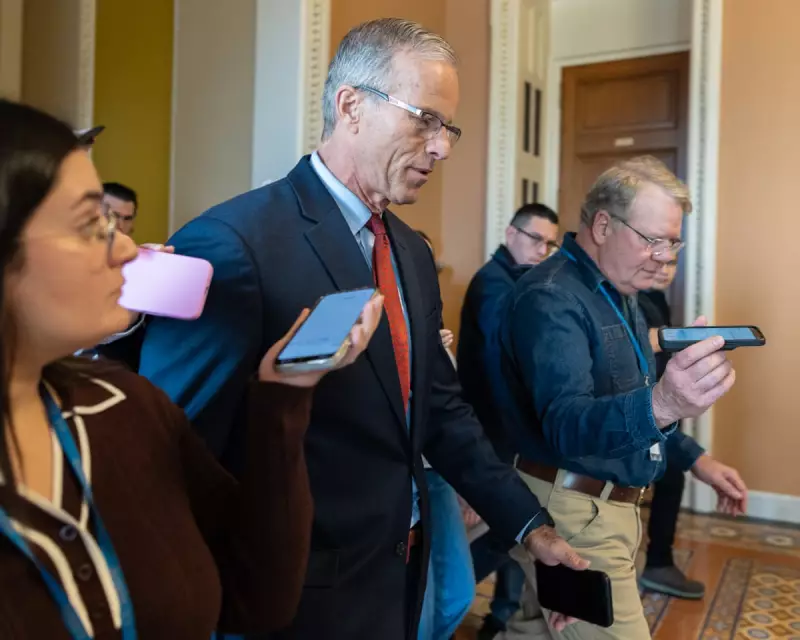
Senate Takes Crucial Sunday Vote to Break Shutdown Deadlock
In an extraordinary move, the United States Senate convened for a rare Sunday session, making significant strides towards ending the longest government shutdown in the nation's history. Lawmakers narrowly advanced a compromise funding bill, a critical step in a political crisis that has now stretched for a full 40 days.
What the Bill Contains and Its Immediate Impact
The legislation, which resulted from intense negotiations between a bipartisan group of senators, successfully cleared a key procedural vote, meeting the 60-vote threshold required for advancement. John Thune, the Republican Senate majority leader, expressed hope, stating, "After 40 long days, I’m hopeful we can bring this shutdown to an end."
The bill authorises government funding through 30 January 2026 and directly addresses the human cost of the shutdown. It officially reverses the furloughs of federal workers that were authorised after the shutdown began on 1 October. Furthermore, it guarantees retroactive pay for all furloughed employees and those who were compelled to work without pay, while also preventing further layoffs through January.
Stumbling Block: The Missing Healthcare Subsidies
However, the compromise package is not without controversy. A major point of contention is its omission of an extension for tax credits supporting Affordable Care Act health plans. These subsidies, established under President Joe Biden, are set to expire at the end of the year, which is expected to cause a sharp rise in premiums for millions of enrollees.
Democrats had refused to support any funding bill that did not include these healthcare subsidies, while Republicans held firm in their opposition to their inclusion. This omission is now poised to create significant turmoil in the next stage of the legislative process.
Next Steps and Potential House Hurdles
The political divide over the compromise was immediately apparent. While the Senate advanced the bill, a split emerged with House Democrats. Hakeem Jeffries, the Democratic House minority leader, announced his opposition, criticising the Senate Republicans' bill for failing to extend the vital healthcare tax credits.
Jeffries vowed to fight the legislation in the House of Representatives, indicating a rocky path ahead. For the shutdown to officially end, the bill must now be approved by the House and then sent to Donald Trump for his signature, a process that analysts suggest could still take several days.