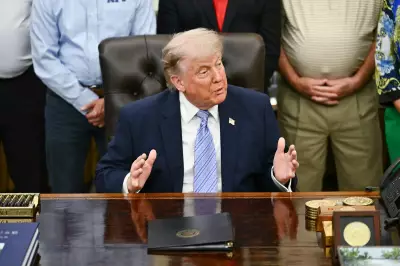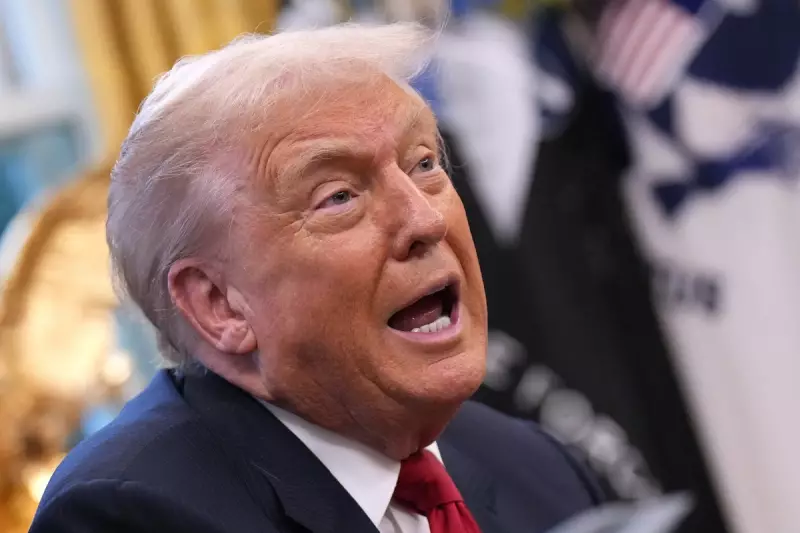
President Donald Trump has made bold claims about achieving the highest poll numbers of his political career, despite multiple surveys indicating his approval rating has sunk to a record low for his second term in office.
Conflicting Claims and Polling Reality
On Saturday morning, President Trump took to his Truth Social platform to declare: "I HAVE JUST GOTTEN THE HIGHEST POLL NUMBERS OF MY 'POLITICAL CAREER'". The president's enthusiastic statement came without specification of which poll he was referencing, though he added that his economic work "has not yet been fully appreciated, it will be!".
Contrary to the president's assertions, a Reuters/Ipsos poll published this week revealed his approval rating had fallen to just 38 percent, marking the lowest point since his second term began. The survey indicated growing American dissatisfaction with Trump's handling of two critical issues: the Jeffrey Epstein files disclosure and the escalating cost of living crisis.

Republican Support Shows Cracks
The president's support within his own party appears to be weakening, though it remains substantial. According to the Reuters/Ipsos data, Trump's approval among Republicans stands at 82 percent, down from 87 percent earlier this month.
This erosion coincides with concerning signs for the Republican party more broadly. Recent polls conducted by Marist, NPR and PBS showed Democrats holding a significant 14-point lead over Republicans among registered voters. The surveys indicated that approximately 55 percent of registered voters would support a Democratic congressional candidate in their district if an election were held today, compared to just 41 percent backing a Republican candidate.
The New York Times presidential approval tracker, which calculates daily averages from numerous polls, corroborates the downward trend. As of Saturday, the president's average approval rating stood at 41 percent, representing a substantial decline from his 52 percent approval rating in late January.
Epstein Files and Economic Pressures Drive Decline
Analysts point to two primary factors contributing to Trump's declining numbers: the administration's handling of Epstein-related documents and mounting economic pressures on American households.
The president initially resisted legislation that would compel the Justice Department to release files concerning Epstein, the convicted sex offender and financier who died in 2019. Trump repeatedly characterised the issue as a Democratic "hoax" before reversing his position on Sunday and urging House Republicans to vote for disclosure.
The bill subsequently passed the House with only a single opposing vote and cleared the Senate without difficulty. President Trump signed the legislation on Wednesday, initiating a 30-day deadline for the Justice Department to publicly release the documents.
Simultaneously, American households are feeling the pinch of rising living costs. According to an October Harris poll reported by The Guardian, approximately 74 percent of Americans say their regular monthly household expenses have increased by at least $100 over the past year. Some respondents reported much steeper increases, with monthly costs rising between $500 and $749.
The economic anxiety is reflected in perceptions about the nation's economic health, with about 54 percent of Americans surveyed believing the economy is currently in a recession.
President Trump's current approval rating places him close to former President Joe Biden's weakest approval rating of 35 percent, though he remains above his own first-term low of 33 percent recorded in January 2017.
The timing of Trump's polling claim is notable, coming just hours after MAGA firebrand Marjorie Taylor Greene announced she would resign from the House of Representatives in January amid her escalating feud with the president.
The White House has not responded to requests for comment regarding the conflicting polling data.