The BBC has been compelled to issue a formal apology following significant criticism of its coverage of Holocaust Memorial Day, during which the corporation's reporting notably omitted the specific reference to Jewish victims of the Nazi genocide.
Widespread Omission Across BBC Platforms
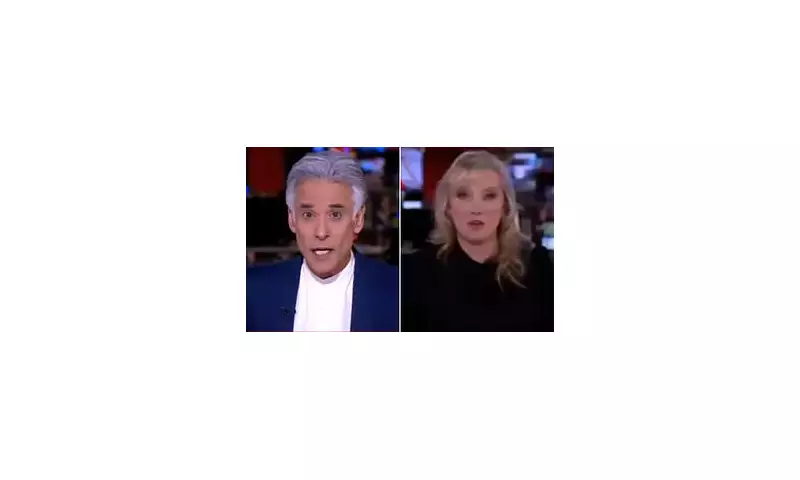
During Tuesday's commemorations marking the anniversary of the liberation of Auschwitz, at least four BBC News presenters opted to describe the victims as six million 'people' rather than specifying 'Jews' in their bulletins. This controversial phrasing appeared across multiple flagship programmes, including BBC Breakfast and BBC World News.
In one broadcast, anchor Martine Croxall introduced the segment by stating: 'Today marks Holocaust Memorial Day. A day for remembering the six million people who were murdered by the Nazi regime over 80 years ago.' This exact formulation was replicated by BBC World News presenter Matthew Amroliwala and Breakfast host Jon Kay during their respective shows.

Immediate Backlash From Jewish Community
The editorial decision prompted swift condemnation from prominent figures within the Jewish community, who described the language as 'hurtful, disrespectful and wrong'. Karen Pollock CBE, Chief Executive of the Holocaust Educational Trust, emphasised that 'The Holocaust was the murder of six million Jewish men, women and children,' adding that any attempt to 'dilute the Holocaust or strip it of its Jewish specificity is unacceptable on any day.'
Former BBC Director of Television Danny Cohen characterised the incident as 'a new low point for the national broadcaster,' stating that failing to correctly identify the victims as Jewish constituted 'an insult to their memory.' Lord Pickles, co-chair of the UK Holocaust Memorial Foundation, went further, describing the wording as 'an unambiguous example of Holocaust distortion, which is a form of denial.'
BBC's Response And Correction
When questioned by the Daily Mail about the editorial choice, the BBC immediately apologised. A corporation spokesperson acknowledged that references in news bulletins on the Today programme and in the introduction to the story on BBC Breakfast were 'incorrectly worded.'
The spokesperson clarified: 'Both should have referred to "six million Jewish people" and we will be issuing a correction on our website.' They further noted that other BBC programming had correctly referenced Jewish victims, including interviews with relatives of Holocaust survivors and a report from the Religion Editor.
Context Of Recent BBC Antisemitism Initiatives
This controversy emerges against the backdrop of recent BBC initiatives addressing antisemitism within the corporation. In December, outgoing director-general Tim Davie mandated that all staff complete a training course on antisemitism within six months, aiming to combat 'discrimination, prejudice, and intolerance' at the broadcaster.
The move followed a letter from more than 200 Jewish staff, contractors, suppliers and contributors who accused the BBC's Board of 'ignoring' their pleas for an investigation into alleged antisemitism. The Board of Deputies of British Jews welcomed the training announcement, having previously met with BBC executives to discuss concerns about Middle East coverage and antisemitism training.
Royal Commemoration Of Holocaust Memorial Day
Separately, King Charles and Queen Camilla hosted a reception at Buckingham Palace to mark Holocaust Memorial Day, where the monarch paid tribute to survivors, stating that those who perished remain 'with us in spirit.' Charles, who last year became the first British monarch to visit Auschwitz, greeted survivors including Helen Aronson, a 98-year-old survivor of the Lodz ghetto, and Anita Lasker-Wallfisch, who survived Auschwitz by playing in the camp's orchestra.
The incident has reignited debates about historical accuracy, media responsibility, and the importance of precise language when commemorating one of history's most devastating atrocities, particularly as antisemitism concerns continue to surface in public discourse and institutional practices.