Bic Fortune Heirs Battle Over Stolen 15th-Century Fra Angelico Masterpiece
The heirs to the Bic pen fortune are locked in a bitter legal dispute to reclaim a priceless 15th-century Fra Angelico masterpiece they allege was stolen two decades ago by their family chauffeur. According to exclusive court documents obtained by The Independent, the 500-year-old painting was illicitly funneled into the art market through a series of questionable transactions before being auctioned for $5.4 million to a South American billionaire who now refuses to return it.
The Central Piece: Saint Sixtus
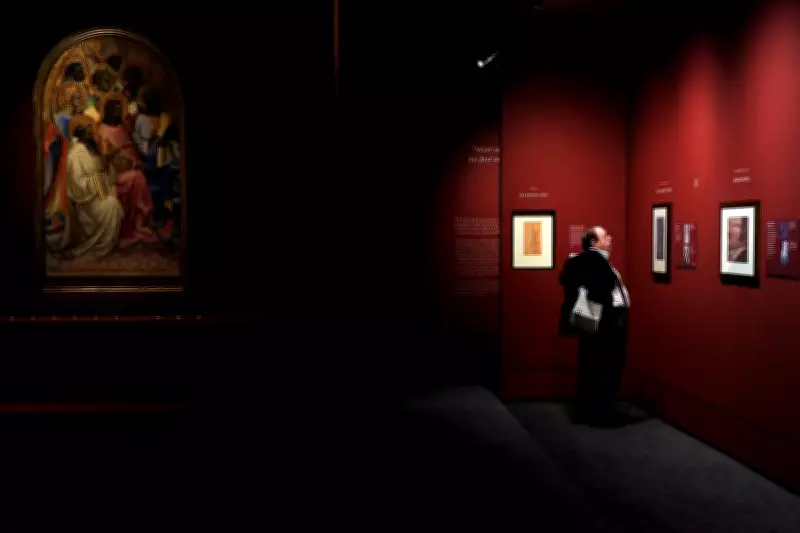
At the heart of this dramatic saga is "Saint Sixtus," a tempera-on-panel work created around 1454, believed to be among the final pieces painted by Fra Angelico before his death in 1455. Fra Angelico, a Dominican friar and celebrated painter of the early Florentine Renaissance, produced numerous frescoes for Florence's Convent of San Marco under the patronage of Cosimo de' Medici. The painting was originally intended as the left wing of a triptych, with another panel now held by the Fogg Art Museum in Cambridge, Massachusetts.
Saint Sixtus, the subject depicted, converted to Christianity as an adult before serving as a deacon in Rome. He was consecrated as Pope on August 30, 257 A.D., but was beheaded less than a year later, achieving sainthood immediately following his martyrdom. His feast day is celebrated on August 7.

The Bich Family's Claim
Gonzalve, Charles, and Guillaume Bich—grandsons of Baron Marcel Bich, founder of the global ballpoint pen, razor, and disposable lighter empire—assert that their grandfather purchased "Saint Sixtus" for £130,000 at a Sotheby's "Important Old Master Paintings" sale on December 6, 1972. Following Marcel's death in 1994, his son Bruno inherited the painting and placed it in trust for his three sons, who reside in New York City, Westport, Connecticut, and Fremont, California.
The complaint details that the artwork hung in Bruno's Upper East Side apartment until 2006, when it mysteriously vanished. The Bich brothers recently discovered that their family chauffeur, Roy Morrow, allegedly stole the masterpiece either during its display at 960 Fifth Avenue or when the family relocated to 935 Fifth Avenue. Bruno repeatedly questioned his wife Veronique about the painting's disappearance, receiving only evasive or inconsistent responses, and died in 2021 without ever learning its fate.
The Alleged Illegal Transactions
Unbeknownst to the Bich family, Morrow reportedly approached renowned art dealer Richard Feigen to sell "Saint Sixtus," despite having no paperwork or proof of ownership. The complaint argues that Feigen should have recognized numerous red flags: Morrow was a chauffeur with no art-collecting background, undocumented means, and no plausible explanation for possessing a multimillion-dollar masterpiece.
Nevertheless, Feigen allegedly purchased the painting for $3 million and insured it for $8.5 million—nearly three times the purchase price. The complaint accuses Feigen of willful blindness, driven by profit motives, and disregarding basic due diligence. In 2018, Feigen consigned the work to Christie's, which subsequently sold it to Colombian industrialist Alvaro Saieh and his wife for $5.4 million.
The Legal Battle Unfolds
In 2023, the Bich brothers learned that "Saint Sixtus" had resurfaced in Saieh's possession. After hiring investigators to reconstruct events, they demanded the painting's return at the end of 2024. Saieh refused, prompting the Bichs to also seek proceeds from Feigen's widow and estate executor, Isabelle Harnoncourt-Feigen. Settlement negotiations failed, leading to the filing of this lawsuit in New York County Supreme Court.
The Bich brothers are requesting the court to order Saieh to return the painting, compel Harnoncourt-Feigen and the Feigen estate to disgorge any profits from the sale, and award compensatory and punitive damages. Christie's and Morrow are not named as defendants in the suit.

Broader Implications and Family History
Former FBI agent Robert Wittman, founder of the bureau's Art Crime Team, emphasized that everyone involved with stolen art—even good-faith buyers—becomes a victim. "They paid good money for something they can't own," Wittman noted, highlighting the cascading effects where Christie's and subsequent buyers must unwind transactions.
This is not the first art-related legal entanglement for the Bich family. In 2020, Bruno Bich sued his ex-wife Veronique for the return of 28 artworks, including pieces by Jean Dubuffet and Pablo Picasso. Veronique has also taken her sons to court multiple times over control of the family fortune, adding layers of complexity to this already contentious dispute.
With the statute of limitations providing at least three to six years to pursue their case, the Bich heirs are determined to reclaim what they describe as a "unique and irreplaceable" piece of their heritage, setting the stage for a protracted legal confrontation over one of the Renaissance's last great masterpieces.