A Hampshire chess club has been plunged into a profound ethical debate after uncovering the disturbing historical origins of one of its most cherished junior trophies. Members of the Basingstoke Chess Club are now grappling with whether to retain or sell the Silver Bishop award, following revelations about its donor's fascist affiliations.
The Unsettling Discovery
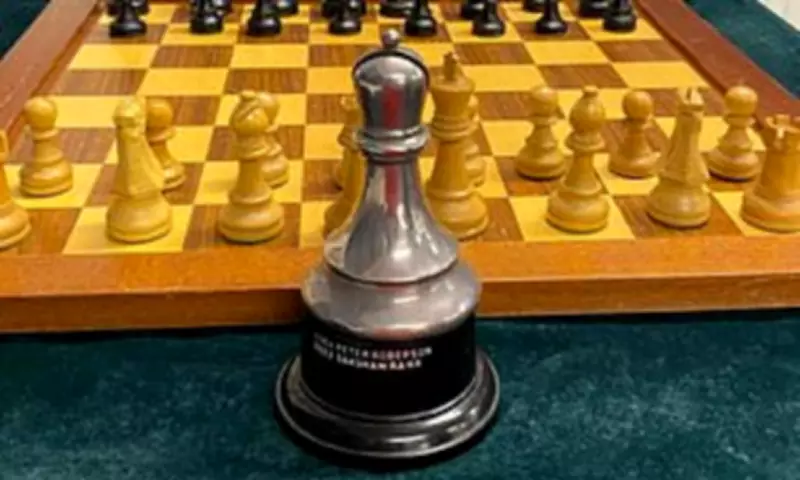
Club secretary David Graham, a 77-year-old retired systems engineer, made the troubling find while examining the eight-inch trophy. Faded inscription revealed it was presented to the club in 1935 by Henry Drummond Wolff MP, a figure with documented connections to Oswald Mosley's British Union of Fascists.
"When we discovered its history, it obviously raised more than a few eyebrows," Mr Graham admitted. "None of us had even heard of the gentleman previously, but this revelation has presented our club with a significant moral dilemma."

A Trophy's Controversial Journey
The Silver Bishop had been retrieved from storage during the COVID-19 pandemic and repurposed as the prize for the Basingstoke Junior Chess Championship, an annual May competition for players aged 5 to 15. Its presentation to a young winner prompted the father of one recipient to notice the barely-legible dedication, triggering the current controversy.
Henry Drummond Wolff was not merely a parliamentary figure of the 1930s but an enthusiastic chess player who frequented the Conservative Club where Basingstoke Chess Club was then based. His wealth stemmed from his grandfather, Sir Henry Drummond Wolff, a prominent British diplomat in the Middle East.
Disturbing Political Affiliations
Following his 1933 marriage to Margaret Fahnestock, daughter of a wealthy investment banker, Wolff began expressing increasingly controversial political views. He actively promoted the replication of Germany's Nazi-style government in Britain while expressing vehement opposition to socialist ideals.
Although he stepped down as MP in 1935, Wolff assisted Oswald Mosley in selecting Patrick Donner as his successor—another individual with fascist sympathies. Throughout this period, Wolff maintained business connections with Nazi Germany and conducted meetings with several of Adolf Hitler's senior advisers.
The Club's Ongoing Debate
The trophy's problematic provenance has sparked intense discussion among club members about its future. "Due to its undeniable links to fascism, we've seriously debated whether to sell it and use the proceeds for club funds," explained Mr Graham.
"Everyone I've consulted believes we should retain it for now, but if a substantial offer materialised—say £10,000 from the Fahnestock family—opinions might understandably shift. While such an outcome seems improbable, one can never be certain."
Historical Context and Modern Implications
Interestingly, both Wolff and Donner modified their political stances following the outbreak of World War II in 1939, with Donner eventually joining the Royal Air Force. Wolff toured globally with his wife after the conflict before passing away in 1982.
Despite his eventual rejection of Nazism, the trophy remains a contentious artifact within the club. "Currently, it serves as a fascinating discussion piece we'll maintain within our collection," noted Mr Graham. "It represents an undeniably intriguing slice of local and political history."
The secretary added that club members hold diverse perspectives regarding the trophy's appropriate use and significance. This controversy emerges during a period of renewed interest in chess, which gained particular prominence during pandemic lockdowns through online platforms.
"Chess is experiencing a genuine resurgence," observed Mr Graham. "After the isolation of COVID-19, players are increasingly eager to return to in-person matches and rediscover the social dimensions of the game that virtual platforms cannot fully replicate."
The Basingstoke Chess Club, established in the 1890s, now faces the delicate task of balancing historical preservation with ethical considerations, as its members continue to deliberate the appropriate fate of this historically loaded award.