In a dramatic High Court appearance, a former senior editor at the Mail on Sunday has vehemently denied allegations that he was informed about phone hacking activities targeting a prominent politician. Chris Anderson, 63, who served as associate editor at Associated Newspapers Limited from 1999 to 2008, described claims that he knew stories were sourced through unlawful means as completely "false."
"Crazy" to Commission Unlawful Stories
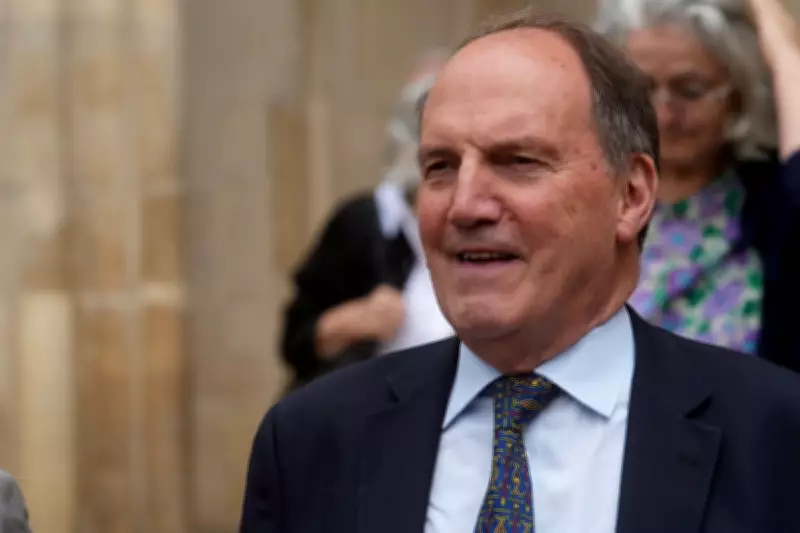
Anderson told the court that he would have been "crazy" and "nuts" to commission a 2006 story about Liberal Democrat politician Sir Simon Hughes if he had known it was obtained through illegal information gathering. The former editor was questioned extensively about his contact with Greg Miskiw, a former News of the World journalist alleged to have passed on information obtained from convicted hacker Glenn Mulcaire regarding the identity and address of Sir Simon's boyfriend, known as HJK.
Denial of Knowledge and Relationships
In his written evidence presented to the court, Anderson categorically denied any knowledge of Mulcaire at the time or any relationship with Miskiw, who provided tips to the Mail on Sunday. "I was certainly not aware of this at the time, nor did Mr Miskiw tell me of this," Anderson stated. "Had Mr Miskiw ever said to me that the information had been obtained by unlawful means, I would not have accepted it."

The former editor emphasized that he would have immediately severed contact with any source using illegal methods. "I would have extricated myself from discussions with him and put out a bulletin to department heads not to use him again," he testified. "I never asked Mr Miskiw to use any unlawful means to obtain information for TMOS."
Cross-Examination Revelations
During cross-examination by barrister David Sherborne, emails between Anderson and Miskiw were presented that referenced a photographer outside HJK's property and noted that he had been "answering the phone in his flat." Despite these communications, Anderson insisted he had no awareness of unlawful information gathering activities.
"I would have been breaking the law for the sake of a middle-of-the-book, back-of-the-book page lead," Anderson told the court. "There was nothing in it for me and I wouldn't have done it anyways because it was against the law. It's nuts honestly."
Denial of Later Claims
Anderson also denied claims made by Miskiw in a 2018 Byline Investigates article that he had been informed about their ability to carry out "hacking" and that he knew some articles had been sourced through these methods. "Mr Miskiw never said anything like this to me," Anderson stated. "This claim is false, as is the claim that I would have gone along with such a suggestion. I would not have gone along with such a proposal with anyone under any circumstances."
Broader Context of the Case
Sir Simon Hughes, former deputy leader of the Liberal Democrats, is one of seven high-profile individuals suing Associated Newspapers Limited over allegations of unlawful information gathering. The other claimants include the Duke of Sussex, Sir Elton John, Baroness Doreen Lawrence, Liz Hurley, and Sadie Frost.
Earlier in the week, former Mail on Sunday editor-in-chief Peter Wright testified that stories about celebrities and royals often came from "hangers-on" who would brief journalists or speak "indiscreetly" to others. Wright, who edited the newspaper between 1998 and 2012, stated in his written evidence that during his tenure, "I was never informed by anyone working for me that a story had been sourced by way of phone hacking, tapping or bugging."
Industry Practices Described
The journalist, now editor emeritus of ANL, described how in the "political, royal and showbiz worlds," journalists cultivated sources at social events. "Included in these contacts would be the numerous cronies and hangers-on who, like moths to a flame, are drawn to the social circles of celebrities and royal figures," Wright explained, noting they were often ready to pass information to journalists to "big themselves up" or earn money.

Wright described these contacts as "part of the lifeblood of Sunday newspapers," particularly for diary sections. He gave the example of the Duke of Sussex, noting that like any royal, he was "surrounded by a large number of staff, friends and hangers-on, many of whom briefed journalists, either directly, or by speaking indiscreetly to third parties who had their own contacts with journalists."
The former editor emphasized that when articles quoted "a royal insider" or "palace sources," this represented "a simple statement of fact" rather than a cover for unlawful acts. Associated Newspapers Limited has strongly denied any wrongdoing and is vigorously defending the claims brought by the group of high-profile claimants.