Prince Harry's Unyielding Legal Campaign Against Tabloid Publishers
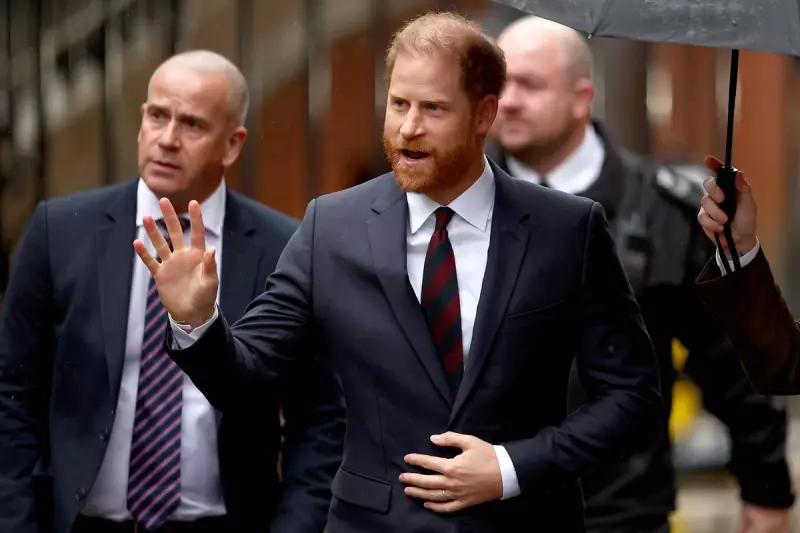
In what has become a quietly spectacular legal drama unfolding in Court 76 of the Royal Court of Justice, Prince Harry has emerged as perhaps the most formidable adversary Fleet Street has ever faced. The royal possesses that rare combination of significant power, substantial financial resources, and deeply personal motivation to pursue newspaper publishers through the courts with dogged determination that shows no signs of abating.
The Unfinished Business of Press Accountability
Oceans of ink have been expended attempting to decipher precisely what Prince Harry hopes to achieve through his sustained legal campaign. Is this fundamentally about revenge for past wrongs, a quest for justice, addressing personal grievances, establishing truth, or seeking vindication? Perhaps it represents belated retribution for what his mother, Princess Diana, endured at the hands of tabloid journalists decades earlier. Alternatively, it might constitute a chivalrous effort to shield his wife Meghan and their children from suffering similar invasions of privacy.
Whatever the underlying motivation – and regardless of the ultimate truth regarding his specific claims against Associated Newspapers – there exists something almost recklessly heroic about his unwavering determination to secure some form of accountability for what he perceives as a generation of Wild West lawlessness within British journalism. His targets understand revenge thoroughly, possessing long memories reminiscent of figures like Donald Trump when it comes to perceived slights and opposition.

The Ghost of Leveson Two
In many respects, Prince Harry is single-handedly accomplishing what the second phase of the Leveson Inquiry into press behaviour and ethics was never permitted to achieve. Remember Matt Hancock, that perky health secretary who appeared so thoroughly out of his depth during the pandemic crisis? Before that role, he briefly served as culture secretary, during which time he quietly shelved the promised Leveson 2 investigation that had been scheduled to examine broader illegality within Fleet Street operations.
Editors and proprietors celebrated this political decision with champagne, later demonstrating their gratitude by publishing CCTV footage showing Hancock and his adviser Gina Coladangelo blatantly disregarding his own Covid social distancing regulations. Yet these celebrations proved decidedly premature. While politicians determined that confronting the journalistic establishment wasn't worth the political cost, two individuals who had suffered egregious front-page humiliation refused to be similarly cowed.
Unexpected Champions of Accountability
The first was Max Mosley, the former Formula One boss whose exotic sex life was splashed across the News of the World's front page in 2008. Following his son Alexander's suspected drug overdose death approximately a year later, Mosley – charming, determined, and crucially wealthy – devoted his remaining years until his 2021 death to turning the tables on his former pursuers. The second individual is, of course, Prince Harry himself.
It's fascinating to speculate whether these two avenging figures would have been quite so fixated on achieving justice had Leveson 2 proceeded as originally intended. The inquiry judge would have possessed extensive investigative powers, discovery authority, subpoena capabilities, and the ability to compel witnesses to provide evidence under oath. He likely would have reached conclusions similar to Mr Justice Fancourt, who oversaw Prince Harry's effort to demonstrate that phone hacking was as widespread at Mirror titles as it had been at the News of the World.
"There is," Justice Fancourt found, "compelling evidence that the editors of each newspaper knew very well that phone hacking was being used extensively and habitually and that they were happy to take the benefits of it."

The Unanswered Questions
Leveson 2 would have thoroughly pursued questions regarding unlawful activity at The Sun, the News of the World's sister publication. Civil claimants who pursued The Sun were essentially compelled to settle for significant damages without any open scrutiny of what had transpired within the daily newsroom. Prince Harry managed to extract a "full and unequivocal" apology alongside an admission that private investigators working for The Sun had engaged in criminal behaviour.
Yet Rupert Murdoch proved willing to expend more than £1 billion in costs and damages rather than permit the full sunlight of courtroom examination to illuminate his organization's operations. Leveson 2 would have investigated whether all witnesses during Leveson 1 testified truthfully (spoiler alert: they didn't). The inquiry would certainly have made substantial progress toward solving the mystery surrounding why millions of emails were deleted from Murdoch titles precisely when police investigators came knocking.
This particular question continues to vex former prime minister Gordon Brown, who for eighteen months has been pressing Metropolitan Police chief Mark Rowley to investigate whether officers were obstructed and evidence destroyed. The Met confirms that material supplied by Brown in November 2025 remains "under assessment."
The Current Legal Confrontation
Leveson 2 would have turned its steely gaze toward Associated Newspapers, which currently hopes to add The Telegraph titles to its media stable. Associated has admitted employing private investigators while vehemently denying they were ever tasked with illegal activities. Lord Leveson expressed clear disappointment with Hancock's decision to abolish his inquiry just as it approached the heart of the matter.
"It must be in the public interest that the extent of the wrongdoing is publicly exposed," he wrote to Hancock and then home secretary Amber Rudd, "not least because the press itself would have been the very first to do just that if it were to have occurred in any other organisation."
He expressed confidence that "a detailed and independent forensic investigation of compellable witnesses would at last provide the answers to 'who did what to whom'." Had collective editorial consciences been clear, there would have been nothing to lose from such scrutiny. They weren't clear, however, and Fleet Street resisted accordingly – ultimately submitting instead to a series of unedifying civil actions culminating in the current blockbuster drama unfolding in Court 76.
The Broader Implications for Journalism
Journalism frequently drapes itself in the crusading colours of morality and truth-telling. Yet the behaviour exposed by Prince Harry and other claimants in recent years has repeatedly been revealed as ethically bankrupt, criminal, and fundamentally dishonest. Regardless of the eventual outcome in the current Associated Newspapers case, Prince Harry and his fellow avengers have performed a valuable public service – one that arguably should have been shouldered by the state through proper institutional mechanisms.
The world desperately requires honest, professional witnesses willing to hold power accountable. It remains profoundly regrettable that editorial leaders couldn't demonstrate greater openness, courage, and truthfulness when confronting egregious past failings within their own industry. In hacked-off Harry, the press has inadvertently created its own worst nightmare – a determined, well-resourced adversary with nothing left to lose and everything to gain from pursuing accountability through the legal system to its ultimate conclusion.