Kaye Adams Denies Bullying Allegations After BBC Scotland Dismissal
Kaye Adams has forcefully responded to bullying allegations as she addressed her removal from her £155,000-per-year BBC Scotland radio show, following a disciplinary investigation. The presenter, 63, was found culpable of three misconduct complaints but saw two bullying claims not upheld, leading to her departure from the corporation last month after an initial suspension in October last year.
Adams Issues Public Statement on Instagram
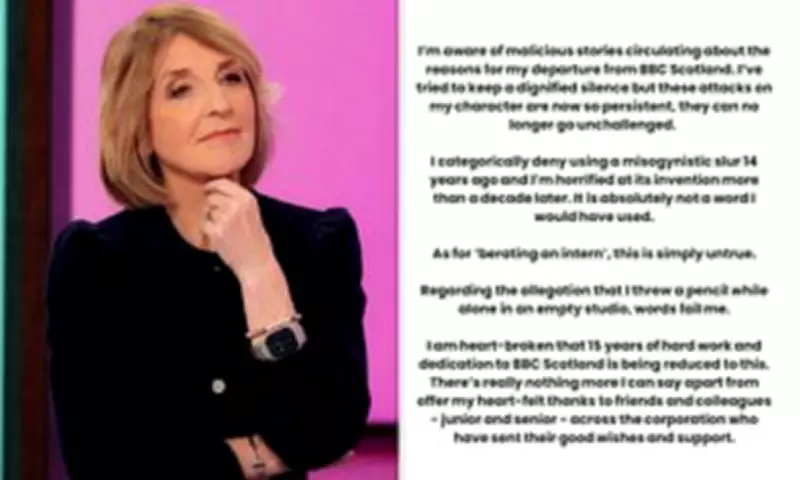
On Thursday, Kaye Adams took to Instagram to issue a detailed statement where she categorically denied key accusations. She expressed awareness of malicious stories circulating about her departure and stated she had tried to maintain a dignified silence, but felt compelled to respond due to persistent attacks on her character.
In her statement, Adams said: I categorically deny using a misogynistic slur 14 years ago and I’m horrified at its invention more than a decade later. It is absolutely not a word I would have used. As for ‘berating an intern’, this is simply untrue. Regarding the allegation that I threw a pencil while alone in an empty studio, words fail me.

She added that she is heartbroken that 15 years of hard work and dedication to BBC Scotland is being reduced to these allegations, and offered heartfelt thanks to friends and colleagues across the corporation for their support.
Background of the Misconduct Probe
The mother-of-two worked at BBC Scotland for 15 years until her suspension on October 7 last year. She hosted her own phone-in show, Call Kaye, before it transitioned to a new format called 'Mornings with…', which she presented several times weekly. The investigation found her culpable of three misconduct complaints, including allegedly swearing at a colleague, throwing a pen at another, and berating an intern's professional ability.
Adams remains a regular panellist and presenter on ITV's Loose Women, with the show stating it is standing by her. Many fellow presenters, including Denise Welch and Nadia Sawalha, have publicly supported her since the suspension.
Personal Impact and Broader BBC Context
Adams hosts a weekly podcast, How To Be 60, with Karen MacKenzie, where she has previously discussed the stress of the BBC probe. Last month, she admitted to losing weight and not feeling like eating, and told the Mail on Sunday her name had been 'dragged through the mud'. Friends have suggested a potential 'witch-hunt' against her by new BBC Scotland radio boss Victoria Easton-Riley, appointed in May 2025.
Within six months of her appointment, Easton-Riley scrapped the station's longest-running programme, Good Morning Scotland, replacing it with Radio Scotland Breakfast. A month later, four more programmes—late-night music shows—were axed along with their presenters.
Insiders indicated the move against Adams followed a team meeting observed by the new boss, who witnessed concerning behaviour and spoke to colleagues about the star. This occurred after the BBC launched its 'Call It Out' anti-harassment campaign, encouraging employees to report unacceptable conduct.
Broader BBC Workplace Culture Issues
The 'Call It Out' scheme was established in response to an independent report into BBC workplace culture, which found that a small number of stars and managers behave unacceptably, with bosses often failing to address it. This report was commissioned after the Huw Edwards scandal, where the former news anchor admitted possessing child abuse images.
Other cases include MasterChef presenter Gregg Wallace being sacked after a report upheld 45 allegations about his behaviour, and BBC Breakfast presenter Naga Munchetty currently under formal investigation for bullying complaints, though she remains on air.
BBC chairman Samir Shah has warned that some powerful people still make life 'unbearable' for colleagues, stating: After today, let me state it clearly, if you think you're too big a star or too important to live by the values of this organisation, not only are you wrong, but we will find you out.
Both Kaye Adams' representatives and the BBC were approached for comment on the matter.