London Marketing Firm's IWD Website Faces Backlash Over 'Exploitation' Claims
A London-based marketing firm has come under intense scrutiny for operating the website internationalwomensday.com, which numerous brands have mistakenly associated with the official United Nations celebration of International Women's Day. This revelation, initially uncovered by a Guardian investigation, has ignited a growing protest movement demanding accountability and transparency.
Open Letter Demands Action from Website Owners
More than 900 individuals have now signed an open letter addressed to the owners of internationalwomensday.com, urging them to either "contribute meaningfully" to the women's rights movement or step aside entirely. The letter, authored by two UK-based professionals and widely circulated on social media platforms, accuses the site of exploiting a vital social cause for financial gain.
"It is our strong belief that you have been exploiting a social movement for financial gain, without addressing any of the genuine structural issues the day was founded on," the letter states emphatically. This sentiment reflects deepening concerns that the commercialisation of International Women's Day is undermining its core mission.

Confusion and Corporate Misunderstanding
The Guardian's December report detailed how the marketing firm behind internationalwomensday.com has for years operated a platform that British organisations have erroneously linked to UN-organised celebrations. The United Nations has explicitly distanced itself from the website, which annually promotes themes distinct from the UN's official selections.
This year's theme "Give to Gain" exemplifies the divergence, contrasting sharply with the UN's focus on substantive women's rights issues. Major British institutions including Sainsbury's, Barclays, the University of Warwick, and UCL's school of management have previously cited the website's themes as if they were officially endorsed, highlighting the widespread confusion.
Voices of Protest from Within the Movement
Belinda Jane Batt, a coach working with mothers and co-author of the open letter, described her motivation for initiating the protest after years of observing the website's activities. "There was just a lot of confusion that I was seeing on all of the social media channels and in my own networks of women about this conflation of the International Women's Day website with the movement of International Women's Day," she explained.
Batt expressed concern that "the entire movement of International Women's Day is being watered down and turned into this kind of almost meaningless marketing, where the words and the themes don't actually seem to marry up with a genuine desire to advance women's rights."
Corporate Partnerships and Commercial Activities
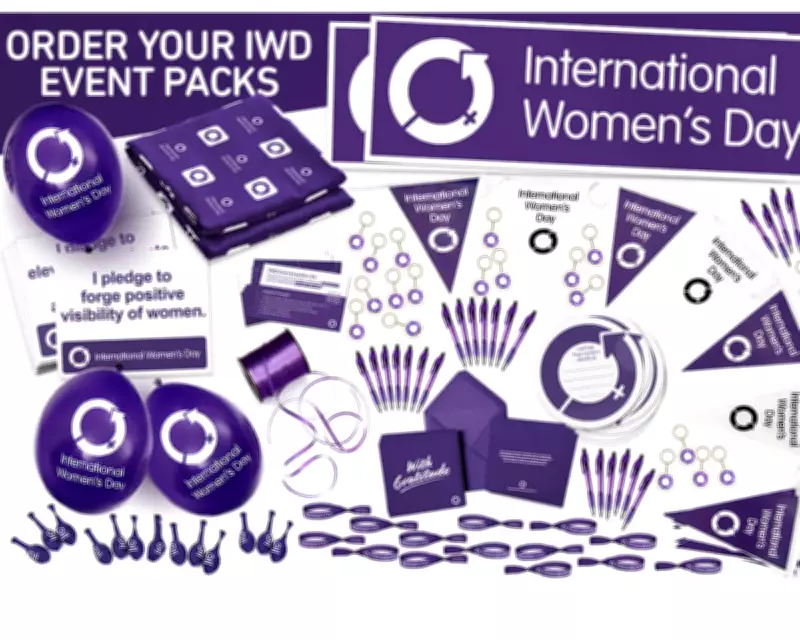
The website has secured numerous high-profile corporate partnerships over the years, including collaborations with the London Eye, insurance firm MetLife, energy giant BP, and accounting firm Ernst & Young. Beyond partnerships, the site engages in commercial activities such as selling merchandise and offering downloadable templates for purple flags to decorate cupcakes.
Glenda Slingsby, a marketing executive who owns the company operating the site, has defended the platform by stating that no one owns the International Women's Day movement and that her website represents "one of many groups that now mark the day worldwide." The site's language remains deliberately vague about its relationship to the UN-recognised celebration.
Criticism of 'Infantilising' Themes and Lack of Substance
Mo Kanjilal, a Brighton-based founder of a diversity, equity and inclusion training company who signed the open letter, criticised the website for "infantilising" International Women's Day. "The theme they announce is always quite corporate," she observed. "Three words, kind of vacuous, making fun – in a way – of International Women's Day. You strike a pose or do a selfie and hug yourself."

Kanjilal expressed particular frustration with this year's "Give to Gain" theme, noting the stark contrast with urgent global women's rights issues: "We had girls killed in Iran, girls in Afghanistan that can't go to school. In this country, six years since the death and murder of Sarah Everard, the fight for women's rights is serious – 74,000 women a year lose their jobs through maternity discrimination. Asking us to pose and say 'Give to Gain' is not going to help with any of that."
Demands for Transparency and Accountability
The open letter represents a concerted effort to pressure the website operators to clarify their operations and financial beneficiaries. Batt emphasised the need for transparency: "Where is all that money going? Is any of it going to causes that are for women, for women's advancement, for women's rights? I think these are things that need to be made more transparent."
As the protest gains momentum, the controversy highlights broader tensions between commercial interests and social justice movements, raising important questions about who benefits from the commodification of causes dedicated to advancing gender equality and women's rights worldwide.