A major policing scandal has erupted, revealing that senior officers from West Midlands Police appear to have fabricated evidence and misled Parliament to justify the controversial ban on Israeli football fans attending a match last year. The controversy, far from being a simple dispute over a football fixture, strikes at the heart of police integrity, political pressure, and who controls public order on Britain's streets.
A Car Crash of Evidence Unravels
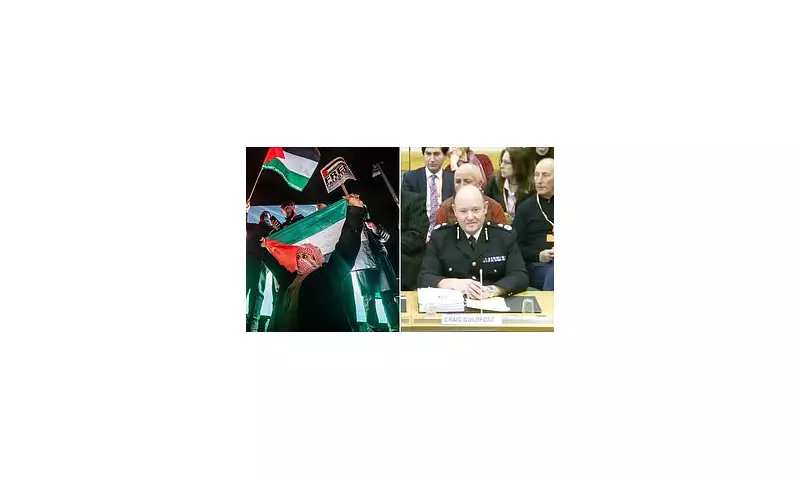
On Monday, senior officers from the force, including Chief Constable Craig Guildford, were hauled before the Home Affairs Select Committee for a second time. Their first appearance last month was described as a 'car crash', with their initial justifications for the ban quickly unravelling. Astonishingly, this week's session was even more damaging.
The day began with a newspaper report revealing what seems to be the real reason for the ban: 'high-confidence intelligence' that 'elements of the community' were looking to 'arm themselves' to fight Jewish fans. The officers had failed to disclose this critical intelligence during their previous parliamentary grilling. When challenged by MPs, Chief Constable Guildford claimed, 'This is the first time specifically that you have asked for that detail,' a response that prompted Scottish Labour MP Joani Reid to exclaim: 'Absolutely outrageous!'

Fabricated Intelligence and False Claims
The evidence presented by West Midlands Police to support the safety ban has been exposed as a 'revolting tissue of lies'. There are at least three glaring instances of misconduct.
First, an intelligence report cited a previous Maccabi Tel Aviv match in Britain against West Ham United. No such match ever took place. Chief Constable Guildford admitted that after finding no relevant information on police databases, officers 'basically Googled' for information. It has now emerged that Google's AI search function had 'hallucinated' the fictitious fixture, which was then included in the official police report. Guildford's claim that 'We don't use AI' was contradicted by the fact that Google's search engine now routinely provides AI-generated summaries.
Second, at last month's hearing, Assistant Chief Constable Mike O'Hara told MPs that Birmingham's own Jewish community had supported the ban. This was simply not true. The police repeatedly ignored requests to meet from the city's small Jewish community, only engaging after the ban was imposed. O'Hara later wrote to Jewish representatives to apologise, admitting that not a single member of the community had told police they backed the exclusion.
The Dutch Police Contradiction
The third and perhaps most shocking revelation concerns events in Amsterdam, which West Midlands Police cited as a key precedent. Their report claimed 'significant numbers' of Maccabi fans were involved in 'demonstrations and confrontations' and had committed hate crimes. Dutch court documents and police statements show the precise opposite: the violence was orchestrated by Muslim gangs on a 'Jew hunt'. Not a single Maccabi fan was charged.
Dutch police took the rare step of publicly contradicting every assertion made by their British counterparts. Yet, Chief Constable Guildford told MPs he had held a private Zoom call with Dutch police who allegedly confirmed his force's version of events. For this to be true, Dutch police would have had to admit lying to their own courts, their media, and British journalists. No record of this alleged call appears to exist.
Broader Implications and Calls for Action
Opposition leader Kemi Badenoch summarised the scandal: 'West Midlands Police capitulated to Islamists and then collaborated with them to cover it up. They knew extremists were planning to attack Jews... and their response was to blame and remove Jewish people instead.'
This case echoes the failures seen in the rape gang scandals, where police in areas with high Muslim populations failed to act for fear of accusations of racism. The scandal raises profound questions about political pressure on policing, the duty of honesty to Parliament, and the fight against extremism.

Calls are now mounting for Chief Constable Craig Guildford to resign and for a formal investigation into alleged misconduct in public office. The lessons, however, extend far beyond one police force, demanding a national reckoning on how extremism is confronted and how public trust in the police can be restored.