Prince Andrew Arrested in Major Royal Scandal Over Epstein Links
Andrew Mountbatten-Windsor, the former Prince Andrew, has been taken into custody on suspicion of misconduct in public office, with the allegations centering on his close relationship with the late convicted sex offender Jeffrey Epstein. This arrest on Thursday marks a dramatic escalation in the long-running scandal that has engulfed the royal, following years of persistent allegations regarding his connections to the disgraced financier.
The Arrest and Its Immediate Context
Officers from Thames Valley Police detained Mountbatten-Windsor on Thursday morning at King Charles III's private Sandringham estate in Norfolk, where the former prince now resides. This action comes in the wake of the recent release of millions of pages of documents related to Epstein by the U.S. Justice Department last month, which intensified the allegations against him.
While many of the allegations have focused on claims of sexual impropriety, including that a woman was trafficked to the UK for an encounter with him, the specific arrest relates to the misconduct in public office offence. This is defined by the Crown Prosecution Service as a serious, willful abuse or neglect of the power or responsibilities of a public office.
The Core Allegation: Sharing Confidential Information
Thames Valley Police confirmed it is assessing reports that Mountbatten-Windsor sent confidential trade reports to Jeffrey Epstein in 2010. At that time, he served as Britain's special envoy for international trade. Emails released as part of the Epstein files appear to show him sharing sensitive information.
- One email from November 2010 seems to show him forwarding a report on official visits to Hong Kong, Vietnam, and Singapore just five minutes after receiving it.
- Another, dated Christmas Eve 2010, appears to involve him sending Epstein a confidential brief on investment opportunities in the reconstruction of Afghanistan's Helmand Province.
Other UK police forces are also conducting their own investigations into related matters.
Legal Ramifications and Potential Sentence
The offence of misconduct in public office technically carries a maximum sentence of life imprisonment, though legal experts suggest a shorter term would be more probable if a conviction is secured. However, proving this offence is notoriously challenging.
"Firstly, it must be determined if Andrew Mountbatten-Windsor was in a role within government that constitutes the title of public officer," explained Sean Caulfield, a criminal defence lawyer at Hodge Jones & Allen. He noted that in recent years, prison officers and police have been prosecuted under this law for similar breaches of trust.
The Immediate Aftermath and Police Procedures
Following the arrest, police have the authority to search Mountbatten-Windsor's properties. Formal interviews can now be conducted. Under UK law, a suspect can be held for up to 24 hours without charge, extendable to a maximum of 96 hours. If insufficient evidence is found, he could be released on bail.
Searches are reportedly being carried out at addresses in Berkshire, where Windsor Castle is located, and in Norfolk, home to Sandringham. It is likely that Mountbatten-Windsor has had his mug shot taken and is being questioned, with legal representation offered if required.
The Royal Family's Response and Historical Precedent
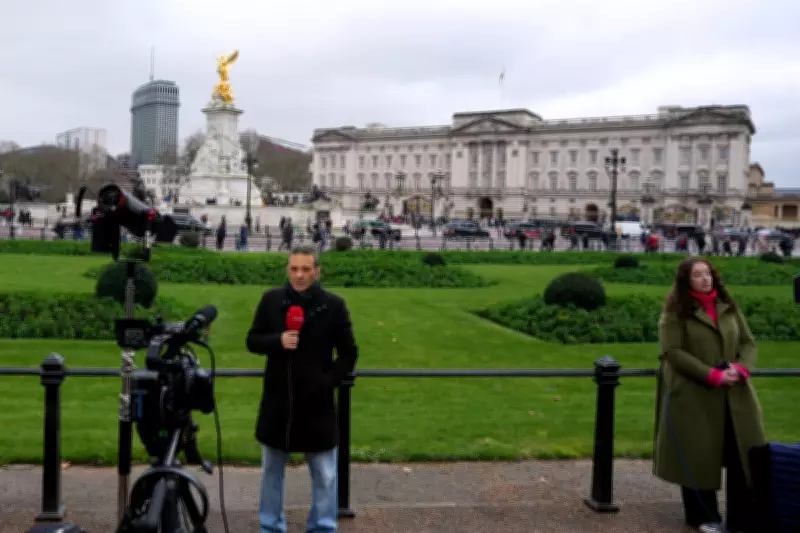
This arrest represents one of the gravest crises for the House of Windsor in over a century, arguably surpassed only by the abdication of King Edward VIII in 1936 and the death of Diana, Princess of Wales, in 1997. King Charles III issued a statement seeking to distance the monarchy from his brother.
"As this process continues, it would not be right for me to comment further on this matter," the King stated, signing it Charles R. "My family and I will continue in our duty and service to you all." Queen Camilla did not comment when questioned, while Mountbatten-Windsor's former wife, Sarah Ferguson, has also remained silent.
The historical parallel is stark: the last arrest of a senior British royal was that of King Charles I nearly 400 years ago, an event that led to revolution, his execution, and the temporary abolition of the monarchy.
The Path Forward: Prosecution Decisions
The Crown Prosecution Service must now decide whether to bring charges. They will apply the two-stage test outlined in the Code for Crown Prosecutors.
"That test is to determine whether there is a more realistic prospect of a conviction than not based on the evidence and whether the matter is in the public interest," said Andrew Gilmore, a partner at Grosvenor Law. "If these two tests are met, then the matter will be charged and proceed to court."
Mountbatten-Windsor has consistently denied any wrongdoing but has not commented on these latest, most serious allegations. The coming days will be critical as police investigations continue and the legal process unfolds, potentially leading to a landmark trial that could reshape public perception of the modern monarchy.