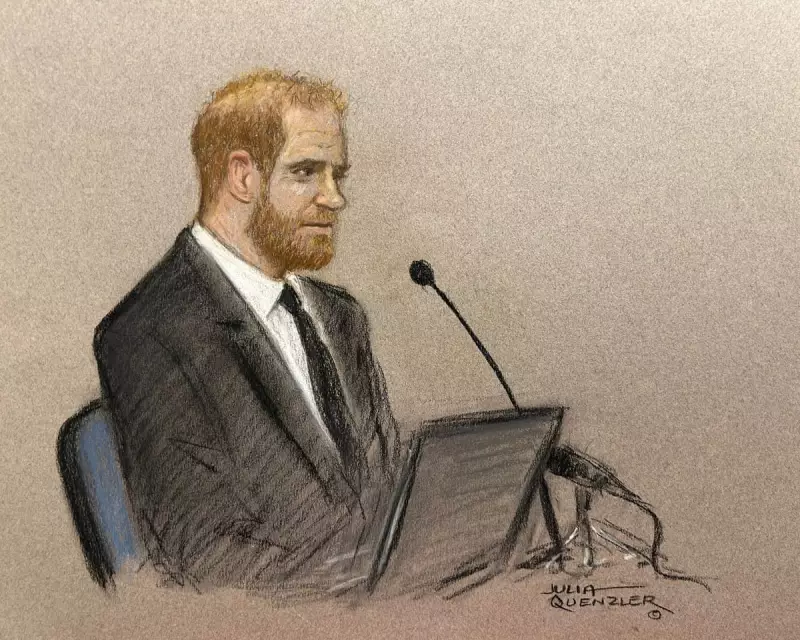
The Duke of Sussex delivered a raw and emotional testimony at the Royal Courts of Justice on Wednesday, painting a stark picture of how decades of press intrusion have impacted his life and that of his wife, Meghan Markle. Prince Harry appeared in court 76 to give evidence against Associated Newspapers, the publisher of the Daily Mail and Mail on Sunday, in a high-stakes legal battle over alleged illegal information gathering.
A Prince Confronts His Past
Arriving just before 11.30am, flanked by security and armed with a bottle of water, Harry took his seat with what appeared to be decades of accumulated grievance. This marks the third major newspaper publisher the prince has pursued through the courts over claims of illegal information gathering, but his determination seemed particularly focused against Associated Newspapers.
The case has been building for years, with Harry bringing his claims alongside other high-profile plaintiffs including Sir Elton John, Elizabeth Hurley, and Doreen Lawrence, mother of murdered teenager Stephen Lawrence. Unlike previous settlements with other newspaper groups, this case has shown no signs of compromise, with Associated vehemently denying all allegations.

Testy Exchanges in the Courtroom
During cross-examination by Antony White KC, acting for the newspapers, Harry displayed visible frustration and testiness. When asked about his relationship with Daily Mail journalist Katie Nicholl, the prince firmly rejected any suggestion of friendship. "She was not part of my social circle," he stated. "Yes at times she turned up at certain social events, but everybody knew who she was and what her capabilities were."
The prince denied using a Facebook profile under the name "Mr Mischief" to contact journalists and disputed claims about meeting Mail Group journalists at social events in Ibiza. "I don't believe I have ever been to Ibiza other than with my now wife," he told the court.
The Psychological Toll of Press Intrusion
Harry repeatedly turned to the judge to provide what he called "context" about his experiences, describing what he perceived as "an endless pursuit, a campaign, an obsession of having every aspect of my life under surveillance." He claimed this constant attention was designed to "drive me paranoid beyond belief, isolating me and probably wanting to drive me to drugs and drinking to sell more of their papers."
Mr Justice Nicklin occasionally intervened to remind Harry that the barrister was simply doing his job, advising the prince that "you don't have to bear the burden of arguing the case today." The judge emphasised that Harry's role was "simply to answer the questions as best you can."
A Portrait of Privilege and Paranoia
The testimony revealed a complex picture of how press attention intersected with Harry's privileged but constrained upbringing. While the newspapers' defence suggests reporters gathered information through legitimate means like befriending his social circle, Harry insisted "my social circles were not leaky."
He described a pattern of nightclub visits where reporters circulated among his friends, relationships that foundered as private details were published, and constant doubts about who might be sharing information with the press. This created what he characterised as a miserable existence of privilege combined with paranoia.
Raw Emotion and Breaking Point
As the day progressed, Harry's emotions became increasingly visible. When asked by his own barrister, David Sherborne, how he felt now about Associated's actions, the prince responded: "Through the course of this litigation, it's only got worse, not better. I think it's fundamentally wrong to have to put all of us through this again when all we required is an apology and some accountability."
The most dramatic moment came when Harry's voice broke as he apparently fought back tears. "They have made my wife's life an absolute misery, my lord," he told the court, referring directly to the impact on Meghan Markle. Mr Justice Nicklin swiftly released him from giving further evidence, and the prince left the courtroom visibly emotional.

Broader Implications for Media Regulation
This case represents more than just another celebrity legal battle. The outcome could have profound implications for how the British media operates and is regulated. Harry's testimony highlights ongoing tensions between press freedom and individual privacy rights, particularly for public figures.
The prince's emotional appearance underscores how deeply these issues have affected him personally, suggesting that despite settlements with other newspaper groups, the psychological impact of years of press attention remains unresolved. As the case continues, it promises to keep these fundamental questions about media ethics and personal privacy at the forefront of public debate.