Russian 'Executioner' Officer Faces Fraud Charges Over £2 Million Injury Scam
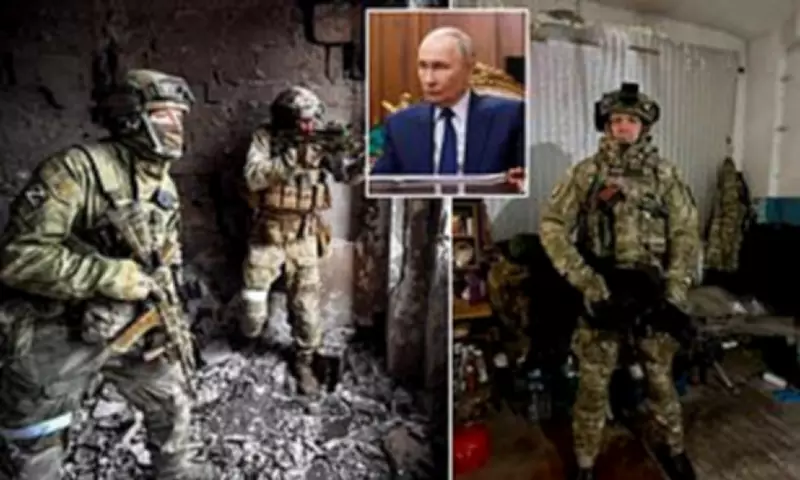
Dozens of Russian troops deliberately shot themselves in a suspected fraud scheme to claim payouts for battlefield injuries, with the alleged scam costing the Russian army approximately £2 million, according to investigators. Russia's Investigative Committee has focused its attention on Lieutenant Colonel Konstantin Frolov, known by the call sign 'Executioner', a decorated officer once celebrated in Russian propaganda.
From Propaganda Hero to Accused Fraudster
Frolov previously appeared in a Ministry of Defense video declaring he would not rest until Russia achieved 'victory' in Ukraine, while boasting of shrapnel wounds from a supposed close call. However, the committee has alleged that those injuries were completely fabricated. Investigators claim Frolov and another commander from the elite 83rd Guards Air Assault Brigade orchestrated a scheme in which more than 30 soldiers and medics intentionally shot themselves to qualify for compensation payments.
The alleged plot defrauded the army of 200 million rubles, equivalent to roughly £2 million, with the commanders reportedly taking a significant share of the money. Frolov is now facing serious charges of fraud, bribery and weapons trafficking in a military court. According to court filings, he has struck a pretrial deal that amounts to admitting guilt, a strategic move that could potentially reduce his sentence. He is expected to appear in court next month for sentencing.

Conflicting Accounts and Allegations
Speaking to the New York Times from a detention centre in Moscow in 2025, Frolov did not deny involvement in a scheme to obtain money from injury payments but strongly disputed the specific allegations of self-inflicted wounds. He claimed the operation instead involved manipulated record keeping, explaining that soldiers in his unit claimed injuries took place in several separate incidents, leading them to receive more than one payout, although he insisted he did not view this arrangement as fraudulent.
Referring to separate weapons trafficking charges, he admitted taking some arms as 'souvenirs' but denied more serious allegations. Frolov further claimed he was being unfairly singled out while others escaped punishment, suggesting his prosecution was retaliation for criticizing senior military leadership and accusing officials of sending troops into mass casualty 'meat grinder' assaults without proper consideration.
'They want to pin everything on us because we spoke out against the command, against those old men in charge,' he told reporters from his detention cell.
Addressing the court directly in August 2024, the Colonel expressed his frustration: 'It turns out that my country, which spent the whole year calling me a hero, is now contradicting itself and keeping me in a cage.'
Broader Corruption Within Elite Units
The 83rd Guards Air Assault Brigade, based near Vladivostok, has also been linked to other corruption cases beyond this particular scandal. A former commander, Colonel Artem Gorodilov, was arrested in 2024 on suspicion of 'large-scale fraud' and is being tried separately through the judicial system. He previously led a regiment accused by Ukrainian prosecutors of committing at least 40 war crimes during the occupation of Bucha, adding another layer of controversy to the unit's reputation.
Under a decree signed by President Putin in November 2024, Russian soldiers became entitled to 3 million rubles for severe injuries and 1 million rubles for minor ones, creating a substantial financial incentive that investigators believe was systematically exploited. This policy change established clear monetary rewards that some commanders allegedly manipulated for personal gain.
Soldier Testimonies Reveal Scheme Mechanics
In detailed testimonies from within the brigade, one paratrooper explained how commanders actively encouraged soldiers to exaggerate injuries and demanded a significant share of compensation payments. He described the arrangement: 'If you want a vacation, you need to be injured. The idea was: "We injure you, you give us the money — a million — and then you go on leave as a result of the injury and end up with two million." That's how they made money on it.'

Another soldier commented that 'money still determines everything' in the Russian military, adding that the war had unfortunately become a business opportunity for some individuals within the system. These revelations point to a troubling culture where financial gain sometimes takes precedence over military discipline and ethical conduct.
Systemic Military Corruption Exposed
At least 12 senior military officials and generals have been charged with corruption in recent years, alongside dozens of lower ranking officers, indicating widespread problems within the Russian military hierarchy. Analysts say this particular case points to deep-rooted corruption that extends far beyond individual bad actors.
Pavel Luzin, a senior fellow at the Center for European Policy Analysis, described an officer corps that is 'demoralized and decayed' with systemic issues affecting morale and integrity. Tatiana Stanovaya, of the Carnegie Russia Eurasia Center, added important context: 'When people profit from tragedy — from a war that is sacred to Putin — it generates political fuel for other actors, including security officials seeking career advancement and those willing to push such cases forward for various motives.'
Contradictory Lifestyle During Wartime
Despite his public image as a frontline hero constantly engaged in combat, social media posts from Frolov's wife showed him attending weddings and concerts, as well as travelling extensively across Russia during the war period. These personal activities contrasted sharply with his official military persona and raised questions about his actual deployment status.
Frolov has suggested he is being held to a double standard within the military justice system, pointing out that some convicted criminals have received pardons in exchange for fighting in Ukraine. 'I mostly had convicts under my command,' he explained. 'People are forgiven for almost anything — to make them go to fight in the war. But we were brought back from the front and sent to prison instead of receiving similar consideration.'
This case continues to develop as military prosecutors prepare their final arguments, with sentencing expected to reveal how seriously Russian authorities are treating corruption allegations within their armed forces during ongoing military operations.