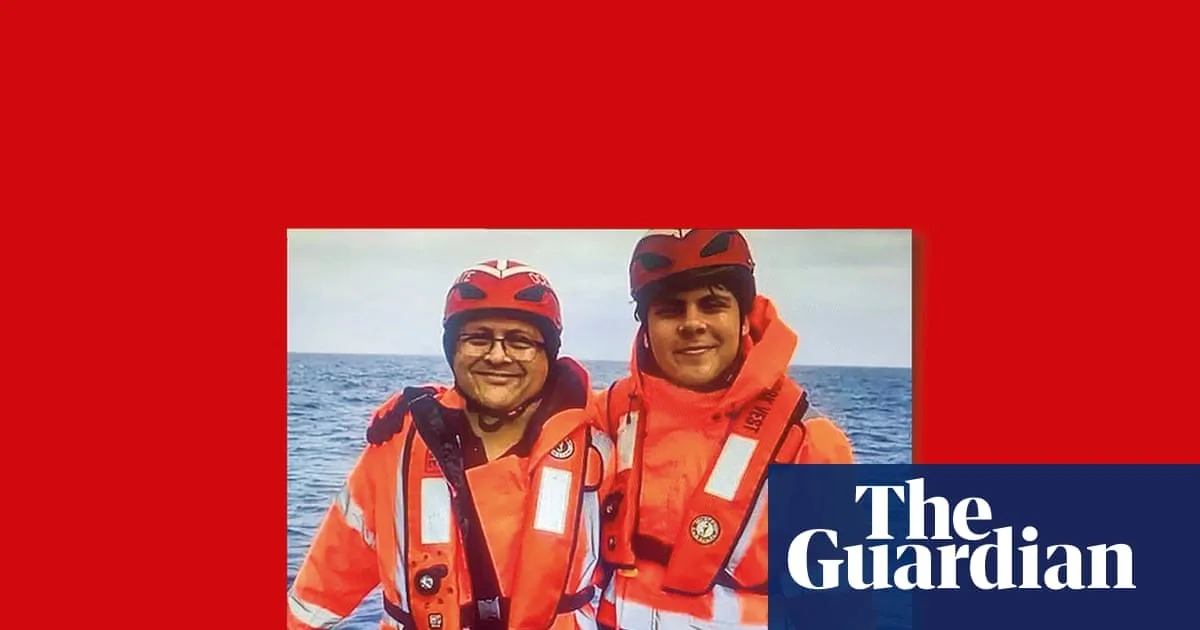
Christine Dawood, whose husband Shahzada Dawood, 48, and son Suleman Dawood, 19, died in the Titan submersible disaster on June 18, 2023, has spoken publicly for the first time about her relief that they were killed instantly. The vessel imploded 500 metres above the Titanic wreck in the North Atlantic Ocean, killing all five on board.
In an interview with The Guardian, Mrs Dawood, a trained psychologist from Surrey, said: 'My first thought was, "Thank God"... I knew Shahzada and Suleman didn't even know about it. One moment they were there and the next they weren't. Knowing they didn't suffer has been so important. They're gone, but the way they went does somehow make it easier.'
The lead-up to the dive
Mrs Dawood first saw an advertisement for the OceanGate expedition during lockdown in 2020. She explored the idea with travel agency Quintessentially, which said it was feasible. Initially, she suggested a shallow dive to her husband, but he was determined to go straight to the Titanic. The plan was forgotten for two years until Quintessentially called in late 2022 to ask if they were still interested.
The cost of $500,000 for two seats was staggering, even for the Dawoods, part of one of Pakistan's wealthiest families. However, they decided to proceed after research showed no civilian submersible accidents. They also trusted Quintessentially, which had arranged previous trips to Antarctica and Greenland. A spokesperson for the agency later said they had no commercial relationship with OceanGate and did not recommend the expedition.
Meeting with OceanGate CEO
In February 2023, OceanGate CEO Stockton Rush and his wife Wendy, the company's communications director, flew from Seattle to London to meet the family. They reassured the Dawoods that the trip was unique and worth the money, as no other submersible could take five people to the deep ocean. Rush claimed he had made 13 successful dives to the Titanic and described the sights they would see.
The family had little underwater experience, but Mr Dawood was soon enraptured by Rush. However, Mrs Dawood noted that Wendy Rush seemed tense and quieter, perhaps aware of risks her husband was not mentioning. She was alarmed when Rush acknowledged that contact with the sub was sometimes lost.
Rush failed to mention hundreds of technical issues and aborted dives OceanGate had faced, nor an explosive noise on the sub during a July 2022 expedition. The Titan was not inspected or classified by a maritime authority, was not registered to carry passengers, and had spent the Canadian winter uncovered in a car park.
The fatal dive
In a tragic twist, Suleman took the ticket originally meant for his mother. 'I was happy for him to make memories with his father. I can't change that,' she said. On June 14, 2023, the family flew to Canada and boarded the Polar Prince, an old icebreaker OceanGate could afford. The boat was not designed for passengers, constantly pitching and rolling, with unpleasant conditions. The submersible was towed behind on a platform, battered by waves.
Persistent heavy fog meant OceanGate had not managed a dive below 10 metres since the start of the 2023 expedition. The family had only two days before the dive, leaving little time for nerves. Mrs Dawood, suffering seasickness, planned to see them off and then sleep.
On the morning of June 18, her husband and son wore jumpsuits with their names and the OceanGate logo. They were joined by Rush, British businessman Hamish Harding, and French Titanic expert Paul-Henri Nargeolet. The group joked about crashing, but the tone was light-hearted. Suleman joked about taking his Rubik's Cube to attempt a world record. They boarded the dinghy to the sub.
Loss of contact
At around 11am, Mrs Dawood was in the dining area when news came that contact with the sub was lost. Crew reassured her it had happened before. But by 6.30pm, the sub had not returned as planned. Mission director Kyle Bingham declared the Titan officially missing.
Mrs Dawood described the feeling: 'It's like an avalanche. You see it coming... I had to make a conscious choice. I knew I couldn't let the emotions come. So, I grew wings, I flew away in my mind.' She told herself the sub was just stuck, but worried about her husband and son, who disliked darkness.
An OceanGate doctor gave her seasickness medication and asked another tourist to look after her. She walked around the ship, overhearing hushed voices. Crew acted as if nothing was happening, but she caught staff saying water could run out and passengers might drink condensation. She avoided news and tried to stay hopeful, knowing they had at most four days of oxygen.
A search and rescue operation by US and Canadian Coast Guards began as media attention grew. Rumours about OceanGate's safety failures emerged. On the Polar Prince, crew organised jamming sessions, movie nights, and poker games, but Mrs Dawood found them jarring.
Discovery of the implosion
On June 22, the Horizon Arctic ship arrived with a remotely operated vehicle that reached the seabed. Operators spotted the twisted remnants of Titan's tail cone. A coastguard officer announced: 'Every indication at this point is that a catastrophic event has occurred with the Titan.' The hull had failed nearly three hours into the dive, imploding under pressure.
Mrs Dawood described the pain of leaving the Polar Prince, packing her husband's bag but asking someone else to pack her son's. She eventually carried his backpack onto the plane. The bag became important for her mother-in-law, who hugged it all the way back to the UK.
Aftermath and investigation
Over the next 18 months, the US Coast Guard investigated OceanGate, revealing numerous flaws. Mrs Dawood was advised not to attend public hearings. The official report concluded the tragedy was preventable, caused by inadequate testing and engineering, and Rush's reckless approach. If he had survived, he would have faced criminal proceedings.
In the years since, Mrs Dawood has had days paralysed by panic attacks. Her husband's study and son's bedroom remain untouched. The family kitchen still has a Lego model of the Titanic that Suleman spent almost two weeks building.
The family did not receive their bodies for nine months. 'Well, when I say bodies, I mean the slush that was left. They came in two small boxes, like shoeboxes,' she said. The remains were recovered from the seabed and DNA tested.
Recently, Mrs Dawood undertook a five-week walk from Hampton Court to the University of Strathclyde in Glasgow, where her son studied business, in tribute to him. She plans to set up a grief and trauma centre in their memory.