UK Plummets to Record Low on Global Corruption Index
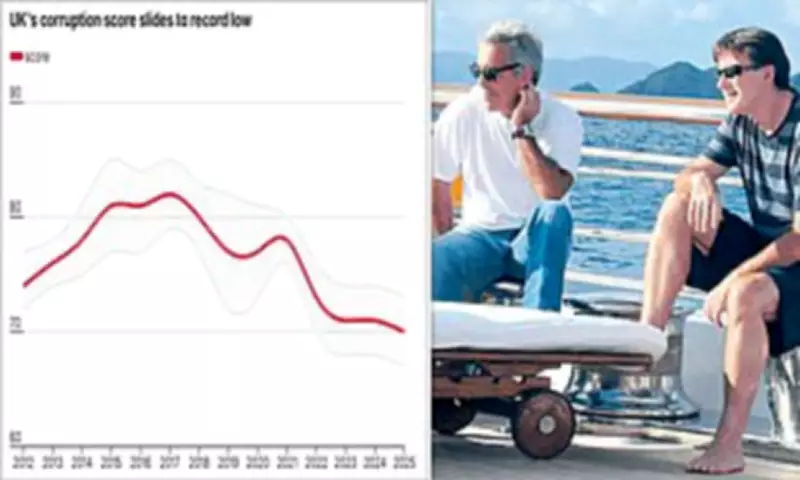
The United Kingdom has descended to its lowest ever position on Transparency International's widely-respected Corruption Perception Index, achieving a score of just 70 out of 100 points. This marks the nation's poorest performance since the index was first compiled in 2012, reflecting a troubling downward trajectory in public sector integrity.
A Consistent Decline in Anti-Corruption Standing
Since 2021, when the UK scored a more respectable 78 points, there has been a steady erosion of its anti-corruption credentials. Despite this significant drop in actual points, the country has managed to maintain its global ranking at 20th place. This juxtaposition highlights how other nations are also struggling with corruption issues, though the UK's decline remains particularly pronounced.
Transparency International's comprehensive assessment examines multiple factors including bribery prevalence, financial disclosure regulations, and whistleblower protection policies across public sectors worldwide. The organization has expressed grave concerns about what it describes as "a long-term decline in leadership to tackle corruption" among established democracies.
International Context and Comparative Performance
While the UK faces mounting challenges, Denmark, Finland and Singapore continue to lead the global anti-corruption effort, though Denmark itself lost one point in this year's assessment. More alarmingly, the United States recorded its lowest ever score with just 64 points, suggesting a broader pattern of democratic backsliding on corruption issues.
The organization's statement emphasized that "the absence of bold leadership is leading to weaker standards and enforcement, lowering ambition on anti-corruption efforts around the world." This critique appears particularly relevant to the UK's current predicament.
The Mandelson-Epstein Scandal and Its Aftermath
The UK's declining score comes amid intense international scrutiny following revelations from the Jeffrey Epstein files. Former Labour cabinet minister Peter Mandelson faces allegations of passing sensitive government information to the convicted paedophile financier while serving as Business Secretary under Gordon Brown's administration.
Specific allegations include:
- Leaking a Downing Street proposal to sell £20 billion in state assets in 2009
- Encouraging JPMorgan Chase CEO Jamie Dimon to pressure then-Chancellor Alistair Darling regarding bankers' bonus taxes
- Forwarding confidential minutes of a meeting between Darling and US National Economic Council director Larry Summers to Epstein within minutes of receiving them
- Providing advance notice of a £435 billion EU bailout package in one of his final acts as Business Secretary
Ongoing Police Investigation and Institutional Response
The Metropolitan Police have launched a formal investigation into a 72-year-old former government minister—understood to be Mandelson—for alleged misconduct in public office. Commander Ella Marriott confirmed the investigation follows "the further release of millions of court documents in relation to Jeffrey Epstein by the United States Department of Justice."
Daniel Bruce, Chief Executive of Transparency International UK, warned that "this persistent decline is not a temporary blip – it risks becoming a defining feature of our political culture." He called for the UK government to demonstrate seriousness about restoring integrity through bold action to remove big money from politics, deliver genuinely open government, and end cronyism that undermines public trust.
The convergence of the UK's declining corruption index score with the unfolding Mandelson-Epstein scandal presents a significant challenge to the nation's international reputation for governance and transparency. As police investigations continue and political scrutiny intensifies, the pressure mounts for substantive reforms to address what appears to be systemic issues in British public life.