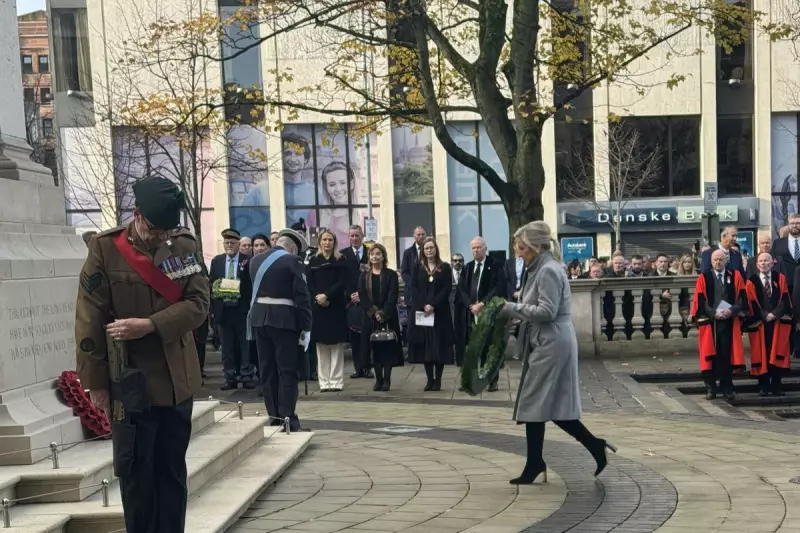
Northern Ireland's political leaders stood together in a powerful display of unity during Remembrance Sunday ceremonies across the island of Ireland. First Minister Michelle O'Neill and deputy First Minister Emma Little-Pengelly led commemorations at Belfast City Hall, marking a significant moment in the region's peace process.
Historic Gestures at Belfast City Hall
Hundreds of people gathered in the Garden of Remembrance and surrounding streets as armed forces representatives and various organisations participated in the solemn service. The ceremony at the Cenotaph saw both leaders laying wreaths in memory of those who lost their lives in conflict.
Ms O'Neill's laurel wreath featured a card bearing poignant words: "Today, as First Minister, I remember all lives lost in the horror of war and conflict." Her message continued, emphasising that "through understanding and respect for our differences, we can build a stronger, more compassionate, and united society."
This participation holds particular significance as Ms O'Neill became the first senior Sinn Fein figure to take part in such an event in Northern Ireland last year, representing a continuing evolution in cross-community relations.
Island-Wide Commemorations
The ceremonies extended beyond Belfast, with events taking place across the island to mark the 107th anniversary of the armistice that ended the First World War. Ireland's Minister for Education and Youth, Helen McEntee, and Belfast's Lord Mayor, Councillor Tracy Kelly, also laid wreaths in the city.
In Enniskillen, Northern Ireland, Taoiseach Micheal Martin attended a service where he laid a wreath at the town's war memorial on behalf of the Irish Government. His presence continued a tradition established in 2013 when Enda Kenny became the first sitting taoiseach to attend the Enniskillen memorial.
The UK's Secretary of State for Northern Ireland Hilary Benn also participated in commemorations that additionally marked the 80th anniversary of the end of the Second World War.
Remembering Tragic History
The commemorations carried added poignancy as Saturday marked the 38th anniversary of the Enniskillen bomb explosion. This tragic event occurred before a Remembrance Day service in 1987 and claimed eleven lives.
The presence of Irish government representatives at such ceremonies has become increasingly significant in recent years. Last year's absence of then-taoiseach Simon Harris, who cited advice from senior officials about Northern Ireland executive representation, highlighted the ongoing sensitivity surrounding these commemorations.
These gestures symbolise the growing recognition in the Republic of Ireland of Irishmen who fought and died while serving in the British Army during the First World War, representing an important development in cross-border relations and historical acknowledgement.