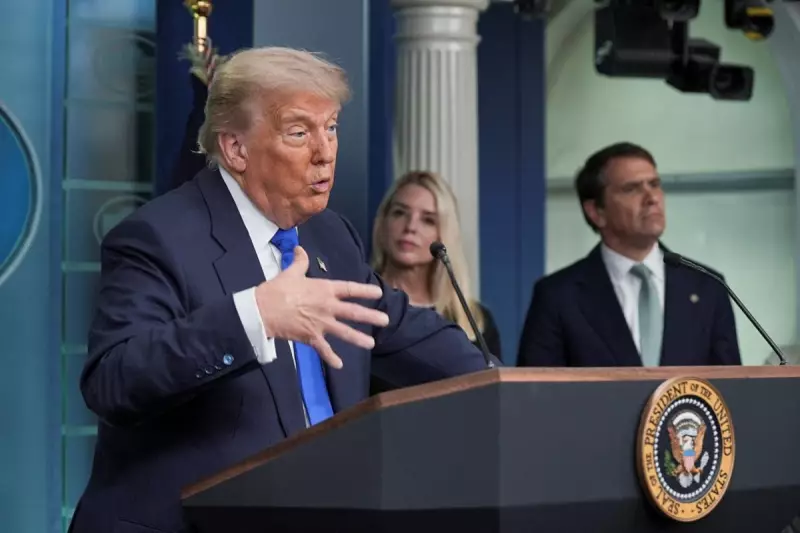
In a striking political contradiction, the Republican Party across the United States is mounting a major drive to encourage mail-in voting for the crucial 2026 midterm elections, directly defying years of fierce opposition from its own leader, former President Donald Trump.
The State-Level Republican Push for Postal Ballots
Despite Trump's repeated and vocal condemnation of postal balloting, labelling it a "catastrophic situation," party machinery in pivotal battleground states is now working hard to promote it. With less than 11 months until votes are cast, which will decide control of Congress and 48 governorships, Republican leaders are not heeding Trump's calls to eliminate the practice.
In the key states of Wisconsin, Michigan, and Pennsylvania, concrete steps are being taken to remind voters to use mail-in programmes. These efforts include direct mail advertisements, email reminders, volunteer phone calls, and even home visits. Substantial digital advertising campaigns are also part of the strategy.

Pennsylvania's GOP is notably doubling down on its successful 2024 playbook, which utilised $16 million to urge voters to send in postal ballots for Trump, a move credited with helping him win the state's electoral votes against Kamala Harris. Furthermore, the GOP-aligned non-profit Citizens Alliance is prepared to send volunteers to knock on 750,000 known voters' doors to remind them to request absentee ballots.
Trump's Unwavering Crusade Against the Practice
This institutional push is fundamentally at odds with the stance of the party's standard-bearer. Donald Trump has spent years railing against postal voting, baselessly claiming it leads to widespread election fraud. His crusade began during his 2020 campaign against Joe Biden and has continued unabated since his return to the White House.
In March 2025, Trump signed an executive order aiming to ban states from counting ballots delivered after Election Day, even if postmarked on time. The Supreme Court is now considering the legality of such a federal prohibition. Later, in July, during a meeting with Ukrainian President Volodymyr Zelensky, he threatened to sign an order banning what he called "corrupt" postal balloting.
"We, as a Republican Party, are going to do everything possible that we get rid of mail-in ballots," he declared, falsely alleging that in Democratic-leaning states like California, "some people get five, six, seven ballots." He suggested ending the practice would prevent many Democrats from being elected in future.
The Strategic Reality for the GOP
Behind the scenes, many Republican operatives acknowledge the tactical necessity of embracing mail-in voting. They point to the 2020 election, where Trump's Covid-era warnings against postal ballots are believed to have depressed Republican turnout. This contributed to a so-called "red mirage" effect, where early in-person counts showed Trump ahead before later mail-in ballots, which skewed Democratic, were tallied.
Brian Schimming, the Wisconsin Republican Party chair, articulated the pragmatic view to Politico, stating his party cannot allow the Democrats' "pretty massive structural advantage" in early voting to go unchallenged. "Treating early voting as optional, or something Democrats do, is a losing gamble," he warned.
The Republican National Committee is also reportedly working to build on its 2024 mail-in voting advocacy, which proved successful for Trump's re-election campaign. Notably, nearly a third of all ballots nationwide in the 2024 election were cast by mail, a figure credited by the U.S. Election Assistance Commission with helping secure Trump's victory.
This leaves the Republican Party in a paradoxical position: energetically promoting a voting method its most influential figure relentlessly demonises, all in the name of electoral survival for the upcoming midterms.