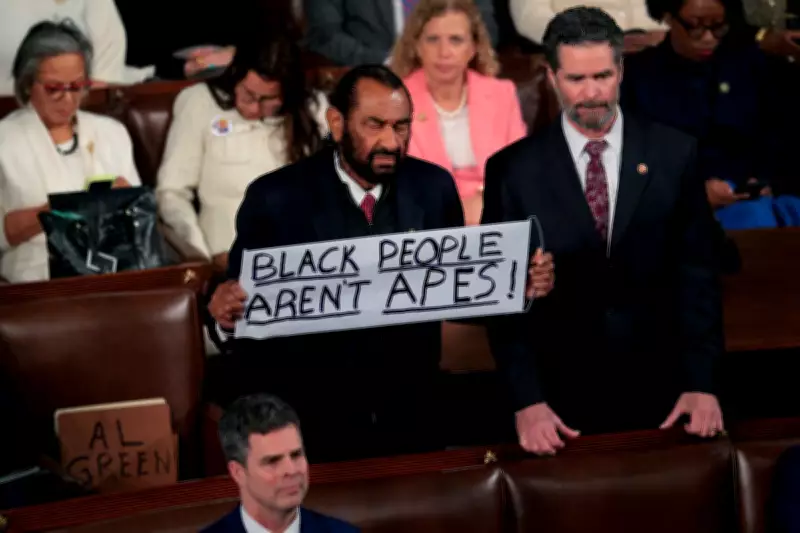
Democrat Representative Ejected from Trump's State of the Union Address Over Protest Sign
For the second consecutive year, Representative Al Green, a Democrat from Texas, was forcibly removed from the House chamber during Donald Trump's State of the Union address. The incident occurred as Green held up a handwritten sign with the message "Black People Aren't Apes" during the president's speech.
Context Behind the Controversial Sign
The sign was a direct response to a racist AI-generated video that had been posted online by Trump, which depicted former President Barack Obama and former First Lady Michelle Obama as primates. This video had sparked widespread condemnation and accusations of racism, prompting Green's symbolic protest.
Just two minutes into Trump's address, Republicans, including House Majority Leader Steve Scalise, attempted to confiscate the sign from Green. Some members of the audience began chanting "USA!" in an effort to drown out the protest, leading to a brief but tense confrontation on the House floor.

History of Disruptions at Presidential Addresses
This marks the second year in a row that Green has been ejected from Trump's State of the Union. Last year, he was removed for heckling during the speech, highlighting a pattern of political dissent during these high-profile events. The repeated incidents underscore the deepening partisan divisions within Congress.
The removal of a sitting representative during a State of the Union address is a rare occurrence, reflecting the heightened tensions and polarized atmosphere in contemporary American politics. Green's actions have drawn both criticism and support, with debates intensifying over the appropriate boundaries of protest in legislative settings.
As the situation unfolded, security personnel escorted Green from the chamber, ensuring the proceedings could continue without further interruption. The event has since fueled discussions about free speech, racial equality, and the role of lawmakers in addressing controversial issues during national addresses.