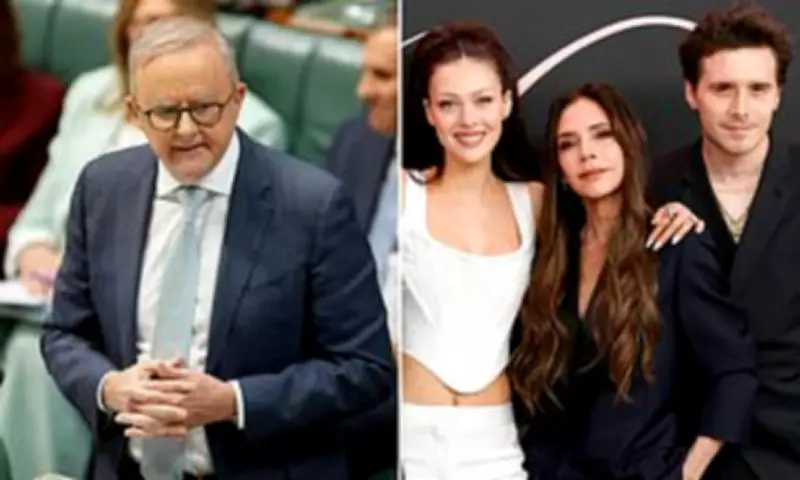
Prime Minister Anthony Albanese launched a blistering and sustained attack on the Coalition during a particularly heated session of Question Time, with Labor strategically exploiting visible cracks within the Opposition ranks. This parliamentary offensive was widely seen as a deliberate attempt to shift the political focus away from the Reserve Bank's recent decision to increase interest rates by 0.25 percentage points.
Butler's Beckham Comparison Highlights Coalition Discord
Health Minister Mark Butler set the tone with a colourful analogy, comparing the ongoing dispute between the Liberal and National parties to the highly publicised family feuds within the Beckham dynasty. Butler suggested tensions flared after Brooklyn Beckham's marriage to Nicola Peltz, drawing a parallel to the current Coalition dynamics.
'They are like a couple who bought a non-refundable holiday, then they broke up and now sit there and suffer through it… they’re like the Beckhams,' Butler remarked from the parliamentary floor, highlighting the perceived dysfunction.

Leadership Speculation Fuels Parliamentary Fire
The Prime Minister then turned his attention directly to Opposition Leader Sussan Ley's key ally, Alex Hawke. Hawke, a significant powerbroker from the New South Wales centre-right faction, is considered one of Ley's closest supporters and played a crucial role in her victory over Angus Taylor following the Liberals' devastating election defeat in 2025.
Butler intensified the attack, referencing Taylor, who is said to be considering a move against Ley's leadership after rival Andrew Hastie publicly ruled himself out. 'But the great pretender to the throne, the member for Hume who inexplicably remains on the frontbench… a man with no apparent honour at all, [plotting] against his leader from the front bench,' Butler declared.
Hawke fired back, insisting comments against Taylor constituted a breach of parliamentary rules. Albanese, clearly amused, heckled Hawke from across the chamber, taunting, 'Whose side are you on? I wouldn’t want you on my side.'
Labor Relentlessly Targets Potential Challengers
Throughout the session, Labor MPs repeatedly referenced Ley's potential leadership challengers, continually pointing to figures like Hastie and Taylor. Energy Minister Chris Bowen went further, targeting Lindsay MP Melissa McIntosh, who has previously aired her own leadership ambitions, while discussing government policy.
'[McIntosh] has got some catching up to do. She’s installed 1,592 batteries in Lindsay. Which I read is about 1,591 more than leadership votes she has in any proposed ballot,' Bowen quipped.
Meanwhile, Andrew Hastie, seated on the far backbench, appeared largely indifferent to the surrounding drama, spending much of Question Time engaged with his mobile phone. Despite the fervent speculation, a direct challenge to Ley's leadership is considered unlikely during the current sitting week.
Interest Rate Hike Sparks Political Crossfire
The parliamentary theatrics unfolded against the backdrop of significant economic news. The Opposition lashed out at the Government after the Reserve Bank announced during Question Time that it was lifting the cash rate by 25 basis points to 3.85 per cent. This marked the first such hike since November 2023.
Fresh analysis from financial comparison service Canstar reveals the immediate sting for homeowners. A typical owner-occupier with a $600,000 mortgage and 25 years remaining on their loan will see their monthly repayments increase by approximately $90, assuming banks pass the rate rise directly on to variable-rate customers.
The Coalition accused the Government of fuelling the rate hike through what it claims is reckless, inflation-driving public spending. However, the Government hit back forcefully, insisting the Reserve Bank's decision was driven by surging private-sector demand and was not a consequence of its own budgetary measures.
The day's events underscored a deeply combative political atmosphere, with Labor successfully using parliamentary procedure to amplify Coalition divisions while both sides traded blame over the pressing economic issue of rising interest rates.