Anthony Albanese Celebrates Three Decades in Parliament: A Political Evolution
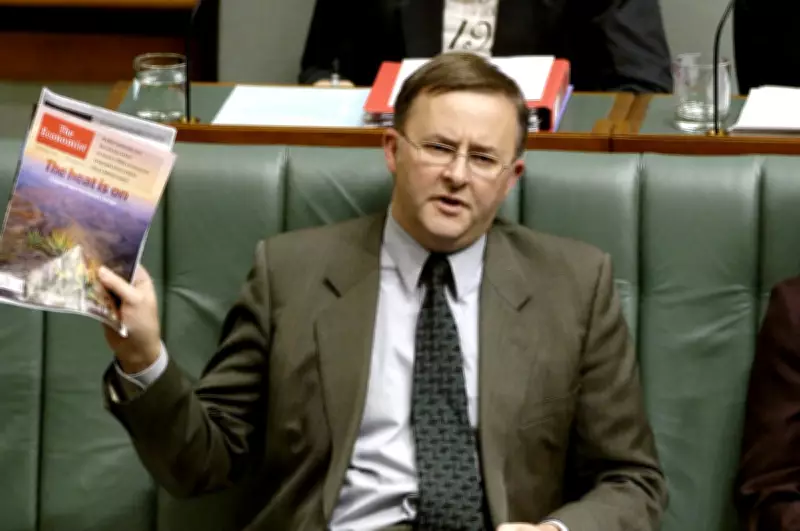
This week, Australian Prime Minister Anthony Albanese commemorates a significant milestone: 30 years in parliament. His journey began in 1996, when he was elected as the opposition environment spokesman, coinciding with John Howard's victory and the end of the Hawke-Keating era. As he reflects on this anniversary, it prompts a compelling question: what would the left-wing warrior of 1996 think of the leader today?
From Scrappy Firebrand to Longest-Serving Labor Member
Albanese's entry into politics was marked by a memorable election night in 1996, where his supporters famously drank the Marrickville Portugal Madeira Club dry. At the time, he was a young, fiery activist from the Labor Left faction, known for opposing the Iraq war and hardline immigration policies. Today, he stands as the longest-serving member in the Labor caucus, having risen through the ranks from staffer to deputy prime minister and, ultimately, prime minister in 2022.
His career predates his parliamentary election, with involvement in student politics and roles as a staffer for Labor figure Tom Uren. Over the decades, he has navigated committee work, backroom negotiations, and leadership challenges, including a close contest against Bill Shorten in 2013. Despite early predictions that he might not win his seat, Albanese has consistently defied expectations, earning a reputation for loyalty and resilience.

Contrasts and Criticisms: A Shift in Political Stance
Recent events, such as Albanese's support for US-Israel strikes against Iran and his strong stance on IS-linked Australians in Syria, highlight a shift from his earlier positions. Political commentator Chris Wallace notes that Albanese's arc from activist to "Tory-curious" prime minister is driven by a transactional focus on power acquisition, sometimes at the expense of Labor values. This has led to criticism from within the party, with groups like the Labor Environment Action Network and Labor Against War pushing for more aggressive action on issues like the extinction crisis and the Aukus submarine deal.
Former Prime Minister Paul Keating has even remarked that on defence and foreign policy, "this is not a Labor government," suggesting Albanese has adopted ideas from his predecessor, Scott Morrison. However, supporters argue that Albanese's consensus-driven approach and respect for cabinet intellect have reinforced Labor as a natural party of government, even if some see him as a handbrake on bolder reforms.
Internal Control and Future Prospects
Albanese now wields unprecedented control within the Labor party, with the left faction holding a majority in caucus and his influence extending to national executive decisions and pre-selections. Despite challenges, such as the Bondi terror attack and economic pressures, he is viewed by many as a safe pair of hands in turbulent times. Veteran journalist Michelle Grattan observes that while he may not be charismatic, his steady leadership resonates with the public.
Looking ahead, Albanese's resounding re-election suggests a potential cakewalk in the next election, possibly allowing him to become the first prime minister since Robert Menzies in 1966 to leave on his own terms. As he turns 63 and contemplates life after politics, his legacy as a working-class firebrand turned prime minister continues to evolve, confounding critics and shaping Australian politics for years to come.