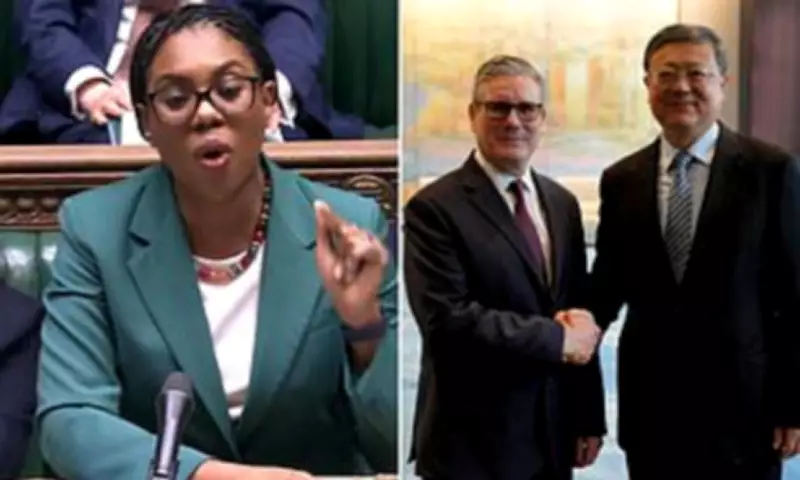
In a fiery parliamentary exchange yesterday, Conservative leader Kemi Badenoch launched a scathing attack on Prime Minister Sir Keir Starmer's recent diplomatic mission to China, branding his approach as "supine" and "short-termist." The heated Commons session saw Badenoch ridicule Starmer's Beijing visit, suggesting it appeared like "a dream come true" for a politician she described as having been "virtually a Communist all his life."
Starmer Defends Engagement Strategy
Sir Keir Starmer, the first British leader to visit China in eight years, used his parliamentary address to defend his government's approach to dealing with the Asian superpower. The Prime Minister insisted his administration remains "clear-eyed about the threats from China" while maintaining that engaging with President Xi Jinping and safeguarding UK national security are not mutually exclusive objectives.
"We can do two things at once," Starmer told MPs, highlighting what he characterised as eight years of Conservative "missed opportunities" in UK-China relations under previous governments.

Badenoch's Scathing Critique
Mrs Badenoch, drawing laughter from Conservative backbenchers, delivered a withering assessment of what she portrayed as Starmer's ineffective diplomacy. "It is not the PM engaging with China we take issue with," she stated. "What we are criticising is his supine and short-termist approach."
The Tory leader suggested Starmer had returned from Beijing with "next to nothing" despite having "hyped up" potential benefits before his departure. She accused him of being "played" by the Chinese leadership and criticised his negotiating style as consistently giving "everything away in the hope people will be nice to him in return."
Limited Outcomes from Beijing Visit
The tangible outcomes from Starmer's China trip appear modest according to parliamentary discussion. The Prime Minister secured a halving of tariffs on whisky exports and the elimination of visa requirements for British tourists and businesses making short visits to China.
Starmer also highlighted an agreement for "closer dialogue on cyber issues" with Beijing, though this claim drew mockery from Opposition benches given China's reputation as a significant hostile state actor in cyberspace.
Sanctions Controversy Deepens
Perhaps the most contentious aspect of the diplomatic exchange concerns the status of sanctioned British parliamentarians. Sir Keir told the Commons that China had "made clear" restrictions on all UK parliamentarians had been lifted, referring to nine British citizens banned from China in 2021.
These individuals included five Conservative MPs and two members of the House of Lords who had been targeted for highlighting human rights violations against China's Muslim Uyghur community. However, those affected say they have received no proof their sanctions have actually been removed and have requested a meeting with the Prime Minister to clarify the situation.
Mrs Badenoch seized on this ambiguity, telling Starmer: "Let me tell him: Those MPs were sanctioned because they stood up to China. They stood up against human rights abuses, they stood up against a country spying on our MPs in a way he wouldn't dare."
Parliamentary Access Dispute Continues
The diplomatic tensions extend to parliamentary access privileges. The Daily Mail understands that sanctioned parliamentarians recently met with Commons Speaker Sir Lindsay Hoyle to press for maintaining a ban on Chinese Ambassador Zheng Zeguang entering Parliament.
Sir Lindsay originally barred the ambassador from parliamentary premises in 2021 following China's imposition of sanctions on British MPs. Meanwhile, Number 10 has sparked controversy by suggesting openness to President Xi Jinping visiting the UK again, despite his last visit occurring a decade ago during what was then termed the "golden era" of UK-China relations under David Cameron's premiership.
The parliamentary clash underscores deepening divisions over Britain's approach to China, with the government defending strategic engagement while opposition figures question both the substance and style of Starmer's diplomatic efforts.