Kemi Badenoch Refuses to Apologise for Controversial 'Paedo Defenders' Remark
Conservative Party leader Kemi Badenoch has firmly stated she will "absolutely not apologise" for claiming that Labour was being branded a "paedo defenders party" during Prime Minister's Questions. The controversial comments were made during the weekly parliamentary exchange on Wednesday, sparking immediate backlash and heated debate across the political spectrum.
Heated Exchange During Prime Minister's Questions
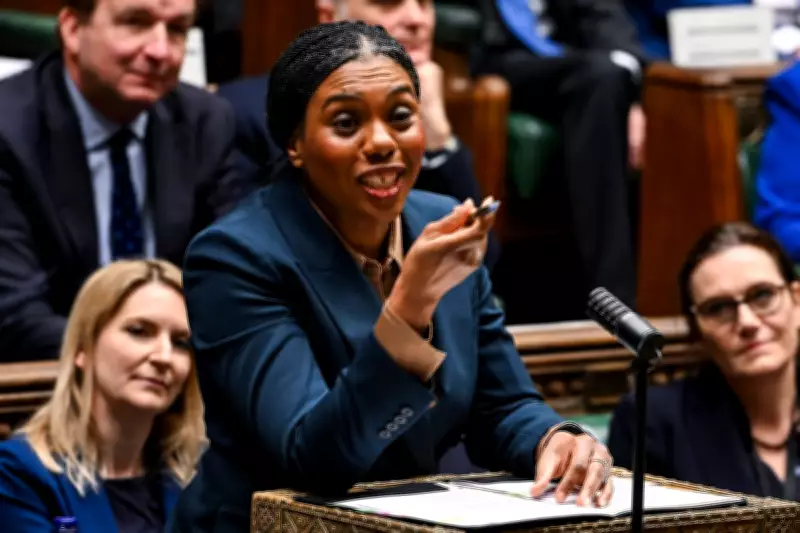
During the tense session in the House of Commons, Badenoch directly challenged Prime Minister Sir Keir Starmer, demanding he explain "why his backbenchers are saying that they're being called the 'paedo defenders party'." This provocative statement followed a report in The Times newspaper, which detailed how female Labour MPs had informed Starmer earlier this month that voters had allegedly "screamed" the phrase at them in public streets.
The reported incidents were linked by some to the ongoing Peter Mandelson scandal, though Badenoch's specific reference to this connection remained implicit rather than explicit in her parliamentary remarks. The Conservative leader's decision to raise this sensitive issue during the high-profile weekly questioning session immediately escalated political tensions.

Significant Criticism from Multiple Quarters
Badenoch's comments have drawn significant criticism from several prominent figures, including Labour MP Natalie Fleet, who was groomed as a teenager, and Katie Amess, daughter of the murdered Conservative MP Sir David Amess. Both women have expressed deep concern about the language used and its potential consequences.
Ms Fleet told LBC radio that Badenoch's use of the term was "just really disgusting" and suggested it had endangered Labour activists campaigning across the country. "There are hundreds of thousands of political activists, Labour and otherwise, that want to make the country a better place," she said, "and to just throw language like that around because it might get you some extra votes is just really disgusting."
Meanwhile, Ms Amess described the remarks as "very inflammatory" and called for a formal apology from the Conservative leader. She emphasised that "it's not the way that our politicians should be talking, unfortunately," highlighting concerns about deteriorating political discourse.
Badenoch's Unwavering Defence of Her Position
Appearing on a phone-in programme on LBC on Wednesday evening, Badenoch stood firmly by her controversial comments, refusing to back down despite mounting criticism. "I will absolutely not apologise," she declared unequivocally during the broadcast.
The Conservative leader defended her position by referencing previous Labour attacks, stating: "I remember when Keir Starmer and the Labour Party were putting out posters saying Rishi Sunak was supporting paedophiles so that they wouldn't go to prison. These people know how to dish it but they don't want to take it."
When pressed on whether she personally believed Labour was a party of "paedo defenders," Badenoch declined to give a direct answer, instead noting: "It wasn't my words, a female Labour MP used that language." She added pointedly: "Nobody would be calling them that if they held themselves to higher standards."
Broader Political Context and Implications
The controversy emerges during a period of heightened political tension, with Badenoch suggesting the Mandelson scandal would become a "defining moment" of Starmer's tenure as Prime Minister. This framing positions the exchange as part of a larger narrative about political accountability and standards in public life.
Political analysts note that such heated exchanges during Prime Minister's Questions are becoming increasingly common, reflecting deeper divisions within British politics. The incident raises questions about:

- The boundaries of acceptable political discourse
- The use of sensitive language in parliamentary debates
- The potential impact on public trust in political institutions
- The role of historical scandals in contemporary political attacks
As the controversy continues to develop, it remains unclear whether further parliamentary consequences will follow or if the matter will gradually fade from immediate political focus. What is certain is that Badenoch's refusal to apologise has cemented her position and ensured this exchange will remain a talking point in Westminster circles for the foreseeable future.