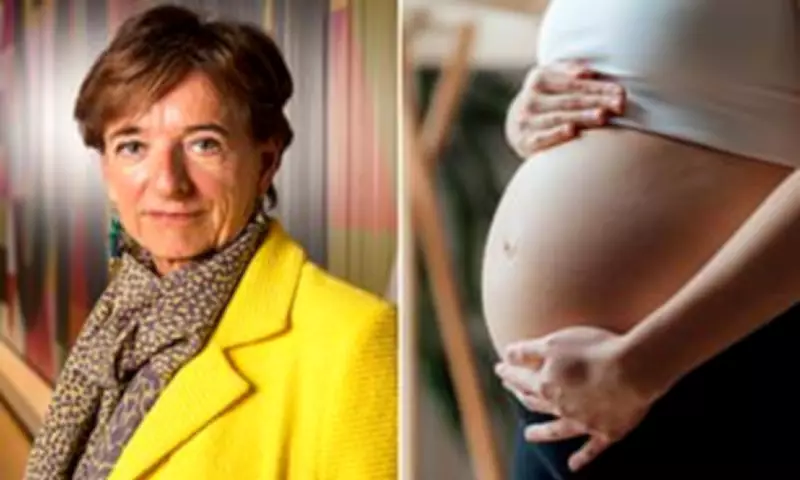
Baroness Monckton's Battle Against Radical Abortion Law Reforms
During a single week in June, the House of Commons approved two legislative measures that would fundamentally alter the fabric of British society. The first, which has garnered significant public attention, enables state facilitation of assisted dying for those with terminal diagnoses. The second, far less discussed but equally consequential, decriminalises abortion up to full term when performed by the mother alone, for any reason whatsoever.
The Stealth Introduction of Clause 191
I pledged to readers that I would contest these proposals in the House of Lords, where both are currently under review. True to my word, on Monday I proposed an amendment to eliminate this drastic reshaping of our abortion legislation from the Crime and Policing Bill. This extensive piece of legislation has occupied peers in our revising capacity for over two months. Yet most citizens remain unaware that a clause entirely unrelated to the bill's primary purpose was inserted via an amendment by Labour MP Tonia Antoniazzi, following a mere 46 minutes of backbench debate in the Commons.
Clause 191, titled 'Removal of Women from the criminal law related to abortion', eliminates all remaining legal oversight concerning women and abortion. It permits a pregnant woman to terminate her pregnancy at any stage, including full term, for any reason, including gender selection. This clause passed through the Commons without proper evidence, scrutiny, or public consultation. It represents a reckless and radical proposal with severe implications for both maternal mental and physical health, alongside catastrophic consequences for the unborn child.

Dangers of Unsupervised Late-Term Procedures
This legislative change effectively revives the concept of backstreet abortions, as women beyond the current 24-week legal limit would be encouraged to terminate pregnancies at home independently. They would use pills obtained by post, which are not designed for use beyond ten weeks outside clinical settings. There is a profound irony that those who historically advocated for legal termination to prevent unsafe backstreet procedures now propose enabling women to perform illegal terminations in equally unsafe, unsupervised environments.
The Royal College of Obstetricians and Gynaecologists, among other medical bodies and abortion providers, has lobbied for Clause 191. They previously supported the 'abortion pills by post' scheme introduced during COVID-19 lockdowns, intended as temporary but now seemingly permanent. However, I received correspondence from a healthcare professional highlighting grim medical realities overlooked in parliamentary deliberations.
Medical Realities and Ethical Concerns
She noted that babies over 22 weeks aborted in medical settings receive a lethal injection to the heart prior to surgery, a procedure recommended by the Royal College to prevent delivery of injured but living sentient babies. In contrast, domestic abortions performed alone cannot include clinical euthanasia. Abortion medication merely induces labour by removing the womb lining, meaning late-gestation babies could be born alive at home. This raises harrowing questions:
- Would the mother need to kill her 'aborted' but living baby?
- How would she legally dispose of the body if left to die?
- Could she face murder charges?
Clause 191 makes it illegal for anyone, including medical practitioners, to be present if pills are taken after the 24-week limit. Thus, when a mother needs medical supervision most, she is entirely alone. NHS England statistics reveal one in 17 women self-managing abortions at home require subsequent hospital admission. Government reports confirm complication rates escalate later in pregnancy, suggesting this clause will not improve outcomes.
Removing Legal Protections for the Unborn
Clause 191 is a radical measure, not moderate as proponents claim. The 24-week limit exists because that approximates when a baby is considered viable if born. This clause seeks to disapply the Infant Life Preservation Act 1929, which protects viable unborn children. Advocates label this progressive; I deem it barbaric.

There has been no public demand for such change. A Whitestone Insight Poll in December 2023 found only 2% support extending the abortion time limit to birth. Yet I have received numerous letters urging me not to oppose Clause 191, some hostile, reflecting intense opposition to detailed scrutiny in the Lords, mirroring reactions to Assisted Dying Bill examination.
A Moral and Legal Imperative
I was criticised for comparing Clause 191's effect on viable unborn children to 18th-century American slaves treated as property. The UN Convention on the Rights of the Child states children need legal protection before and after birth. Removing offences for self-abortion up to birth would eliminate remaining legal protections for unborn children, one-third of whom are already aborted in the UK.
Is this our national desire? To descend into moral darkness, protecting neither mother nor child? This is why I fight to remove Clause 191. I refuse to acquiesce in abandoning final defences for blameless, viable unborn children.