

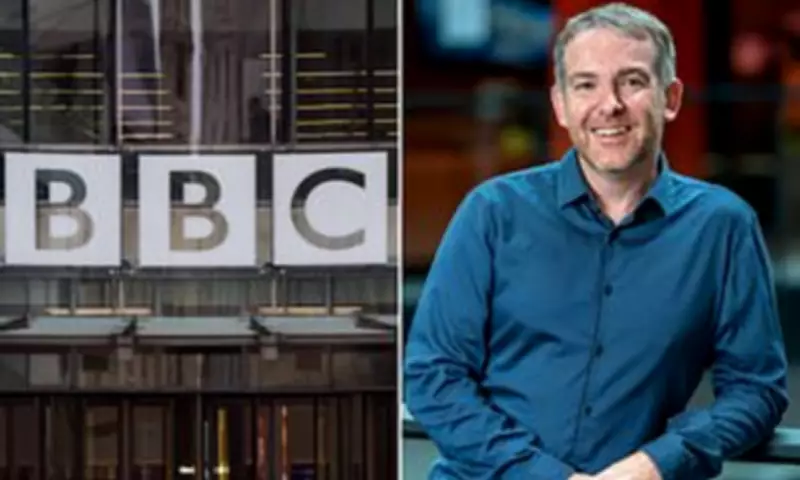
BBC Faces Scathing Review Over 'Middle Class' and 'London-Centric' Focus
A new independent report has delivered a damning assessment of the BBC, claiming the broadcaster is still widely perceived as leaning towards the 'middle class' and being excessively 'London-centric'. The review, commissioned by the BBC board, urges the corporation to significantly improve how it connects with working-class audiences and those living outside London and the South of England.
Perception Gap Among Key Demographics
The investigation found that perceptions of the BBC are notably lower among these demographic groups, who are also less likely to feel satisfied with how they are represented and portrayed in its content. The report, authored by former Bafta chairwoman Anne Morrison and independent media consultant Chris Banatvala, states that power within the organisation remains too concentrated in London.
'Our audience research found that the perception of the BBC remains that it is skewed towards the middle class and is London-centric - and that the power in the organisation still lies in the UK capital,' the report said. 'We found that this has consequences for portrayal and representation.'

Call for Decentralisation and Authentic Representation
The review strongly recommends relocating more key decision-makers outside the capital to ensure programming better reflects the entire United Kingdom. It argues that genuine production, deeply rooted in specific locations and created by people with intimate understanding of those areas, is fundamental to achieving on-air authenticity.
'Genuine production, rooted in the location, made by people who understand it in depth was described to us as fundamental to on-air authenticity. We agree,' the report emphasised.
Specific Recommendations for Structural Change
To facilitate these changes, the report proposes that senior editorial staff should be based outside London. It further suggests that the BBC would represent the whole country more effectively if 'at least half' of all senior television genre commissioners were 'rooted in the location' where audiences are currently more disengaged from its content.
'The genres which bear most strongly on UK portrayal and representation and have the greatest impacts for audiences would be the most appropriate to move to these locations,' the review continued. 'We also believe that network radio not based in Salford should move elements of its commissioning out of London over time.'
Persistent Gender Imbalance Highlighted
The review also noted that, despite some improvement, gender imbalance persists within BBC programming. It found there are still more men than women featured in BBC news, nations, and factual programming, with this disparity being particularly prevalent among older age groups.
'We would like to see a renewed effort to achieve gender balance in content for contributors and reporters in news and factual programmes,' the report stated. 'In addition, we found that male presenters significantly outnumber female presenters in the older age groups.'
The report criticised the BBC for not fully utilising the data it holds to monitor this issue effectively, asserting that women on air ought to be able to have as long a career at the BBC as their male counterparts.
BBC Leadership Responds to Findings
In response to the review, BBC chairman Samir Shah acknowledged the challenges outlined. 'It is vital the BBC authentically reflects the lives of all the communities, classes and cultures across the UK,' he said. 'Decision-making must happen closer to audiences if we want to ensure that everyone feels represented and that the BBC remains an engine for growth within the creative industries.'
Shah confirmed that the board welcomes the report's challenges and the actions the BBC Executive intends to take in response. The BBC Executive has committed to several measures, including:

- Strengthening how the BBC measures portrayal and representation of different audiences in its output.
- Systematically reviewing upcoming content plans to ensure underrepresented audience groups are reflected authentically.
- Utilising existing and new data to ensure social background, age, and geographical representation inform the development of on-screen and on-air roles.
The report concluded that BBC's key decision makers 'must understand the audience and what will appeal to them - whoever and wherever they are'. It recommended that bosses devise a 'new set of diversity characteristics specifically for measuring portrayal and representation which would include class and geography.'





