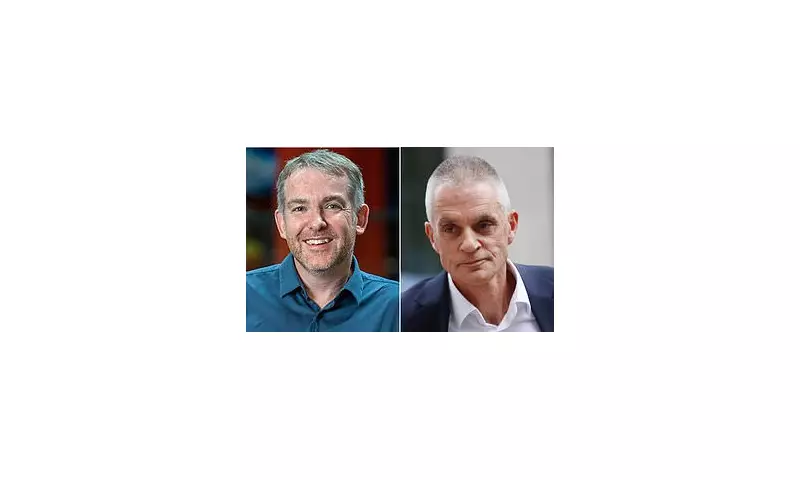
The BBC has confirmed Rhodri Talfan Davies as its new interim director-general, stepping into the role following the resignation of Tim Davie in the wake of the Panorama controversy involving a misleading edit of Donald Trump's speech. The appointment comes as the corporation battles a multi-billion dollar lawsuit from the former US president.
A Leadership Transition Amid Legal Turmoil
Rhodri Talfan Davies, currently the BBC's director of nations, will assume the interim director-general position on April 3, having joined the BBC board as an executive director from February 1. The 54-year-old executive, who also sits on the BBC's executive committee, will lead the organisation through a period of significant challenge and scrutiny.
His appointment follows Tim Davie's resignation in November, which came after allegations emerged that the BBC had selectively edited sections of Donald Trump's January 6 speech for a Panorama documentary. The programme, titled Trump: A Second Chance?, was broadcast just one week before the 2024 US presidential election.

The Controversial Edit and Legal Fallout
The controversy centres on a clip that appeared to show Mr Trump encouraging supporters during the 2021 Capitol riots, with the former president saying: 'We're going to walk down to the Capitol… and I'll be there with you. And we fight. We fight like hell.' However, this message was actually formed from two separate clips taken approximately 54 minutes apart, which were spliced together for the documentary.
Following the broadcast, Donald Trump filed a $10 billion lawsuit in a Florida court last month, accusing the BBC of defamation and violating trade practices. The lawsuit seeks $5 billion on each count. While the BBC has apologised to Mr Trump and withdrawn the report, the corporation has refused to pay any compensation, prompting the legal action.
In response, the BBC has announced it will fight to have the lawsuit dismissed. The corporation's stance has drawn criticism from the White House, with press secretary Karoline Leavitt previously describing the edited clip as '100 per cent fake news'.
Leadership Changes and Corporate Response
The Panorama controversy has triggered significant leadership changes at the BBC. Alongside Tim Davie's departure, Deborah Turness, the CEO of BBC News, also resigned following criticism that the documentary misled viewers. In her resignation statement, Ms Turness acknowledged that 'the buck stops with me' and admitted the controversy had 'caused damage' to the BBC, though she denied claims of institutional bias within the organisation.
BBC chair Samir Shah addressed staff regarding the leadership transition, describing Rhodri Talfan Davies as 'an outstanding leader who brings deep editorial experience and a passionate commitment to the power of public service broadcasting'. Mr Shah added that Davies would work to 'reach and represent audiences across all parts of the UK'.
Regarding Tim Davie's departure, Mr Shah noted: 'There will be a time to celebrate Tim and thank him for his extraordinary contribution to the BBC nearer his departure date. Until then, Tim continues to lead the corporation through this critical period.'
Davies' Background and Responsibilities
As director of nations since 2021, Rhodri Talfan Davies has overseen the BBC's work serving audiences across England, Scotland, Wales, and Northern Ireland. The grandson of poet and literary critic Aneirin Talfan Davies, he also leads the BBC's Across The UK strategy to decentralise the organisation and manages the corporation's deployment of generative artificial intelligence technology.
According to BBC records, Mr Davies was paid between £305,000 and £309,999 annually as of last July. During his interim tenure, Rhuanedd Richards will continue as interim nations director while Davies serves in the interim director-general role.
Political Reactions and Ongoing Challenges
The controversy has drawn reactions from political figures on both sides of the Atlantic. Donald Trump described Tim Davie as 'very dishonest' and praised his departure in a post on his Truth Social platform, writing: 'These are very dishonest people who tried to step on the scales of a Presidential Election.'

Meanwhile, the BBC faces ongoing challenges as it prepares its response to the government's consultation on the future of the BBC charter. The corporation has confirmed that the process to appoint a permanent director-general is underway, though no timeline has been specified for this appointment.
In his resignation statement, Tim Davie acknowledged: 'Like all public organisations, the BBC is not perfect, and we must always be open, transparent and accountable. While not being the only reason, the current debate around BBC News has understandably contributed to my decision.' He added that 'there have been some mistakes made and as director-general I have to take ultimate responsibility'.
The leadership transition occurs at a critical juncture for the BBC, as it navigates both the legal challenges from Donald Trump and broader questions about its future direction and funding model in an increasingly competitive media landscape.