Suella Braverman Joins Reform UK in Major Political Realignment
Nigel Farage has intensified the fragmentation of Britain's political right as former Conservative Home Secretary Suella Braverman became the latest high-profile defector to Reform UK. The 45-year-old MP launched a scathing attack on her former party, claiming it had been overtaken by centrist 'wets' who left her with no alternative but to switch allegiance.
'Politically Homeless' MP Finds New Home with Reform
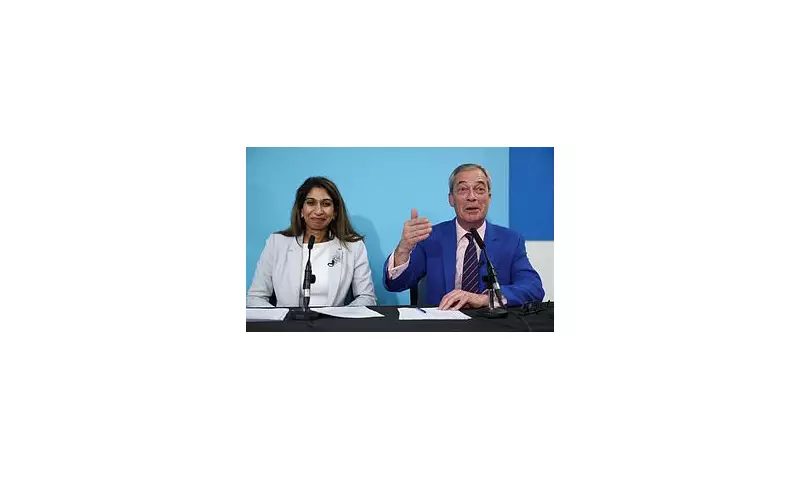
At a press conference in London, Braverman declared she had been 'politically homeless' for several years, asserting that the Conservative Party had transformed into a 'social democrat, left-leaning party' that no longer represented her values. She stood alongside Reform leader Nigel Farage as she announced her resignation from the Conservative whip and party membership after three decades of affiliation.
The former home secretary accused her old party of engaging in 'performative conservatism' in public while failing to support her right-wing agenda behind closed doors. She specifically cited being sidelined by Business Secretary Kemi Badenoch as a key factor in her decision to leave.

Growing Exodus from Conservative Ranks
Braverman's defection follows closely on the heels of former immigration minister Robert Jenrick and shadow foreign minister Andrew Rosindell, who both abandoned the Conservatives for Reform earlier this month. This brings Reform's parliamentary representation to eight sitting MPs, marking a significant expansion of their Westminster presence.
Despite her high-profile move, Braverman revealed she would not trigger a by-election, instead choosing to represent her Havant and Waterlooville constituency in Hampshire under her new party banner.
Controversial History and Policy Positions
The defection comes despite Reform previously expressing reservations about Braverman joining their ranks. As recently as last summer, party sources described her as 'not a team player' and 'just too disruptive'. Meanwhile, the Conservative Party faced embarrassment after a spokesman suggested Braverman was suffering from mental health problems following her departure, a statement they were forced to retract.
Braverman used the announcement to reiterate her hardline stance on immigration and the European Convention on Human Rights (ECHR), claiming her advocacy for leaving the ECHR while serving as home secretary led to her being 'sacked' and 'punished' for 'telling the truth'.
'I'm calling time on Tory betrayal. I'm calling time on Tory lies. I'm calling time on a party that keeps making promises with zero intention of keeping them,' she declared passionately.
Farage Sets Deadline for Further Defections
Nigel Farage has established May 7 as a cut-off point for admitting current and former MPs to Reform, coinciding with crucial local elections where the party hopes to make substantial gains. This strategic timeline suggests further defections may be imminent as the political landscape continues to shift.
Speaking at the same event, Farage echoed Braverman's critique of contemporary Britain, stating: 'I don't think until you're prepared to accept the depths to which we've sunk and are sinking fast – economically, socially, societally – unless you understand and accept those things, that it's impossible to get into the mindset to be radical enough to change them.'
Political Background and Personal Journey
Braverman's political journey reflects significant ideological shifts within British conservatism. The daughter of immigrants who arrived in Britain from East Africa in the 1960s, she rose through Conservative ranks to become one of the most right-wing home secretaries in modern history.
Her tenure was marked by controversial positions on immigration, multiculturalism, and trans rights, alongside her staunch Brexit advocacy. Despite previous Conservative leadership ambitions, she now joins a growing number of politicians who believe their prospects are better served outside the traditional party structure.

The defection occurs against a backdrop of increasing calls for an electoral pact between Reform and the Conservatives to challenge Labour's dominance. However, Braverman's move suggests deepening divisions rather than reconciliation within Britain's political right.