Andy Burnham's Potential Westminster Return Ignites Labour Leadership Debate
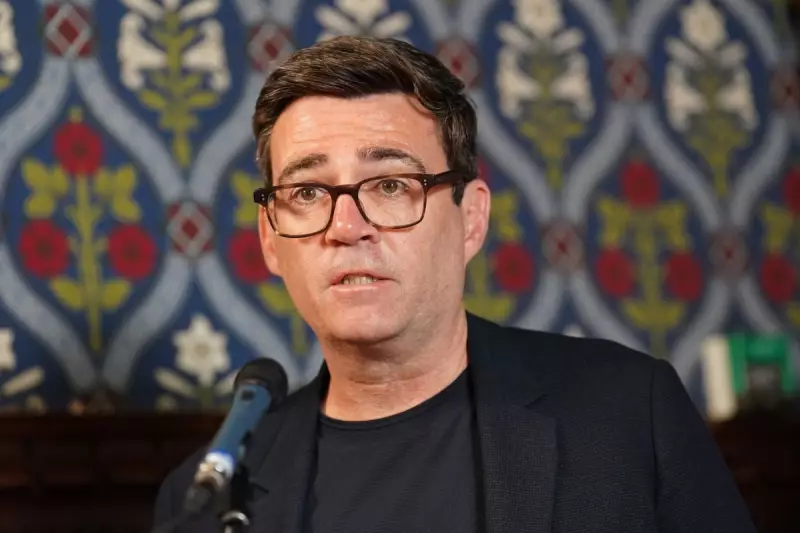
The political landscape within the Labour Party has been significantly stirred by the possibility of Andy Burnham, the so-called 'King of the North', making a dramatic return to Westminster. With Keir Starmer's leadership facing persistent challenges in opinion polls and the growing threat from Reform UK, Labour finds itself at a critical juncture. The upcoming by-election in the traditionally safe Labour seat of Gorton, situated firmly within Burnham's Greater Manchester domain, has opened a fascinating window of opportunity that could reshape the party's future direction.
From Manchester Mayor to Potential Prime Minister
Andy Burnham's political journey has been nothing short of remarkable. Having served as a minister under both Tony Blair and Gordon Brown, Burnham has undergone a political rebirth as Mayor of Greater Manchester, transforming himself into a powerful regional voice. The historical precedent for such transitions exists internationally, with figures like Boris Johnson demonstrating how a successful mayoral tenure in London could pave the way to national leadership. The question now dominating political circles is whether Burnham can replicate this trajectory from his Manchester headquarters to the doorstep of 10 Downing Street.
Burnham currently enjoys marginally better approval ratings than the Labour Party nationally, bolstering his credentials as a potential leadership contender. This represents what would be his third attempt at securing the Labour leadership, following previous unsuccessful bids in 2010 and 2015. While such a proposition seemed improbable during Starmer's period of apparent dominance, the political climate has shifted dramatically. Last autumn's party conference revealed growing anxieties within Labour ranks, with some members exhibiting what might be termed 'the Tory disease' – a belief that changing leaders could solve deeper structural problems.

The Complicated Dynamics of Leadership Ambition
Burnham's approach to leadership speculation has been characteristically cautious. He has consistently avoided giving definitive answers about his intentions, appearing torn between his natural inclination toward straightforward communication and the political realities of timing and opportunity. His political platform, often described as 'Manchesterism' or representing the 'soft left', has remained somewhat amorphous, lacking the concrete policy substance that might have generated greater momentum for his leadership aspirations.
The recent victory of Lucy Powell over Starmer ally Bridgette Philipson in the deputy leadership contest indicated the membership's preference for a leftward shift, though this has yet to translate into significant policy changes. Meanwhile, Starmer's strong performance in Liverpool temporarily quelled leadership speculation, demonstrating that while the Prime Minister faces challenges, his potential rivals remain divided and unable to present a compelling alternative vision.
Historical Context and Political Evolution
Burnham's political career has been marked by both resilience and setbacks. His defeat to Jeremy Corbyn in the 2015 leadership contest was particularly bruising, with Burnham securing just 19 percent of the vote compared to Corbyn's 59 percent. This followed an earlier disappointing performance in the 2010 leadership election, where he finished with only 9 percent support. These experiences contributed to what Burnham himself described as falling 'out of love with Westminster', leading to his successful pivot toward regional politics.
As Mayor of Greater Manchester, Burnham has undergone a noticeable transformation. Shedding the conventional business attire that never seemed entirely comfortable, he has embraced a more contemporary Mancunian aesthetic while developing a distinctive political voice. His impassioned speeches about regional inequality and his confrontations with central government over funding have resonated strongly, particularly his criticism of what he termed 'punishing negotiations' that were 'grinding communities down'.

Building a Northern Power Base
Burnham has skillfully positioned himself as the authentic voice of Northern England, carefully cultivating an image that connects with what he describes as 'people too often forgotten by those in power'. He has forged fragile cross-party alliances at the regional level while maintaining a distinct political identity. His approach mirrors that of other successful city mayors who have used their platforms to build national profiles, with Sadiq Khan representing a comparable figure in London politics.
The mayor has pursued practical achievements alongside his political positioning, including innovations in integrated public transport inspired by London's system and sustained efforts to combat homelessness in Greater Manchester. His response to the Manchester Arena terror attack demonstrated leadership under pressure, while his ongoing battles with Whitehall over funding and devolution have kept him in the national spotlight.
The Road Ahead and Political Calculations
At 55 years old, Burnham remains younger than both Keir Starmer and Nigel Farage, with whom he shares a certain perceived authenticity that resonates with voters beyond traditional political circles. His establishment of the 'Mainstream' grouping for 'radical realists' represents a calculated effort to build an institutional support base, while his careful navigation of leadership questions suggests strategic patience rather than indecision.
The fundamental question remains whether Burnham represents a genuine alternative to Starmer's leadership or simply another potential contender in a divided field. Critics point to his shifting positions on issues like Brexit and question whether he has developed sufficiently detailed policies to address the nation's most pressing challenges, from economic growth and public finances to immigration and international relations.
As the Gorton by-election approaches, Burnham faces what could represent his final opportunity to return to Westminster and mount a serious leadership challenge. The outcome will not only determine his personal political future but could significantly influence Labour's direction as the party seeks to address its polling difficulties and present a compelling alternative to the current government.