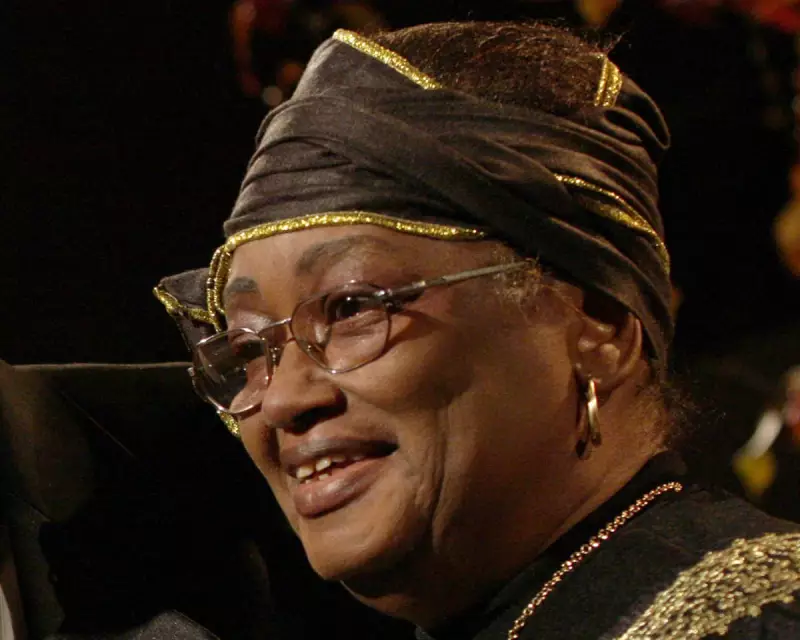
Claudette Colvin: The Unsung Heroine of the Civil Rights Movement
The passing of Claudette Colvin at the age of 86 marks the loss of a pivotal yet often overlooked figure in American history. Her courageous act of defiance against segregation on Alabama's buses in 1955 laid crucial groundwork for the civil rights movement, though full recognition eluded her for decades.
A Teenager's Defiance That Changed History
On March 2, 1955, fifteen-year-old Claudette Colvin was riding a bus home from school in Montgomery, Alabama. The vehicle operated under strict segregation laws, with front seats reserved for white passengers and rear sections designated for black people. Colvin found herself in a "neutral" zone, from which the driver could order black passengers to move as the bus filled up.
When a white woman demanded her seat, Colvin refused to comply. The driver called the police, leading to her arrest. She subsequently appeared before a juvenile court, where charges of violating segregation laws and disturbing the peace were eventually dropped on appeal. However, her conviction for assaulting a police officer was upheld, casting a long shadow over her future.

The Rosa Parks Connection and Legal Battle
Nine months after Colvin's protest, on December 1, 1955, Rosa Parks famously refused to give up her seat, sparking the Montgomery Bus Boycott. Parks' conviction and ten-dollar fine galvanised the black community, attracting national attention and the support of Reverend Martin Luther King Jr.
In February 1956, civil rights attorney Fred Gray filed suit in federal district court. Colvin, by then sixteen and eight months pregnant, became one of four plaintiffs testifying in Browder v. Gayle. The district court ruled 2-1 that Montgomery's segregation on public transport violated the equal protection clause of the 14th Amendment, a decision upheld by the Supreme Court.
This landmark ruling brought the bus boycott to an end. However, Parks—a respectable housewife perceived as less threatening to white people—became the public face of the movement, rather than a poor black teenager with a child. Colvin's mother reportedly told her: "Let Rosa be the one. White people aren't going to bother Rosa, her skin is lighter than yours and they like her."
Early Life and Personal Struggles
Claudette was born in Birmingham, Alabama, to Mary Jane Gadson and CP Austin. Her father abandoned the family while she was still an infant. Unable to support Claudette and her younger sister Delphine, her mother sent them to live with her uncle, Quentiss Colvin, and his wife Mary Ann in Pine Level, Montgomery County. Claudette took the Colvins' name, and the family later moved to King Hill, a black section of Montgomery.
She began her secondary education at the segregated Booker T. Washington High School but struggled emotionally following Delphine's death from polio. Despite being a good student and active in the NAACP youth council—where Rosa Parks served as a mentor—Colvin felt distanced from her peers.
Life After the Protest
Her son Raymond was born in March 1956, but with a juvenile conviction on her record and a reputation as a troublemaker, Colvin found few opportunities in Montgomery. Two years later, she moved to New York, living with her cousin Velma in the Bronx. She worked in domestic service and gave birth to a second son, Randy, in 1960.
In 1969, she began working as a nurse's aide in a Manhattan care home, retiring as a nurse thirty-five years later. Throughout this period, recognition of her role in civil rights history came slowly, as the movement was largely driven by men, as was the subsequent black power era.
Belated Recognition and Legacy
Poet Rita Dove included a poem, Claudette Colvin Goes to Work, in her 1999 collection On the Bus With Rosa Parks. Philip Hoose's book, Claudette Colvin: Twice Towards Justice, which detailed her experiences, won a National Book Award in 2009.

In 2005, when Troy State University in Montgomery opened a Rosa Parks museum, Colvin declined an invitation to appear in a video and tell her story. She stated: "I feel very, very proud of what I did. I do feel like what I did was a spark and it caught on … I'm not disappointed. Let the people know Rosa Parks was the right person for the boycott. But also let them know that the attorneys took four other women to the Supreme Court to challenge the law that led to the end of segregation."
In 2010, the street in Montgomery where the Colvins lived was renamed Claudette Colvin Drive. When a statue of Parks was dedicated in Montgomery in 2019, Colvin and her three fellow plaintiffs in Browder v. Gayle were honoured with granite markers nearby. In December 2021, a Montgomery judge ordered that Colvin's juvenile record be expunged; County District Attorney Daryl Bailey called her 1955 actions "conscientious, not criminal." Colvin remarked: "I guess you can say that now I am no longer a juvenile delinquent."
A Lasting Impact
In a 1998 interview with writer Paul Hendrickson, Colvin perfectly summarised her moment in history: "I was tired of hoping for justice. When the moment came I was ready." Her courage as a teenager helped dismantle institutionalised segregation, though her story remained in the shadows for too long.
Claudette Colvin is survived by her son Randy. Her first son, Raymond, died of a heart attack in 1993. Her legacy as a civil rights activist and nurse endures, reminding us that history often celebrates some while overlooking others who were equally instrumental in the fight for equality.