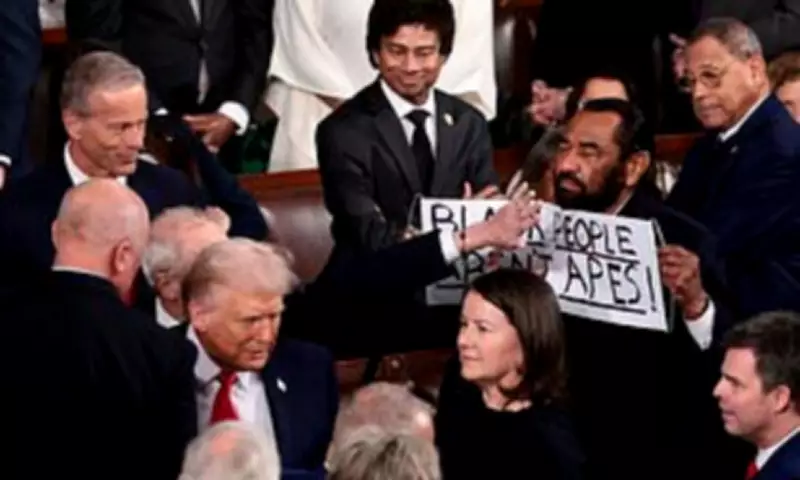
Democrat Al Green Ejected from Trump's State of the Union Address Over Protest Sign
Texas Democrat Al Green was forcibly removed from Donald Trump's State of the Union address on Tuesday evening after he held up a placard in a direct protest against the President. The incident occurred during the high-profile speech, causing a significant disruption in the chamber and highlighting the deep political divisions in Washington.
Controversial Sign References Trump's AI Video
Green's sign read, 'Black people aren't apes,' which was a pointed reference to a recent social media post by Donald Trump. In that post, Trump shared an AI-generated video that depicted former President Barack Obama and First Lady Michelle Obama as primates, sparking widespread outrage and accusations of racism.
The protest was a bold move by Green, who has been a vocal critic of Trump's rhetoric and policies. By bringing the sign into the State of the Union, he aimed to draw national attention to what he views as the President's inflammatory and racially charged behaviour.

Republican Senators Swiftly Intervene
As soon as Green raised the placard, Republican Senators Markwayne Mullin and Roger Marshall acted quickly. They walked over to Green's location and positioned themselves directly in front of him, effectively blocking the sign from view. Their intervention was immediate and physical, underscoring the tense atmosphere in the room.
This action by the GOP senators prevented the sign from being visible to television cameras and other attendees, but it did not stop the ensuing commotion. Security personnel were called, and Green was subsequently ejected from the address for violating protocol and causing a disturbance.
Broader Implications and Reactions
The ejection of Al Green from the State of the Union has ignited a fierce debate about free speech, political protest, and racial sensitivity in American politics. Supporters of Green argue that his protest was a necessary stand against racism, while critics claim it was an inappropriate disruption of a formal governmental event.
This incident also raises questions about the use of AI in political discourse, as Trump's video has been condemned by many as a dangerous escalation in digital misinformation and racial stereotyping. The fallout from both the video and Green's protest is likely to influence ongoing discussions about ethics in technology and political accountability.
In summary, the State of the Union address was marred by this dramatic confrontation, reflecting the ongoing partisan strife and cultural clashes that define the current political landscape. Al Green's ejection serves as a stark reminder of the challenges facing democracy in an era of deep polarization and technological manipulation.