Democrat Senator Questions Trump's Mental Capacity Over Iran Strikes
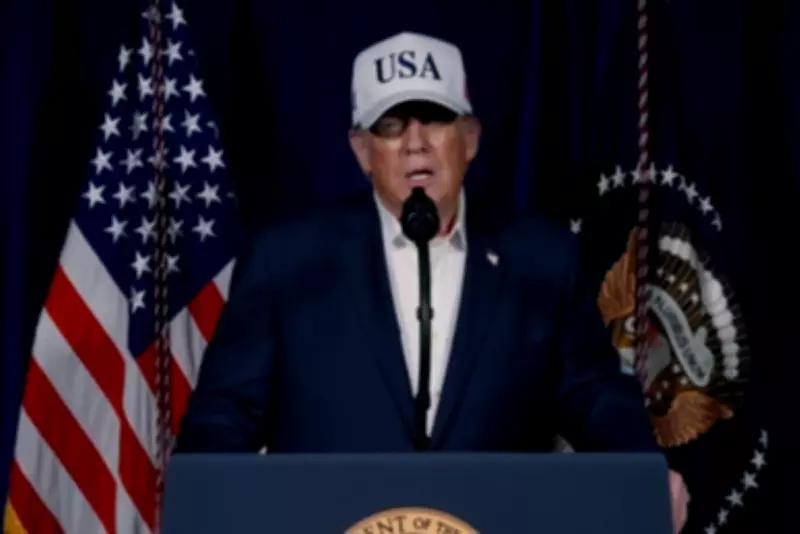
A senior Democrat has suggested that former President Donald Trump may be too "mentally incapacitated" to understand the harm of his policy on Iran, following coordinated airstrikes by the United States and Israel. The comments came after Trump confirmed American involvement in military strikes against Iran in an eight-minute video posted on Truth Social early Saturday.
Kaine's Scathing Critique of Trump's Iran Policy
Senator Tim Kaine, a member of the Senate Armed Services and Foreign Relations Committees, issued a statement questioning Trump's judgment and mental capacity. "Has President Trump learned nothing from decades of U.S. meddling in Iran and forever wars in the Middle East?" Kaine asked. "Is he too mentally incapacitated to realize that we had a diplomatic agreement with Iran that was keeping its nuclear program in check, until he ripped it up during his first term?"
Kaine was referring specifically to the Joint Comprehensive Plan of Action (JCPOA), a landmark nuclear agreement with Iran that was signed under former President Barack Obama in 2015. The agreement, which was backed by the five permanent members of the United Nations Security Council and the European Union, saw Iran agree to limit its capability to stockpile and enrich uranium while allowing inspections of its nuclear sites in exchange for significant sanctions relief.

Trump's Withdrawal from Nuclear Agreement
Despite international support for the JCPOA, Trump called the agreement "horrible" and unilaterally withdrew the United States from it in May 2018. Critics of the deal had pointed out that some clauses would sunset after 10 or 15 years and argued it did nothing to curb Iran's missile program. However, supporters maintained it represented the best diplomatic solution to prevent Iran from developing nuclear weapons.
Kaine expanded on his criticism, stating: "For months, I have raised hell about the fact that the American people want lower prices, not more war—especially wars that aren't authorized by Congress, as required by the Constitution, and don't have a clear objective."
Trump's Announcement of Military Operations
In his Truth Social video announcement, Trump stated that "major combat operations" had begun against Iran. "Our objective is to defend the American people by eliminating imminent threats from the Iranian regime," the president declared. He added that Tehran's "menacing activities directly endanger the United States, our troops, our bases overseas, and our allies throughout the world" and reiterated that the regime must never produce nuclear weapons.
"For 47 years," Trump continued, "the Iranian regime has chanted 'Death to America' and waged an unending campaign of bloodshed… It's been mass terror, and we're not going to take it any longer." The president acknowledged that "the lives of courageous American heroes may be lost" and that "we may have casualties," adding that "that often happens in war."
Bipartisan Concerns Over Constitutional Authority
Kaine's concerns found some bipartisan support, with Republican Representative Thomas Massie writing: "I am opposed to this War. This is not 'America First.' When Congress reconvenes, I will work with Representative Ro Khanna to force a Congressional vote on war with Iran." Massie emphasized that "the Constitution requires a vote, and your Representative needs to be on record as opposing or supporting this war."
Kaine himself expressed grave concerns about the strikes, calling them "a colossal mistake" and stating: "I pray they do not cost our sons and daughters in uniform and at embassies throughout the region their lives… Every single Senator needs to go on the record about this dangerous, unnecessary, and idiotic action."
Support for Trump's Actions
Despite these criticisms, some lawmakers backed the president's decision. Senator Lindsey Graham, a close ally of Trump and longstanding foreign policy hawk, wrote that Trump's speech would "go down in history as the catalyst for the most historic change in the Middle East in a thousand years."

"I am confident this operation will be successful and the liberation of the long suffering people of Iran is at hand," Graham asserted. "From their liberation the path toward peace and prosperity for the region and throughout the world will be long and wide."
International Involvement and Regional Impact
Israeli Prime Minister Benjamin Netanyahu issued a similar statement confirming Tel Aviv's involvement in the operations. Reports indicated explosions had been seen and heard in Tehran and surrounding areas following the announcement of the strikes.
The controversy highlights deep divisions within American politics regarding foreign policy in the Middle East, particularly concerning Iran. The debate centers on whether military action represents an appropriate response to perceived threats or whether diplomatic solutions should be prioritized to avoid further regional instability and potential loss of American lives.