Senate Democrats Negotiate Critical Deal to Prevent Government Shutdown
In a high-stakes political manoeuvre, Senate Democrats are actively considering a strategic agreement designed to head off a looming partial government shutdown. This potential deal would provide crucial breathing room to negotiate substantial reforms to immigration enforcement operations, a move prompted by the tragic killings of US citizens Alex Pretti and Renee Good in Minneapolis.
Ultimatum on Immigration Enforcement Reforms
The negotiations, confirmed by a Senate aide to the Guardian, follow intense demands from Senate Democrats for sweeping changes to federal agents involved in former President Donald Trump's mass deportation campaign. Their proposed reforms include a prohibition on agents wearing masks during operations, the imposition of a strict code of conduct, and the establishment of independent investigations into any violations.
This Democratic ultimatum has directly collided with delicate Senate negotiations aimed at passing six essential spending bills. One of these critical bills funds the Department of Homeland Security, which oversees Immigration and Customs Enforcement. Without passage, a partial government shutdown would commence after Friday, creating significant disruption across federal operations.

Proposed Short-Term Funding Solution
While discussions remain fluid, the potential agreement would see Democrats voting for a short-term funding measure specifically for the DHS. This temporary solution would grant the party valuable time to negotiate their proposed immigration enforcement reforms while allowing passage of the five other spending bills. These additional bills authorise funding through September for vital departments including Labor, Defense, and Health and Human Services.
Republican Senate Majority Leader John Thune has scheduled a key procedural vote on all six bills for Thursday morning. Democrats had previously signalled their intention to vote against this package, insisting that the DHS funding bill must be considered separately from the other five pieces of legislation.
Schumer's Strong Stance on Immigration Reform
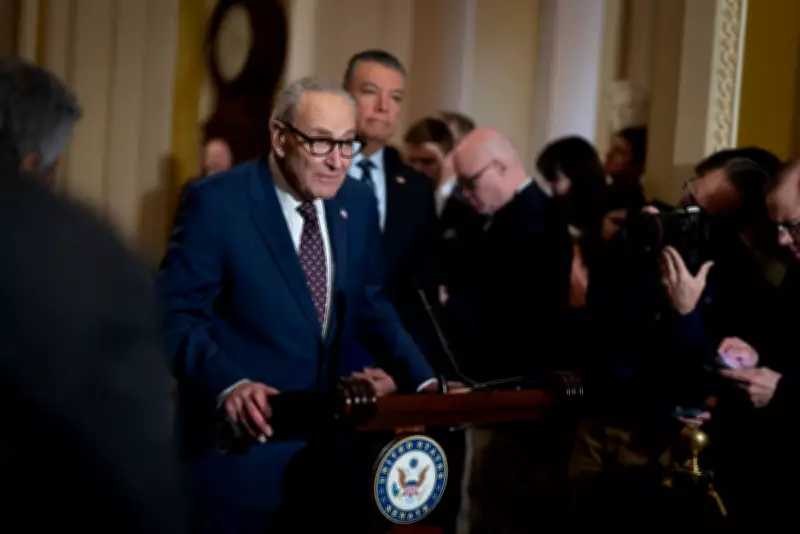
Senate Majority Leader Chuck Schumer delivered a forceful statement on Thursday, declaring, "Republicans in Congress cannot allow this violent status quo to continue. They must work with Democrats on legislation, real legislation, strong legislation to rein ICE in."
Schumer emphasised Democratic readiness to act, stating, "Democrats are ready to pass five bipartisan funding bills in Senate, we're ready to pass them today. We're ready to fund 96% of the federal government today, but the DHS bill still needs a lot of work."
Legislative Hurdles and Bipartisan Challenges
Any spending legislation requires at least some bipartisan support to clear the Senate's 60-vote threshold for advancement. The House of Representatives approved all six bills last week before entering recess. Should the Senate pass a short-term spending measure for DHS, it would still need approval from the House, which doesn't return until Monday. This timeline likely guarantees at least a weekend shutdown for the department.
A White House official indicated openness to the Democrats' demands on Thursday, stating the president "wants the government to remain open, and the administration has been working with both parties to ensure the American people don't have to endure another shutdown."
Republican Response and Administration Position
Thune adopted a conciliatory tone toward Democrats on Wednesday, telling reporters, "We're anxious to hear what their demands are, what their requests are, what their asks are. I think the administration is willing to sit down with them and have a discussion, perhaps a negotiation about how do we move forward."
At a Minneapolis press conference on Thursday morning, Trump's border czar Tom Homan acknowledged that the administration has "recognized that certain improvements could and should be made" in ongoing immigration enforcement operations in Minnesota. However, he provided no specifics about what these improvements might entail or when they would be implemented.

Homan redirected responsibility to Congress, stating, "For the people out there don't like what ICE is doing, if you want certain laws reformed, then take it up with Congress. They're enforcing laws enacted by Congress and signed by president. The same laws have been on the books for the last six presidents I worked for."