Democrats Rally Behind Universal Childcare as a Defining Political Issue
In a notable transformation, Democratic candidates across the United States are now championing universal childcare as a cornerstone of their platforms, signalling a strategic pivot that could reshape electoral dynamics. This shift represents a departure from traditional party stances, with figures from various wings of the party endorsing the policy as essential for addressing a national crisis.
A Growing Consensus on Childcare as a Public Good
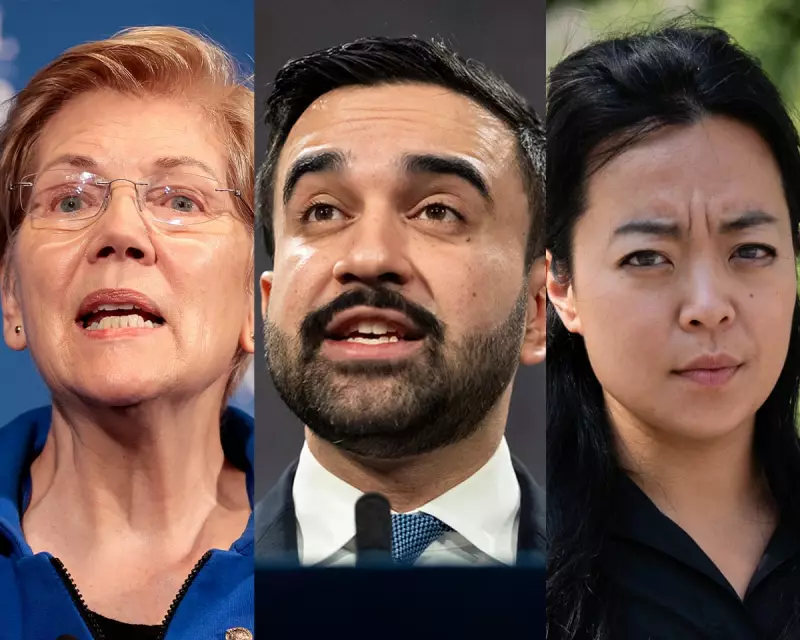
Francesca Hong, a Democratic representative and gubernatorial candidate in Wisconsin, exemplifies this trend. Initially, childcare was not a focal point in her 2020 state assembly campaign, but she now advocates for a universal childcare bill as a priority if elected governor. Hong describes the situation as a "childcare catastrophe," emphasising that universal measures are necessary to meet the scale of the crisis and ensure affordability across the state.
She is joined by other Democratic contenders, such as Jason Esteves in Georgia, Jordan Wood in Maine, and Janeese Lewis George in Washington DC, who have all embraced universal childcare in their campaigns. Esteves, a former Atlanta school board chair, frames childcare as an issue affecting all families, not just specific groups, highlighting its role in economic stability and child development.

Historical Context and the Evolution of Democratic Policy
The Democratic party's journey towards universal childcare has been marked by significant historical hurdles. In 1971, a bipartisan Comprehensive Child Development Act was vetoed by President Richard Nixon, who criticised it for promoting communal child-rearing over family-centred approaches. This event, along with fierce opposition in the 1970s, made the topic politically toxic for decades, leading Democrats to focus on targeted aid for low-income families and employer incentives instead.
For years, the dominant proposal was the Child Care For Working Families Act, introduced in 2017, which offered sliding-scale support but capped eligibility based on income. However, the Covid-19 pandemic acted as a catalyst, bringing childcare issues to the forefront as media coverage shifted from scandals to policy discussions. Pollster Celinda Lake notes that the pandemic broadened concern to include small businesses, employers, and grandparents, making childcare integral to economic functionality.
Key Drivers and Recent Developments
Advocacy from grassroots organisations, particularly those representing Latino parents and childcare educators, has been instrumental in pushing for universal policies. In states like New Mexico and New York, years of organising led to significant victories, such as New Mexico removing income limits on free childcare and New York announcing a pathway to universal access.
High-profile endorsements have further solidified the shift. James Carville, a veteran strategist, argued in a New York Times op-ed that universal childcare should be a public good, while David Plouffe, an adviser to Kamala Harris, called for its inclusion in the party's 2028 platform. Senator Elizabeth Warren's 2019 childcare plan, which proposed free care for families under certain income thresholds, also helped mainstream the idea.
Challenges and Future Directions
Despite growing support, questions remain about the definition and implementation of universal childcare. Policies vary, with New Mexico excluding families where parents are not working or in school, and debates ongoing over inclusion of home-based providers and financing mechanisms. Moderate and progressive factions differ on the speed of implementation and whether care should be entirely free.
Nevertheless, shared principles are emerging, including free care for most families and investment in the childcare workforce to improve quality and supply. As universal childcare becomes a mainstream Democratic position, it may avoid the polarisation seen in other issues, given bipartisan bills in Congress and widespread recognition of its importance. Ultimately, this evolution signals a move away from welfare-based frameworks towards a more inclusive approach that benefits all families.