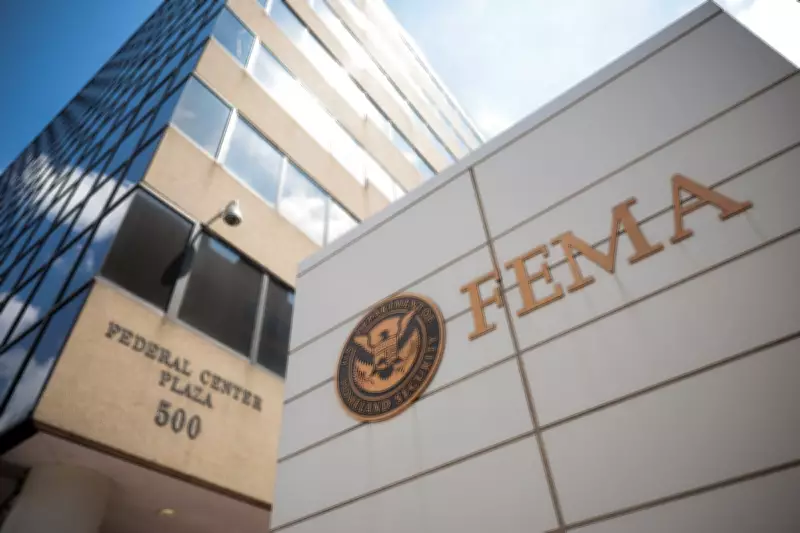
The Department of Homeland Security has implemented a near-total travel freeze for its employees as a result of the ongoing partial government shutdown, a move that could significantly hamper disaster relief operations conducted by the Federal Emergency Management Agency. According to a report from The Washington Post, this directive impacts hundreds of FEMA personnel who routinely travel to and from areas affected by natural disasters.
Funding Lapse Triggers Unprecedented Travel Restrictions
Over the weekend, a partial government shutdown commenced after lawmakers failed to agree on funding allocations for the DHS. In response, the agency has instructed its staff to cease nearly all travel activities. Officials familiar with the situation told The Washington Post that it is highly unusual for funding disputes to interfere with disaster-related missions.
"DHS imposing restrictions on FEMA's ability to deploy our response and recovery workforce slows us down and limits our effectiveness in meeting the needs of impacted states and communities," an official working in a region battered by a severe winter storm explained to the outlet.

Essential Travel Requires Stringent Justification
FEMA officials have been directed to submit detailed justifications for any travel deemed necessary during this funding lapse, as reported by The Washington Post. They must explicitly state whether the travel qualifies as "mission essential," which pertains directly to the "safety of human life or protection of property."
This travel pause is expected to affect other critical FEMA functions, such as flood-mapping meetings. Delays in updating flood maps could have serious repercussions. "This directly impacts people waiting on new maps for various reasons," an official noted in the report.
FEMA Assures Continued Disaster Response Amid Limitations
A FEMA spokesperson clarified to The Independent that "travel related to active disasters is not canceled." The spokesperson elaborated, "Due to the lapse in federal funding caused by congressional Democrats, DHS issued guidance restricting travel and certain operational activities. These limitations are necessary to comply with federal law, not a choice. FEMA continues to coordinate closely with DHS to ensure effective disaster response under these circumstances."
The spokesperson emphasized that FEMA will prioritize "life safety and property protection" throughout the funding lapse and remains prepared to "resume full operations as soon as Congress restores funding."
"FEMA continues mission-essential operations for active disasters, including immediate response and critical survivor assistance. While some non-essential activities will be paused or scaled back, FEMA remains committed to supporting communities and responding to incidents like Hurricane Helene," the spokesperson added.
Background: Legal Challenges and Proposed Workforce Cuts
This development follows a lawsuit filed last month alleging that President Donald Trump's administration intends to reduce FEMA's workforce by 50 percent. A DHS spokesperson previously stated that the agency is "confident that our staffing decisions are consistent with the program's design and mission."
President Trump has repeatedly advocated for substantial changes to FEMA over the past year. Shortly after taking office, he even suggested that his administration might recommend the agency "go away," highlighting ongoing tensions regarding the agency's role and funding.