Three professors at Emory University in Atlanta have filed a lawsuit against the institution, alleging that it violated its own free speech policies during a campus protest over the Israel-Hamas war in 2024. The lawsuit, lodged on Thursday, contends that the university overreacted by calling in police and state troopers to disband the demonstration, leading to 28 arrests.
Professors Speak Out
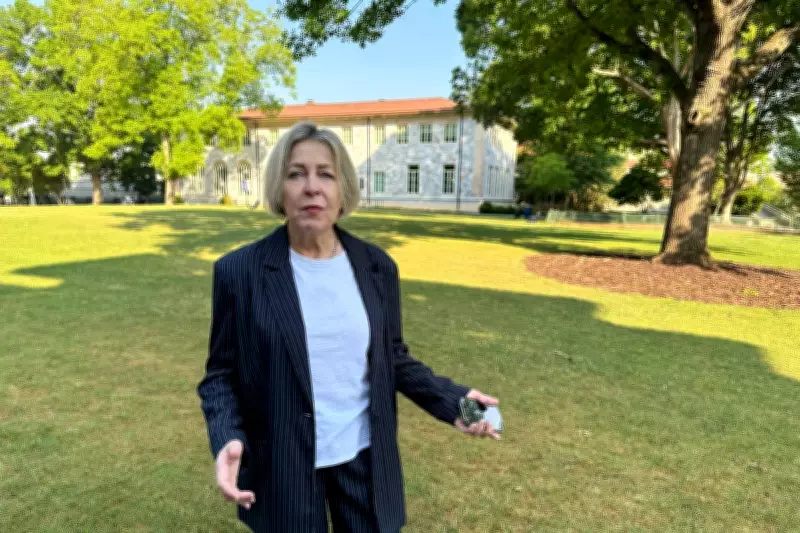
Philosophy professor Noelle McAfee, one of the plaintiffs, stated, “The judicial system would find that Emory failed to protect its students, to protect its staff, to protect the educational mission of the university.” She emphasized that the issue extends beyond individual rights, highlighting the university’s educational duty to foster free and critical inquiry.
Emory spokesperson Laura Diamond responded, saying, “Emory acts appropriately and responsibly to keep our community safe from threats of harm. We regret this issue is being litigated but we have confidence in the legal process.”

Details of the Lawsuit
The civil suit, filed in DeKalb County State Court, seeks reimbursement for legal fees the professors incurred defending themselves against misdemeanor charges that were later dismissed, along with punitive damages. The three professors—McAfee, English and Indigenous studies professor Emilio Del Valle-Escalante, and economics professor Caroline Fohlin—are all tenured faculty members and were not convicted of any charges.
According to the lawsuit, on April 25, 2024, students and others set up tents on the university’s main quad to protest the war. The professors claim they were merely observing when Emory called in Atlanta police and Georgia state troopers without exploring alternative measures. McAfee was charged with disorderly conduct after yelling “Stop!” at an officer roughly arresting a protester. Del Valle-Escalante was arrested while trying to assist an older woman and also charged with disorderly conduct. Fohlin, who protested against officers pinning a protester to the ground, was thrown face-first to the ground and arrested, suffering a concussion and spine injury. She was charged with misdemeanor battery of an officer.
University’s Response and Broader Context
Emory initially claimed that those arrested were outsiders trespassing on school property, but 20 of the 28 arrested were affiliated with the university. The professors say they faced threats and harassment after their arrests, part of a conservative backlash against universities perceived as failing to protect Jewish students from antisemitism and allowing lawlessness.
Nationwide, advocates point to a “Palestine exception,” where universities are willing to curb pro-Palestinian speech and protest. Palestine Legal reported receiving 300% more legal requests in 2025 than its annual average before 2023, mostly from college students and faculty.
McAfee, who served as president of the Emory University Senate after her arrest, helped draft the university’s open expression policy. She said she asked then-President Gregory Fenves in fall 2024 why charges were not dropped, and Fenves replied that he wanted “to see justice.” The policy was later revised to prohibit tents, camping, occupations of university buildings, and demonstrations between midnight and 7 a.m.
McAfee lamented that students are now afraid to protest at Emory, saying the university has turned its back on what Atlanta Civil Rights icon John Lewis called “good trouble.” She concluded, “Students know right now that any trouble is not going to be good trouble at Emory, that they could get arrested. So students are afraid.”