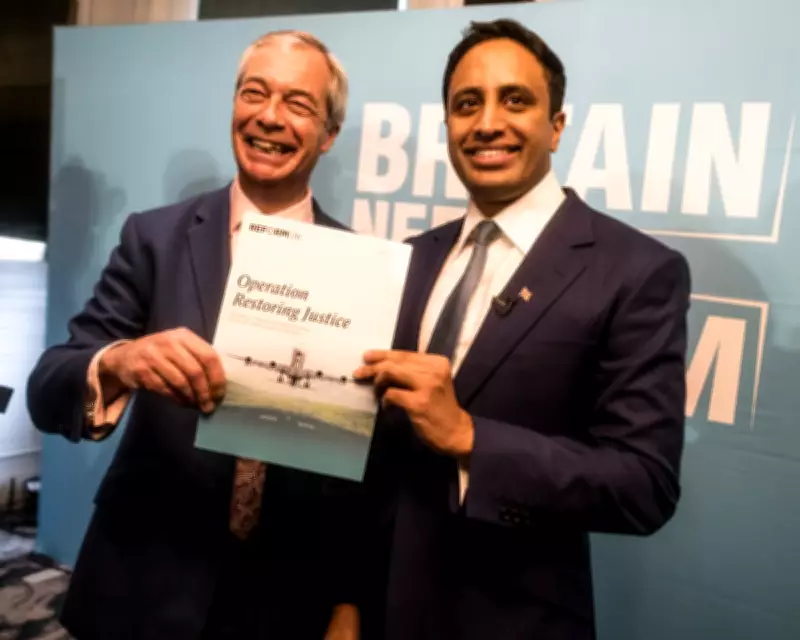
In a tightly controlled event in Dover on Monday, Reform UK's newly appointed Home Office spokesperson, Zia Yusuf, delivered his first major speech, outlining a series of hardline immigration policies. The event, however, was dominated by party leader Nigel Farage, who introduced the speech, managed media questions, and had the final word, underscoring his central role in the party's operations.
Farage's Central Role in the Event
Fresh from a controversial trip to the Chagos Islands, Nigel Farage took centre stage in Dover, ensuring he remained the focal point. Despite billing the event as Yusuf's debut, Farage delivered the introductory remarks, controlled the Q&A session with journalists, and concluded the proceedings. This arrangement highlighted Farage's reluctance to cede the limelight, even as he expands his team beyond a one-man band.
In his opening comments, Farage criticised what he termed an "invasion of foreigners," disparaged the concept of diversity, and claimed legal migration would cost the UK £200 billion. He also asserted that many residents in areas like Gorton and Denton cannot speak English, while paradoxically positioning himself as a bulwark against far-right nationalism, despite accusations that he has normalised far-right ideas.

Yusuf's Controversial Proposals
Zia Yusuf, who is not an MP and holds no official shadow home secretary role, then took the lectern for what was described as a "30 minutes of hate." He launched into a tirade of misery, advocating for extreme measures against immigrants. As the son of immigrants himself, Yusuf stated that Britons had been too generous in the past and suggested he would have deported immigrants in the 1980s if given the chance.
Key Policy Points from Yusuf's Speech
- Detention and deportation of all small boat arrivals, with up to 288,000 deportations annually.
- Revocation of indefinite leave to remain status for legal migrants after illegal migrants are removed.
- Implementation of local schemes to encourage reporting of neighbours, and monthly elections where white citizens could vote on deportations.
- A ban on burqas to prevent confusion with Antifa activists or ICE agents.
- Restrictions on churches being converted into places of worship for other faiths, with a push for Judaeo-Christian values.
Yusuf framed these policies as a way to "put the fun back in Britain," comparing deportation lotteries to gameshows and suggesting that ICE-style agents on streets would rekindle national adventure. He also targeted Muslim men as second-class citizens, excluding himself, and expressed concerns about radicalisation within Muslim communities.
Reactions and Implications
The speech grew increasingly hardline and deranged as it progressed, with Yusuf appearing to seek credibility through extreme rhetoric. However, such visions are likely to appeal only to Reform UK's core supporters, as many Christian leaders have condemned similar immigration policies as unchristian. Yusuf's call for Judaeo-Christian values was particularly ironic, given his Muslim background and the lack of church attendance among proponents.
Farage reasserted control during the Q&A, clarifying points on burqa bans and claiming superior theological knowledge over archbishops. The event reinforced Farage's dominance within Reform UK, even as he delegates minor roles, and highlighted the party's shift towards more radical stances on immigration and social issues.