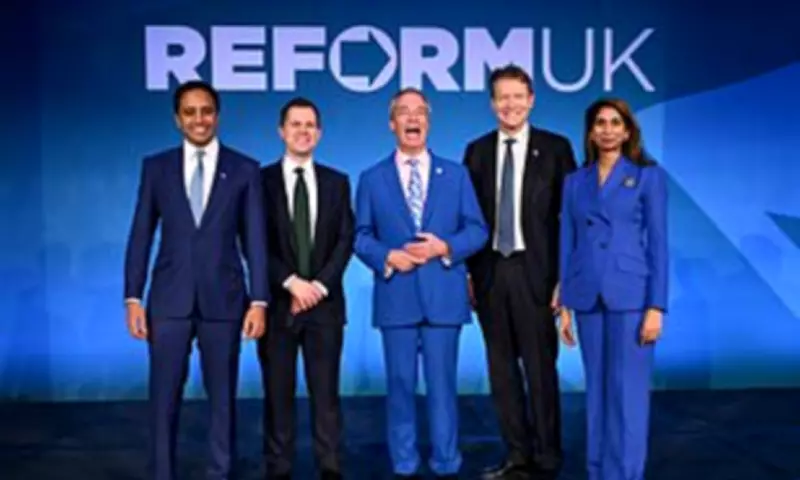
Nigel Farage Launches Reform's First Shadow Cabinet in Bold Opposition Move
Nigel Farage has dramatically unveiled Reform's first-ever 'shadow cabinet', positioning his party as the principal opposition to Labour in a significant political escalation. Declaring that Reform is no longer a "one-man band", the leader announced a high-profile team including former Conservative heavyweights.
Key Appointments and Responsibilities
In a Westminster press conference, Farage revealed that Robert Jenrick, who defected from the Conservatives barely a month ago, would become his chancellor-in-waiting with responsibility for the party's economic approach. Richard Tice was appointed as deputy leader alongside taking the business, trade and energy portfolio, while Zia Yusuf was named home affairs representative.
Suella Braverman, another Tory defector, was handed the education and skills brief alongside responsibility for equalities. The party also named philosopher professor James Orr as its head of policy, completing what Farage described as a "statement of intent" rather than merely a list of names.

Policy Directions and Declarations
In a Daily Mail article, Farage launched a scathing attack on the current political establishment, stating: "For far too long, politics in this country has been defined by short-termism, timidity and a refusal to confront the big questions." He criticized what he called Sir Keir Starmer's "rag-tag collection of sixth-form common room socialists" and declared that "politics used to be about the tough decisions."
Jenrick thanked Farage for allowing him to "oppose the wrecking ball that is Rachel Reeves" and vowed to "fix Britain's broken economy", cut the welfare bill, and become the "only party that will be as careful with your money as you are".
Specific Policy Commitments
Richard Tice outlined ambitious plans for his "super department", aiming to increase economic growth to four percent of GDP and reindustrialise Britain. He proposed using oil and gas production to fix the economy while abandoning net zero goals, creating a British wealth fund to support industry, promoting British products, and building affordable homes.
Zia Yusuf promised to cut migration, stop small boat crossings, and return those illegally in the country. Suella Braverman announced she would scrap the Equality Act and the equalities department if Reform won power, while setting a target of 50 percent of young people entering trades rather than attending university.
Leadership and Internal Dynamics
Farage announced the appointments as 'shadow' roles despite the terminology traditionally being reserved for the official opposition - currently the Conservatives. When questioned about whether his team were content with their appointments, the leader stated he would not "tolerate dissent", warning: "If people mess about, behave badly and are disloyal, they won't be here very long."
This follows speculation about whether former leader Richard Tice was satisfied with his new role, having previously been tipped as Farage's pick for chancellor. In his Daily Mail piece, Farage concluded emphatically: "From now on, I will hear no more about my party being a one man band."
The British people, he argued, "are fed up of broken promises. They want a country that works - for those who contribute, who care about their communities and who believe in fairness and freedom."