Nigel Farage's Surprising Davos Attendance: A Strategic Move Against Keir Starmer
In a striking reversal of his longstanding position, Nigel Farage, the leader of Reform UK, has made an unexpected appearance at the World Economic Forum in Davos, Switzerland. For years, Farage has derided the annual gathering as a mere jaunt for 'globalists', yet he has now relented, joining world leaders in what many see as a calculated political manoeuvre. His primary objective appears to be leveraging his relationship with US President Donald Trump to undermine Prime Minister Keir Starmer, particularly in the wake of the collapsed Chagos Islands deal.
The Chagos Islands Setback and Farage's Response
The controversy centres on Donald Trump's decision last year to approve Keir Starmer's agreement to transfer the Chagos Islands to Mauritius. This move represented a significant bruising setback for Nigel Farage, who had confidently assured journalists, speaking as a 'senior Reform source', that his ally in the White House would never consent to such an arrangement. Much like his erroneous prediction regarding Peter Mandelson's ambassadorial appointment, Farage found himself on the wrong side of history. However, in both instances, he is determined to have the final say.
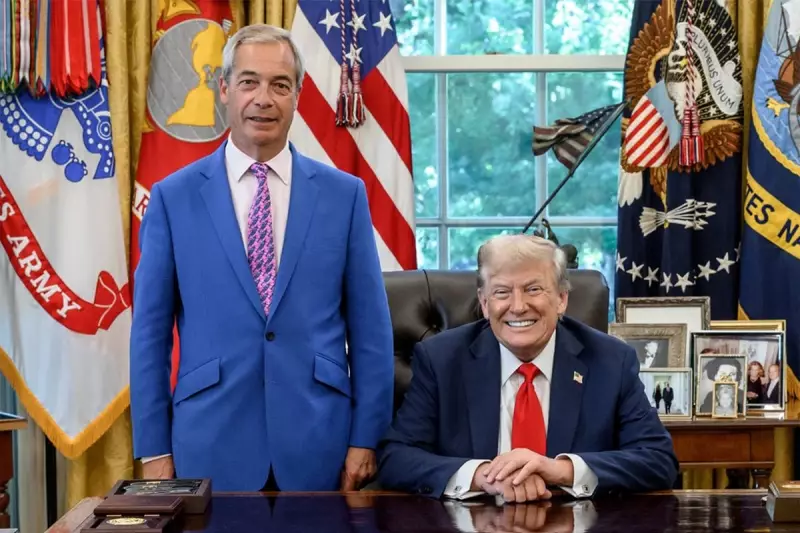
While Keir Starmer has opted to skip the Davos summit, likely judging a meeting with Trump as improbable and fraught with risk, Farage has seized the opportunity. He is reportedly in Switzerland hoping for a 'greet and grip' with the president, aiming to capitalise on Starmer's absence. The Reform leader is now crowing about inflicting a humiliating reverse on the prime minister's foreign policy, positioning himself as Labour's true rival on the international stage.

Analysing Trump's Motivations and Farage's Influence
It is doubtful that Nigel Farage wielded substantial influence over Donald Trump's U-turn on the Chagos Islands. The US president may have been seeking an excuse to lash out against Keir Starmer for aligning with European critics of his plan to acquire Greenland. A particular point of irritation for Trump, if he noticed it at all, was Starmer's response at an emergency news conference. When questioned about whether Trump was 'genuinely' considering military action in Greenland, the prime minister erred by stating his genuine belief: 'I don't, actually.' Trump notoriously dislikes when individuals suggest he does not mean what he says.
Initially, US support for the Chagos deal represented a triumph for the pragmatists within the American foreign policy establishment over Trump's instincts, which would typically oppose ceding territory housing a US base. The president's grasp of the details appears limited; he seemed unaware, when questioned by Harry Cole of The Sun, that Starmer intended to compensate Mauritius for taking on the islands. Farage is correct in asserting it was a terrible deal, with Starmer arguably bamboozled by an excessive reverence for international law.
The Political Fallout and Broader Implications
Did Nigel Farage persuade Donald Trump to scupper the treaty? The evidence suggests not. Farage failed to sway him last year, and if he possessed such influence, Trump would not be threatening punitive tariffs on Britain. Nevertheless, this is somewhat immaterial. The Chagos issue has become a setback for Starmer that Farage is keen to exploit, even if it means overcoming his distaste for the globalist ethos of the World Economic Forum—an organisation many of his online followers view as a conspiracy against nation states.
Assuming Trump does not reverse course again, the Chagos deal is effectively dead, which some may view positively. However, it undeniably embarrasses Starmer, allowing Farage to frame it as a personal victory. While Kemi Badenoch has also opposed the deal resolutely, despite its negotiation under a government she served in, she cannot claim the same friendship with the president who ultimately killed it.

Long-Term Consequences for Farage and British Politics
In the grand scheme, Chagos is relatively small beer, despite exaggerated figures circulating about its long-term cost. More significantly, Nigel Farage may discover that his association with Donald Trump proves to be a vote-loser. The British public has historically held unfavourable views of Trump, and his recent wild aggression towards Greenland, coupled with tariffs on dissenting nations, is unlikely to improve his standing.
Moreover, Trump's latest antics could inadvertently push the British people closer to the European Union—an outcome Farage would certainly not desire. As the political landscape evolves, Farage's Davos gambit highlights the complex interplay between personal alliances, foreign policy, and domestic perception, with lasting repercussions for UK politics.