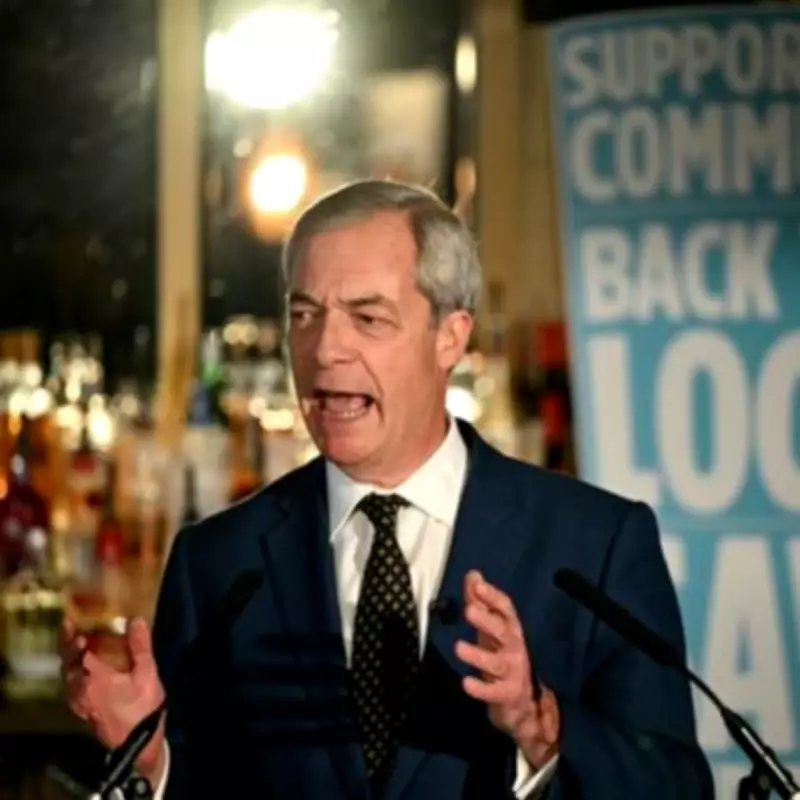
Farage's Controversial Pub Funding Plan Draws Accusations of Choosing Poverty for Children
Reform UK leader Nigel Farage has been accused of making a deliberate choice to plunge half a million children into poverty following his announcement of a substantial £3 billion support package for Britain's struggling pubs.
The controversial funding mechanism for this hospitality sector rescue plan involves restoring the two-child benefit cap, a policy originally introduced by the Conservative government in 2017. This move has sparked immediate condemnation from political opponents and child poverty campaigners alike.
The £3 Billion Hospitality Rescue Package
Mr Farage unveiled a comprehensive series of measures designed to support the beleaguered hospitality industry during a press conference on Tuesday. The Reform UK leader declared that pubs and hospitality businesses were "on the edge of falling off a cliff" and required urgent intervention.

The proposed package includes several key elements:
- Reducing VAT to 10% specifically for the hospitality sector
- Scrapping the planned employer national insurance increase for hospitality businesses
- Implementing a 10% cut in beer duty
- Introducing new staggered business rate abolition for pubs
- Creating fresh regulations to support landlords
These measures collectively aim to reduce the price of a pint by approximately 5p while providing substantial financial relief to struggling hospitality venues across the country.
The Controversial Funding Mechanism
The political storm erupted over how Reform UK proposes to fund this £3 billion package. The party plans to restore the two-child benefit cap, which limits child tax credit and universal credit to the first two children in most families.
Research indicates that lifting this controversial limit would lift approximately 450,000 children out of poverty by 2029. By choosing to reinstate it, Farage's plan effectively reverses this potential poverty reduction.
Labour's Social Security Minister, Stephen Timms MP, responded forcefully to the announcement, stating: "Politics is about choices. Nigel Farage's choice is to join with the Tories and plunge half a million children back into poverty."
Political Backlash and Accusations
The announcement has triggered significant criticism from across the political spectrum, particularly from Labour MPs who have highlighted what they see as contradictory positions from the Reform UK leader.
Connor Naismith, Labour MP for Crewe and Nantwich, tweeted: "The cost of 5p off a pint for Reform UK? Plunging half a million kids (and counting) into poverty."
Torsten Bell, another Labour MP and former director of the Resolution Foundation think tank, added: "Couldn't make this up. Farage: WAS calling for the two child limit to be scrapped. NOW calling for the two child limit to be reinstated. Reform aren't just importing failed Tory politicians. They're importing failed Tory policies."
This criticism highlights what opponents see as a significant policy reversal from Farage, who had previously called for the two-child limit to be abolished.
Context and Government Comparison
The announcement comes just one month after the current government unveiled its own support package for pubs, featuring a 15% cut in new business rate bills. Treasury minister Dan Tomlinson confirmed this measure would apply from April, with bills for pubs receiving a real-terms freeze for an additional two years.
Farage's more comprehensive package represents a significantly larger intervention in the hospitality sector, but its funding mechanism has become the central point of controversy. The Reform UK leader defended his position by emphasising the crisis facing Britain's pubs, describing the situation as "little short of a disaster" that requires serious attention.
As the debate continues, the fundamental question remains whether supporting struggling pubs justifies what critics describe as sacrificing the welfare of hundreds of thousands of children. The controversy highlights the difficult trade-offs in political decision-making and sets the stage for further discussion about priorities in social and economic policy.