Federal Charges Filed Following Attack on Congresswoman Ilhan Omar
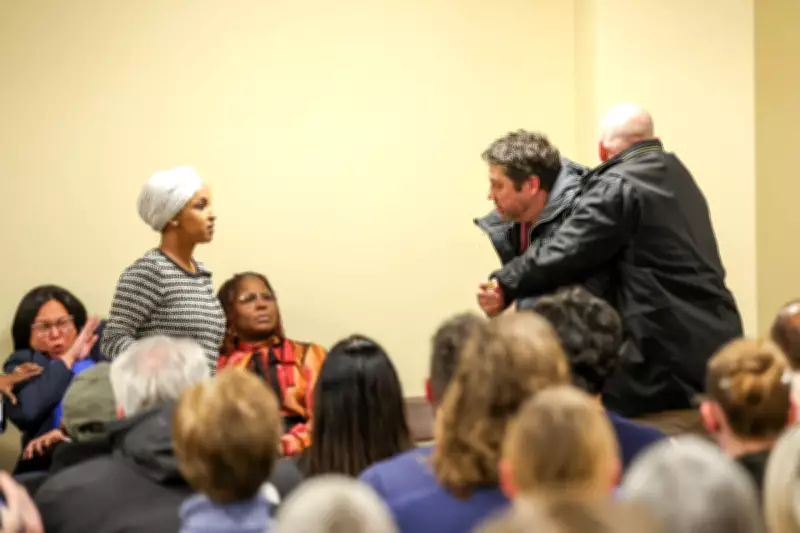
The Department of Justice has formally charged a man with federal assault after an incident where he allegedly sprayed Democratic Congresswoman Ilhan Omar with a liquid during a town hall event in Minneapolis, Minnesota. The attack occurred on 27 January 2026, prompting immediate action from law enforcement and widespread condemnation from political figures.
Details of the Assault and Arrest
Local police arrested and booked Anthony James Kazmierczak, aged 55, for third-degree assault following the disturbance at the town hall. According to reports, Kazmierczak charged at the lectern while Representative Omar was addressing constituents, spraying her with an acidic-smelling liquid from a syringe. The incident took place in north Minneapolis, causing a temporary disruption to the event.
In a criminal complaint filed the following day, federal prosecutors charged Kazmierczak with a single count, alleging he "forcibly assaulted, opposed, impeded, intimidated, and interfered" with the congresswoman. This federal charge carries a potential penalty of up to one year in prison upon conviction.

Forensic Analysis and Evidence
An affidavit signed by an FBI special agent revealed that forensic analysis identified the substance sprayed at Omar as a mixture of water and apple cider vinegar. The liquid reportedly stained Omar's clothing and may have reached her face and right eye during the altercation. Photographs of the syringe used in the alleged assault were included as evidence in the court documents.
The affidavit further detailed that Kazmierczak rushed the stage immediately after Omar called for the abolition of Immigration and Customs Enforcement (ICE) and the resignation of Department of Homeland Security Secretary Kristi Noem. Witnesses reported Kazmierczak shouting, "She's not resigning. You're splitting Minnesotans apart," following the spraying incident.
Background and Previous Threats
Court documents outline disturbing background information about the accused. The FBI agent spoke with a close associate of Kazmierczak who stated that the defendant had previously said "someone should kill" the Minnesota lawmaker. In more explicit terms, the associate reported Kazmierczak calling for "somebody to kill that bitch," referring directly to Representative Omar.
Law enforcement investigators also discovered a cartoon shared on Kazmierczak's public Facebook profile in 2021 that criticized Omar's stance on security spending during nationwide calls to defund the police. Social media analysis revealed that Kazmierczak followed several conservative activists and commentators, though no direct connection to organized groups was established in the initial investigation.
Political Context and Reactions
The attack occurred against a backdrop of heightened political tensions. Just hours before the Minneapolis incident, former President Donald Trump made xenophobic comments about Omar during remarks in Iowa. Following the attack, Trump remained unsympathetic, baselessly claiming that Omar "had herself sprayed."
Representative Omar, visibly shaken but determined, decided to continue the town hall event despite safety concerns raised by attendees. "I've survived war," she told reporters afterward. "And I'm definitely going to survive intimidation and whatever these people think they can throw at me, because I'm built that way." Omar has frequently been the subject of Trump's animus and attributed the frequent threats against her to what she called the former president's "hateful rhetoric."
Bipartisan Condemnation and Ongoing Proceedings
Lawmakers from both parties condemned what they described as a "disgusting" attack on the congresswoman. The bipartisan criticism highlighted concerns about political violence and the safety of elected officials during public engagements. Despite this widespread condemnation, Trump continued to lambast Omar at a cabinet meeting days later, making inflammatory remarks about immigration and personally attacking the representative.

The case continues to develop as federal prosecutors prepare their arguments against Kazmierczak. The incident has sparked broader conversations about security for public officials, the impact of political rhetoric on violence, and the challenges facing lawmakers who represent diverse constituencies in increasingly polarized times.