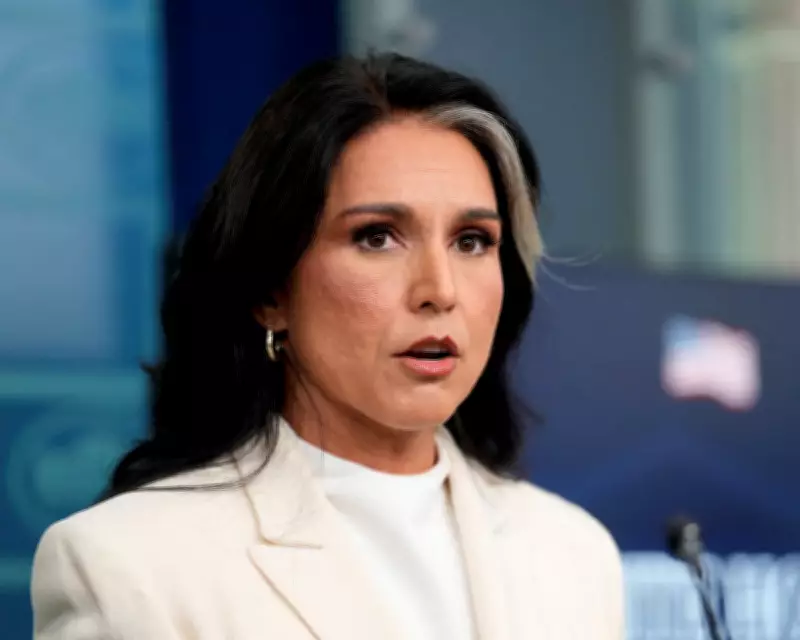
Tulsi Gabbard Under Mounting Pressure Over Intelligence Handling
National Intelligence Director Tulsi Gabbard is confronting escalating scrutiny and serious questions regarding her management of a highly sensitive intelligence report. The report details an intercepted phone call between an individual associated with foreign intelligence and a person closely linked to former President Donald Trump. This developing situation has sent shockwaves through Washington's political corridors over the past week, creating significant turbulence within the intelligence community.
Whistleblower Alleges Gabbard Blocked NSA Distribution
According to a whistleblower's attorney, Andrew Bakaj, who was briefed on the existence of the intercepted communication, Gabbard took controversial action upon receiving the report from the National Security Agency (NSA). Rather than permitting NSA officials to follow standard protocols for distributing such intelligence, Gabbard allegedly blocked the agency from sharing the information further. Instead, she personally delivered a paper copy of the intelligence directly to the White House Chief of Staff, Susie Wiles. This action has raised profound concerns about proper procedure and potential political interference in intelligence matters.
Eight-Month Secrecy and Congressional Concerns
The intelligence report has remained tightly guarded and under lock and key for an astonishing eight months, despite repeated efforts by the whistleblower to push for disclosure of its details to the congressional intelligence committees. This extended period of secrecy has intensified concerns about transparency and accountability within the intelligence apparatus. The initial revelation of this sensitive communique was first published by the Wall Street Journal, which broke the story that has since dominated political discourse in the capital.

Background of the Intercepted Call
The origins of this controversy trace back to last spring, when the NSA detected evidence of an unusual and potentially significant phone call. The communication occurred between an individual with connections to foreign intelligence services and a person described as being close to Donald Trump. The precise nature of the conversation and the identities of the participants remain classified, but its detection triggered the chain of events that now places Gabbard's judgment under the microscope.
Broader Political Context and Additional Developments
This intelligence controversy unfolds against a backdrop of other significant political developments involving the Trump administration. In a separate legal matter, a federal judge has reversed a freeze imposed by Donald Trump on $16 billion in funding for the Gateway Project. This major infrastructure initiative aims to build a new commuter rail tunnel between Manhattan and New Jersey under the Hudson River, while also repairing a century-old tunnel currently used by over 200,000 daily travelers and 425 trains.
Meanwhile, Donald Trump has created further controversy by refusing to apologize for a racist video depicting Barack and Michelle Obama as apes, instead shifting blame to an aide while acknowledging he authorized the posting. In immigration matters, Trump administration attorneys are pursuing the deportation of five-year-old Liam Conejo Ramos, whose detention photograph in a bunny hat in snowy Minneapolis gained global attention last month.
The convergence of these events illustrates the complex and often contentious landscape of current American politics, with the Gabbard intelligence handling controversy representing a particularly sensitive intersection of national security concerns and political accountability.