German State Lawmakers Elect New Governor to Counter Far-Right Threat
Lawmakers in the eastern German state of Saxony-Anhalt have elected a new governor, a strategic move by mainstream political parties aiming to prevent a victory for the far-right Alternative for Germany in an upcoming regional election scheduled for September.
Midterm Transition to Strengthen Mainstream Position
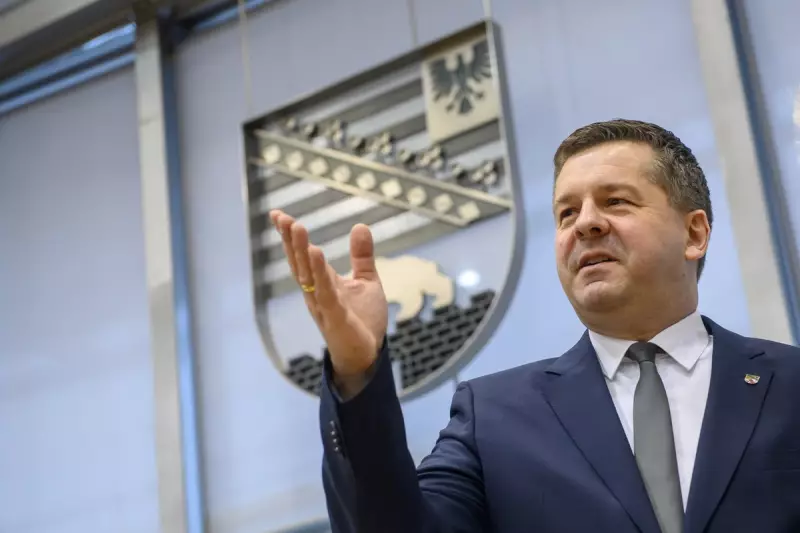
The state legislature in Saxony-Anhalt elected Sven Schulze, a member of German Chancellor Friedrich Merz's center-right Christian Democratic Union, to replace long-serving incumbent Reiner Haseloff. This transition occurred on Wednesday, marking a significant shift in the state's political leadership.
Haseloff, aged 71, has led the state of approximately 2.2 million people since 2011. Schulze, aged 46, was designated last year as the CDU's candidate for governor to succeed him in the state election set for September 6. While it is relatively common in Germany for governors to hand over the reins midterm to allow their successors to become better-known to voters, Haseloff initially appeared inclined to serve out his full term.

Rising Far-Right Influence Drives Early Departure
However, with regional support for the Alternative for Germany, commonly known as AfD, reaching very high levels, Haseloff announced earlier this month that he would step down early. The AfD, which became the second-largest party in Germany's federal parliament following last year's national election, is particularly strong in the formerly communist and less prosperous eastern regions of the country.
Opposition to migration serves as the signature issue for AfD, a party with which mainstream parties refuse to collaborate. Beyond this, AfD has demonstrated a notable talent for capitalising on public discontent with other pressing matters, including Germany's sluggish economic performance.
Strategic Advantages in Combating Far-Right Challenges
In recent years, several sitting governors in eastern Germany, including Haseloff himself during the state's last election in 2021, have managed to successfully beat back challenges from AfD by leveraging their popularity as incumbents. Schulze, who previously served as Saxony-Anhalt's economy minister, would have lacked this potential advantage if Haseloff had remained in office until the election.
To date, AfD has emerged as the largest party in one state election, specifically in the neighbouring eastern region of Thuringia in 2024, but it has yet to secure power at the state level. The early transition in Saxony-Anhalt represents a proactive effort by mainstream parties to consolidate their position and present a united front against the growing influence of far-right politics in the region.