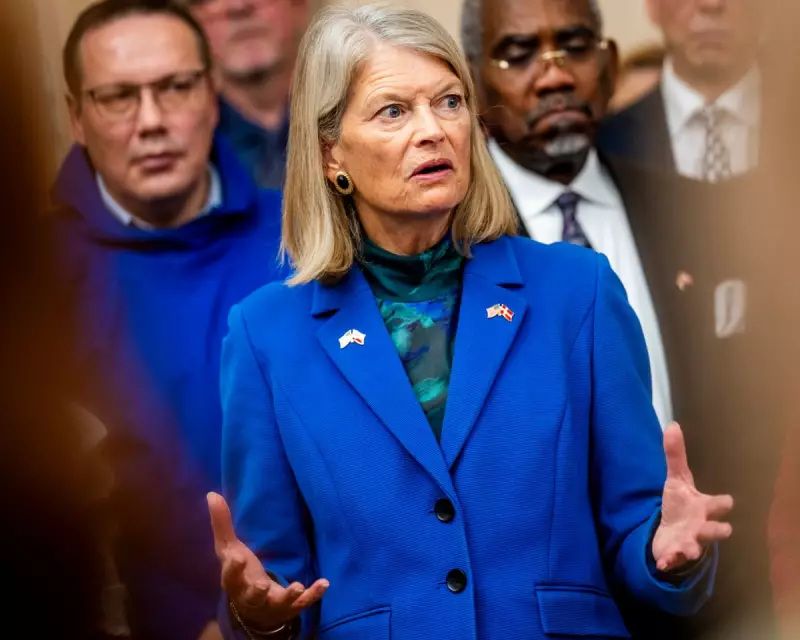
Republican Senator Lisa Murkowski addressed the media following discussions with Danish parliamentarians and a Greenlandic delegation in Copenhagen on 16 January, highlighting the diplomatic fallout from recent US foreign policy moves. This meeting underscores the growing international concern over Washington's stance.
Trump's Greenland Gambit Rattles GOP Ranks
Donald Trump's abrupt withdrawal from a potential confrontation over Greenland has nonetheless left significant diplomatic scars and exposed fissures within his own Republican party. The US president's aggressive posturing has prompted the most vocal opposition from GOP members since he assumed office, challenging his authority on multiple fronts including military engagements, healthcare legislation, and sensitive legal files.
A Party Questioning Its Leader
Political analyst Frank Luntz observes that while Trump maintains considerable influence and legislative achievements, his own party is beginning to question the cost of his leadership. "He has been the most influential president since Franklin Roosevelt," Luntz noted, "but the public and even people in his own party are starting to wonder whether it's too much."

This emerging dissent suggests that a minority of Republicans feel increasingly empowered to voice concerns about a leader whose declining poll numbers could jeopardise their prospects in November's crucial midterm elections.
Historical Context of Republican Dissent
Speculation about Trump's grip on the Republican party has persisted for years, with previous challenges from figures like Liz Cheney resulting in political purges or forced retirements. Even the dramatic events following the 2020 election, including the Capitol insurrection, failed to fundamentally alter the party's loyalty dynamics.
For much of Trump's tenure, Republicans granted him considerable latitude on issues ranging from government restructuring to immigration enforcement and trade policies, leading critics to accuse Congress of abdicating its oversight responsibilities.
Recent Fractures in Party Unity
Several recent incidents have revealed cracks in what was once considered unshakeable Republican solidarity:
- Four House Republicans took the unusual step of supporting a discharge petition to release files related to Jeffrey Epstein, despite Trump's initial opposition
- Marjorie Taylor Greene, once a staunch Trump ally, resigned from Congress while accusing the president of betraying his "America First" principles
- More than a dozen House Republicans recently supported Democratic legislation to extend Affordable Care Act subsidies
- The party has struggled to maintain unity against war powers resolutions that would limit presidential military authority
Greenland as a Tipping Point
While many Republicans supported Trump's Venezuela policy, his bellicose rhetoric regarding Greenland – including threats of tariffs against European allies and refusal to rule out military action – represented a boundary too far for some party members.
Republican senators including Thom Tillis and Lisa Murkowski participated in diplomatic engagements with Danish and Greenlandic officials, while Murkowski co-sponsored legislation prohibiting Pentagon funds from being used against NATO allies without consent.
Former Senate leader Mitch McConnell warned that any attempt to seize Greenland would "shatter the trust of allies" and damage Trump's foreign policy legacy. Congressman Don Bacon went further, suggesting such action could lead to impeachment proceedings.
Electoral Calculations and Future Prospects
Senator Susan Collins of Maine, considered the most vulnerable Republican incumbent this election cycle, has criticised "excessive" immigration enforcement tactics. Her position reflects the difficult balancing act facing Republicans as they approach midterm elections with a potentially unpopular standard-bearer.
Tara Setmayer of the Seneca Project observes emerging fractures: "I don't think it's as ironclad as it once was... Before, you wouldn't have seen any of that; now you're starting to see pockets of it."

Recent polling underscores the challenge facing Republicans. An Emerson College survey found 51% disapproval of Trump's performance, with Democrats leading 48% to 42% on the generic congressional ballot. These numbers suggest potential difficulties for Republicans in November's elections.
The Looming Leadership Transition
With Trump constitutionally barred from seeking re-election, the Republican party faces an inevitable leadership transition. Several Trump merchandise outlets have announced closures, signalling the beginning of a political shift that will gradually diminish his influence.
Bill Galston of the Brookings Institution notes that while few Republicans are willing to break publicly with Trump, "there's clearly a sense of unease spreading in Republican ranks as they contemplate running for election or re-election."
As the midterms approach, Republicans find themselves navigating treacherous political waters – unable to openly break with their leader yet increasingly aware that his declining popularity could threaten their electoral prospects. The Greenland episode has merely highlighted tensions that have been building within the party for some time, suggesting that the coming months may test Republican unity as never before.