Republican Rift Widens Over Trump's Election Nationalisation Push
Donald Trump's recent call for the federal government to "nationalise" voting procedures has sparked significant internal conflict within the Republican Party, revealing a fundamental tension between loyalty to the former president and traditional conservative principles regarding states' rights.
Constitutional Concerns Clash with Political Allegiance
The proposal, which would represent a dramatic departure from America's long-standing electoral framework where states administer elections, has created what some observers describe as "tummyaches" among Republican lawmakers. While certain establishment figures have voiced constitutional objections, others appear ready to support Trump's controversial stance.
Trump articulated his position during an appearance on Dan Bongino's programme, specifically targeting predominantly Democratic urban centres including Philadelphia, Atlanta, and Detroit, which he characterised as too corrupt to manage their own electoral processes. This approach would fundamentally contravene the constitutional arrangement that grants states authority over election administration.

White House Attempts to Navigate Constitutional Waters
White House Press Secretary Karoline Leavitt sought to reconcile the president's statements with constitutional fidelity, asserting that "the president believes in the United States Constitution." However, she immediately qualified this by referencing alleged "fraud and irregularities" in American elections.
Leavitt clarified that Trump's support aligns specifically with the Safeguard American Voter Eligibility Act, a Republican legislative initiative that would mandate voter identification requirements and impose restrictions on mail-in ballots. This legislation has long represented a priority for congressional Republicans, particularly within the House of Representatives.
House Republicans Defend Legislative Approach
Representative Chip Roy of Texas, a prominent member of the hardline House Freedom Caucus who is currently campaigning for Texas attorney general, defended the SAVE Act against accusations that it violates federalist principles. "We have significant federal authority on both of those issues to ensure that citizens are voting," Roy explained to The Independent. "There's a clear nexus there. We allow for states to continue to do what they want to do for their elections."
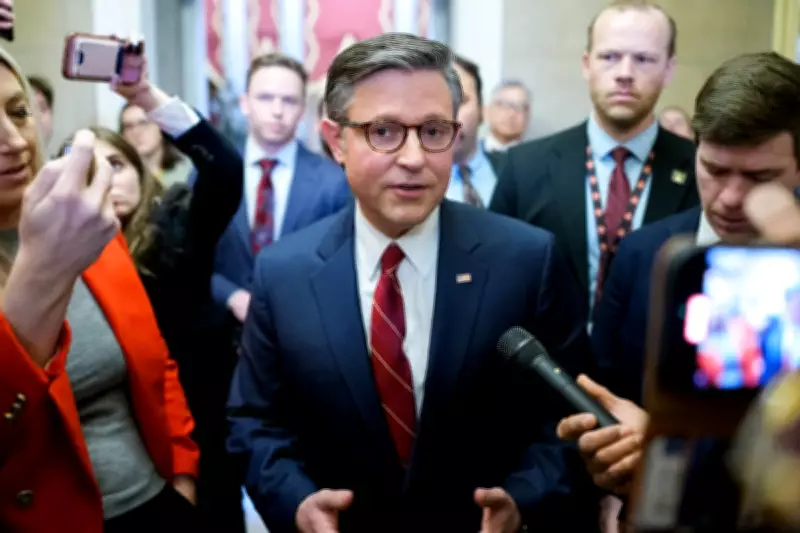
House Speaker Mike Johnson, acting as facilitator for the president, contextualised Trump's remarks as expressing "frustration about the lack of some of the blue states, frankly, of enforcing these things and making sure they are free and fair elections." Johnson cited the 2024 California election results, where Republican candidates initially led on election day only to lose as mail-in ballots were counted, describing the outcome as appearing "on its face to be fraudulent" while acknowledging he couldn't prove this assertion.
Senate Republicans Express Significant Reservations
Even if the SAVE Act successfully passes the House, it would face the formidable obstacle of a Senate filibuster that Democrats would inevitably invoke. Republican senators express considerable scepticism about overcoming this procedural hurdle.
Senator Thom Tillis of North Carolina, who has emerged as a Trump critic despite co-sponsoring the SAVE Act in the Senate, strongly rejected the nationalisation concept. "But nationalising elections, to me, are as bad now as when I said they were bad when the Democrats tried to do it in 2022," Tillis told The Independent. "There's never a good time to nationalise elections. There's never a good time to nuke the filibuster."
The North Carolina senator further predicted little appetite within the Senate to eliminate the filibuster, particularly when targeting specific states would likely preclude Democratic support.
Moderate Voices Reinforce Traditional Republican Position
Senator Lisa Murkowski of Alaska, representing the party's moderate wing, firmly dismissed the nationalisation proposal. "We, as Republicans, have long maintained it's about state control," she emphasised. "It is not federal control. So it's somewhat inconsistent with our prior position to now say that we need to nationalise or federalise. I am not a proponent."

Ongoing Political Battle Looms
Despite these Senate reservations, the issue shows no signs of disappearing from the political landscape. House Republicans are expected to continue advancing the SAVE Act legislation, while Trump appears determined to maintain his nationalisation advocacy. Simultaneously, a contingent of Republican senators remains committed to preserving the filibuster as a bulwark against Democratic policy initiatives, ensuring this internal party debate will persist as a defining feature of Republican politics.
The fundamental tension between constitutional traditionalism and political loyalty continues to shape Republican responses to Trump's provocative electoral proposals, creating a complex political dynamic with significant implications for American democracy.