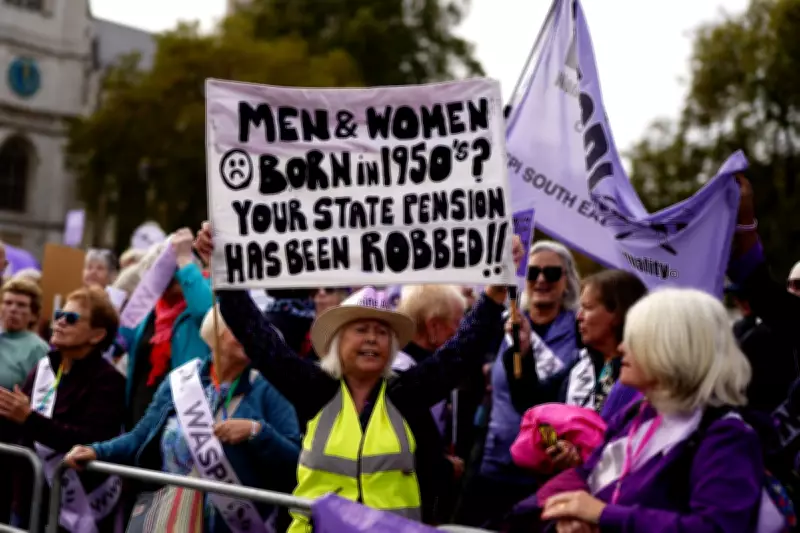
In a significant blow to campaigners, the government has definitively refused to grant compensation to approximately 3.8 million women affected by changes to the state pension age. Work and Pensions Secretary Pat McFadden delivered the announcement to the House of Commons, confirming that a recent review had upheld the government's earlier conclusion against making any payments.
Apology Offered But Compensation Denied
Mr McFadden expressed regret for the government's failure to send individual letters about the state pension age changes to women born in the 1950s in a more timely manner. He reiterated an apology previously given by former Work and Pensions Secretary Liz Kendall, stating clearly: "I am sorry that those letters were not sent sooner."
However, the minister drew a firm distinction between this communication failure and the policy decision itself. He emphasised that the compensation question revolves solely around "how changes to the state pension age were communicated," rather than the merits of past policy decisions regarding pension age equalisation.

Review Upholds Original Decision
The government's position follows a reconsideration of the case prompted by the emergence of new documentation. Despite this fresh examination, ministers have maintained their original stance that no compensation should be awarded.
Mr McFadden told Parliament: "We also agree with the Parliamentary and Health Service Ombudsman that women did not suffer any direct financial loss from the delay." This assessment forms the cornerstone of the government's argument against providing financial redress.
Historical Context and Political Backlash
The controversy stems from changes implemented in 2011 by the coalition government, which accelerated the equalisation of the state pension age and raised it to 66. This move dramatically affected women who had expected to retire at 60, giving many just 18 months to adjust retirement plans despite original 1995 legislation suggesting they should have received 10 to 15 years' notice.
The current Labour government's decision represents a stark reversal of its pre-election position. Before coming to power, Labour had pledged to compensate women whose retirement plans were disrupted by the six-year delay in their state pension qualification age.
Last year, then Work and Pensions Secretary Liz Kendall rejected calls for payments ranging between £1,000 and £2,950 per affected individual, triggering considerable anger among Labour backbenchers. The issue resurfaced in November when Mr McFadden announced his department would review the previously-announced policy of non-compensation.
Ongoing Political Tensions
The announcement has already sparked confrontation within political circles, with prominent figures like Diane Abbott confronting Labour leader Keir Starmer over what campaigners describe as a "betrayal" of the Waspi women. The government's stance acknowledges the "legitimate and sincerely held views" about whether accelerating pension age equalisation was wise, while maintaining that compensation remains unjustified based on the communication issues alone.
This decision leaves approximately 3.8 million women without the financial compensation many had hoped for, despite the government's admission of administrative failure in communicating the pension age changes effectively.