The United States government has entered a partial shutdown over the weekend, with multiple federal agencies caught in a funding standoff that has intensified the debate over Immigration and Customs Enforcement operations. House Speaker Mike Johnson faces critical days ahead as he attempts to secure passage of a federal funding package and prevent a prolonged government closure.
Funding Deadline Looms as Political Battle Intensifies
The partial shutdown comes amid escalating controversy surrounding the Trump administration's immigration enforcement operations. Speaker Johnson has indicated he is relying on assistance from President Donald Trump to ensure the funding package passes through Congress successfully. This development follows a deal struck between Trump and senators to separate funding for the Department of Homeland Security from a broader legislative package.
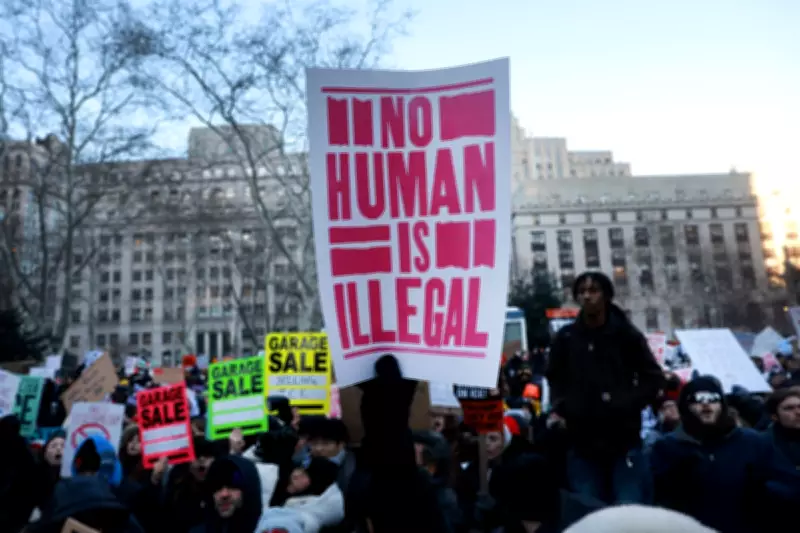
This separation occurred after public outrage erupted over two shooting deaths during protests in Minneapolis against Immigration and Customs Enforcement activities. Under the Senate-approved plan, DHS would receive temporary funding until February 13th, creating a tight deadline for Congress to attempt to find consensus on new restrictions governing ICE operations.

Democratic Demands for ICE Reform
Democrats are pushing for substantial constraints on ICE that extend beyond the $20 million allocated for body cameras already included in the proposed legislation. Their demands include requiring federal immigration agents to unmask and identify themselves during operations, ending roving patrols in urban areas, and implementing several other significant changes to current enforcement practices.
House Democratic leader Hakeem Jeffries of New York emphasized the need for dramatic reform within the Department of Homeland Security during a television appearance. He argued that negotiations about changes to immigration enforcement operations should begin immediately rather than waiting for the two-week funding extension to expire.
"Masks should come off," Jeffries stated firmly. "Judicial warrants should absolutely be required consistent with the Constitution, in our view, before DHS agents or ICE agents are breaking into the homes of the American people or ripping people out of their cars."
Republican Counter-Demands and Priorities
Meanwhile, House Republicans, supported by some Senate allies, are advancing their own demands as they work to bolster President Trump's immigration enforcement agenda. The House Freedom Caucus has insisted on more comprehensive funding for Homeland Security, while certain Republican legislators are pushing to include additional measures.
Among these is the SAVE Act, a Trump priority that would require proof of citizenship before Americans become eligible to participate in elections and cast votes. This measure faces significant political hurdles but represents a key component of Republican immigration policy objectives.
Key Points of Contention in ICE Legislation
The legislative battle centers on Democratic efforts to impose new constraints on federal immigration agents following the shooting deaths of Alex Pretti and Renee Good during Minneapolis protests. Democratic proposals include ending roving patrols in cities while requiring coordination with local law enforcement on immigration arrests, stopping the detention and deportation of U.S. citizens, requiring judicial approval for warrants, implementing an enforceable code of conduct for federal agents with enhanced training, and mandating that agents wear body cameras and remove masks during operations.
Republicans have shown openness to some proposed changes but have firmly drawn lines regarding judicial warrants and unmasking requirements. They argue that warrant requirements would create excessive bureaucratic burdens and warn that unmasked federal agents would face doxxing risks, with their private information potentially published online by protesters.
Impact of the Partial Government Shutdown
As the political standoff continues, numerous federal agencies remain ensnared in the funding impasse that triggered the partial government shutdown over the weekend. Departments including Defense, Health, Transportation, and Housing have received shutdown guidance from the administration, though many essential operations continue uninterrupted.

Federal workers could face unpaid periods if the impasse persists, with some potentially facing furloughs. Lawmakers from both parties express growing concern that the closure could disrupt Federal Emergency Management Agency operations, which they rely on to assist constituents in their states following storms and other natural disasters.
This marks the second time in recent months that federal government operations have been disrupted as Congress uses the annual funding process as leverage to extract policy changes. Last fall, Democratic protests over expiring health insurance tax breaks sparked what became the longest federal shutdown in history at 43 days.
Administration Seeks Swift Resolution
The current administration has signaled its interest in resolving this shutdown more quickly than previous episodes. Speaker Johnson revealed he was present in the Oval Office last week when President Trump, along with border czar Tom Homan, negotiated with Senate Democratic leader Chuck Schumer of New York to work out a potential deal on immigration enforcement changes.
Body cameras, already provided for in the legislative package, and an end to roving patrols by immigration agents represent areas of potential agreement between the parties, according to Johnson. However, he expressed strong reservations about requirements to remove masks and display names on agents' uniforms, arguing these measures could create security problems for law enforcement officers whose personal information might be targeted by protesters.
Democrats maintain that immigration operations have spiraled out of control and must be reined in, particularly in Minneapolis and other cities where enforcement activities have sparked controversy. Growing numbers of lawmakers are calling for Homeland Security Secretary Kristi Noem to be removed from her position or impeached.
Senator Chris Murphy of Connecticut, who has led efforts to secure more substantial changes to ICE operations, described the situation in Minnesota as "a dystopia" and argued that "ICE is making this country less safe, not more safe today." He emphasized that "our focus over the next two weeks has to be reining in a lawless and immoral immigration agency" as the funding deadline approaches.