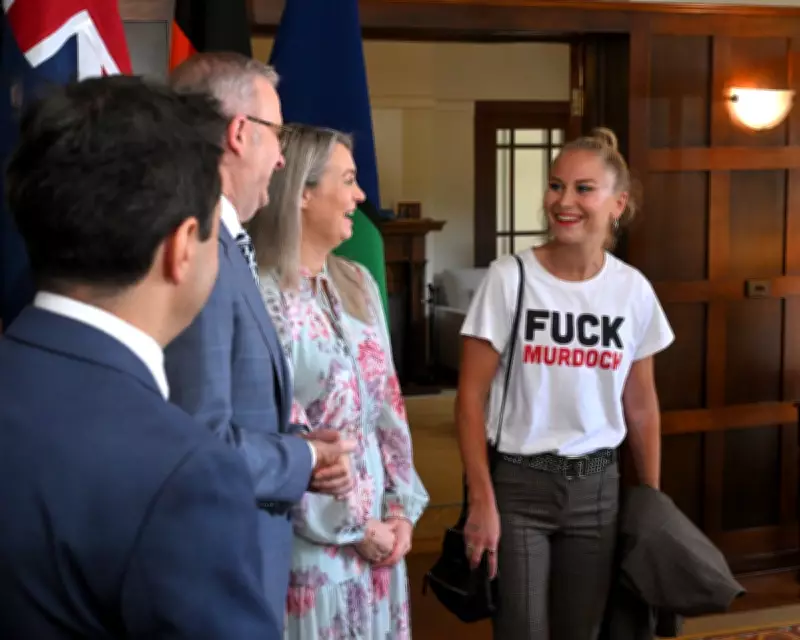
Grace Tame Condemns PM Albanese's 'Difficult' Description as Misogynistic
Australian Prime Minister Anthony Albanese has sparked a heated controversy after using the word "difficult" to describe Grace Tame, the 2021 Australian of the Year and a prominent advocate for sexual abuse survivors. The incident occurred during a public engagement where Albanese was asked to characterise Tame in a single word, leading to immediate backlash and accusations of underlying sexism.
Albanese's Explanation and Tame's Sharp Rebuttal
Following the remark, Albanese quickly clarified that he intended to reference Tame's "difficult life," not her personality or advocacy style. However, Tame responded forcefully on social media, stating, "we all know what you meant" and implying that Albanese was echoing language previously used by former Prime Minister Scott Morrison. She reshared a post to her Instagram story that read: "'Difficult' is the misogynist's code for a woman who won't comply. History tends to call her 'courageous.'"
Despite Albanese also praising Tame's advocacy as "courageous" and apologising for "any misinterpretation," the damage was done. The exchange has ignited a broader discussion about how women in public life, particularly those challenging established power structures, are often labelled in pejorative terms.

Broader Context and Political Implications
This episode underscores ongoing tensions between political leaders and activist figures in Australia. Tame, known for her unwavering stance on survivor rights and institutional accountability, has frequently clashed with government officials. Her response highlights a perception that dismissive language is used to undermine women who refuse to conform to expectations.
The controversy comes at a time when Albanese's government is navigating multiple domestic and international challenges, making such public spats potentially damaging to his administration's image.
Other Key News Developments in Australia
Beyond the Tame-Albanese row, several other significant stories are shaping the national conversation:
- Jacinda Ardern's Relocation: The former New Zealand Prime Minister has moved to Australia after a stint in the United States, taking up new professional opportunities that could influence trans-Tasman relations.
- Northern Territory Administrator Apology: A newly appointed NT administrator has issued an apology for historical "racist" social media posts, as local MPs plan to boycott the swearing-in ceremony in protest.
- Travel Advisory Updates: The Australian government has advised dependants of officials in Israel and Lebanon to depart due to escalating tensions between the US and Iran, reflecting heightened global security concerns.
- Emergency Alert System Overhaul: Plans are underway to implement blaring smartphone sirens for major disaster warnings, aiming to enhance public safety through modernised emergency communication protocols.
- Qantas Financial Performance: The national airline has reported a substantial profit of $1.46 billion, indicating that Australian travellers are continuing to fly despite widespread cost-of-living pressures.
Human Interest and Investigative Highlights
In a poignant human interest story, single mother Loma Bropho and her six children have been homeless for over two years in Perth, struggling to secure rental accommodation despite exhaustive efforts. Bropho's plight sheds light on Australia's ongoing housing crisis and its devastating impact on vulnerable families.
Additionally, an exclusive investigation has revealed the conditions faced by Australian children of IS families detained in al-Roj camp in Syria. Journalist William Christou documented their lives and their thwarted attempts to return to Australia, placing them at the centre of a complex political and humanitarian debate.

Health and Lifestyle Insights
The article also touches on health-related topics, including actress Christina Applegate's disclosure about being largely bedridden due to multiple sclerosis. Furthermore, it explores rejection sensitive dysphoria (RSD), a condition where rejection or criticism triggers intense physical and emotional reactions. Support groups on social media are emerging as resources for those affected, as medical understanding of RSD gradually evolves.
This collection of news underscores a dynamic period in Australian affairs, where political rhetoric, social advocacy, and personal stories intersect to shape public discourse.