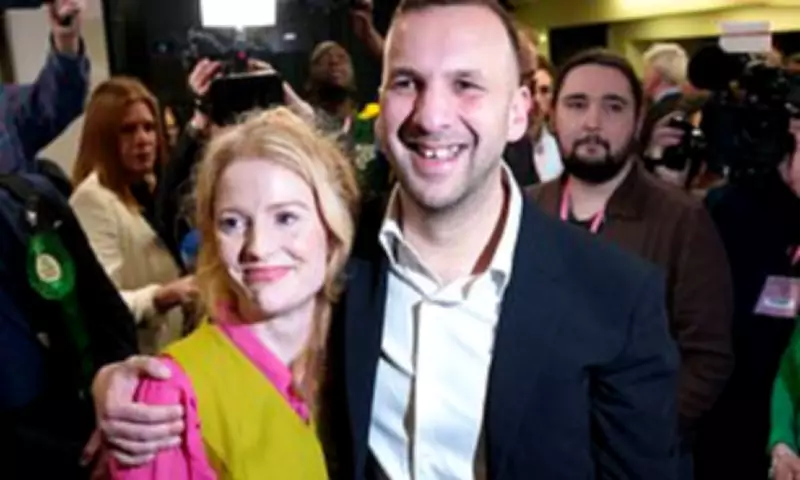
Green Party's Surprise By-Election Win Sends Shockwaves Through British Politics
Following her unexpected victory in the Gorton and Denton by-election, newly elected Green Party MP Hannah Spencer boldly declared: 'There's no part of the country where the Green Party cannot win.' If this statement contains even a grain of truth, Britain finds itself confronting profound political turbulence that threatens to reshape the nation's democratic landscape for generations to come.
From Environmentalists to Political Disruptors
Once regarded as a coalition of well-meaning environmental advocates, the Greens have undergone a dramatic transformation. They now champion what critics describe as a toxic blend of envy-driven policies, divisive rhetoric, and ugly sectarian politics. Their triumph in yesterday's by-election has left numerous moderate voters feeling both anxious and bewildered about the future direction of British democracy.
Many observers fear that the traditional two-party system is experiencing an unprecedented collapse, creating a dangerous vacuum that extremist elements appear eager to fill. The implications of this political shift extend far beyond the boundaries of Gorton and Denton, potentially affecting every constituency across the United Kingdom.

Controversial Campaign Tactics Raise Serious Concerns
To secure substantial support from Muslim voters in the constituency, the Green Party embraced an aggressive anti-Zionist stance that frequently bordered on outright anti-Semitism. Their campaign often seemed more preoccupied with international conflicts in Gaza than with addressing local issues affecting Gorton residents. Consequently, many British Jews now report feeling significantly less secure in their own country following this electoral outcome.
Furthermore, disturbing allegations have emerged from independent election monitors regarding potential 'family voting' practices. These accusations suggest that some Asian women may have been accompanied into polling booths by their husbands, who allegedly instructed them how to cast their ballots. Such apparent misogynistic coercion represents a serious threat to democratic integrity and demands immediate, thorough investigation by electoral authorities.
The Green Policy Platform: Radical Proposals Under Scrutiny
Unlike established political parties that face constant media examination, the Greens have largely avoided rigorous policy scrutiny until now. A preliminary analysis of their manifesto reveals what critics characterize as dangerously unrealistic proposals that threaten economic stability and social cohesion.
Their platform includes controversial measures such as:
- Universal basic income funded through massive wealth taxation
- Complete legalization of all recreational drugs
- Open border immigration policies
- Slavery reparations programs
- Numerous other radical left-wing initiatives
With characteristic far-left disingenuity, Green representatives maintain that these extravagant proposals can be financed exclusively through wealth taxes. Critics dismiss this as sixth-form politics at its most absurd, yet acknowledge that these ideas are gaining traction, particularly among younger voters disillusioned with mainstream alternatives.
Labour's Existential Crisis Deepens
The most immediate consequence of this by-election humiliation is the apparent political demise of Sir Keir Starmer's leadership. The fundamental question now confronting the Labour Party is whether it faces a similar fate to the historic Liberal Party, which dominated British politics for over six decades before collapsing spectacularly in the early twentieth century.
Between 1859 and 1922, the Liberals produced seven prime ministers, including William Gladstone who secured four election victories. Then, quite suddenly, they lost their political direction and imploded. While it would be premature to declare Labour similarly doomed, the party faces profound questions about its future purpose, core values, and electoral viability.

Modern Labour MPs no longer represent the traditional working-class constituencies they once served. Instead, the parliamentary party increasingly comprises human rights lawyers, think-tank researchers, single-issue activists, political advisers, union officials, and various lanyard-wearing commentators disconnected from ordinary voters.
While Labour representatives obsess about niche issues like trans rights, assisted dying legislation, and rapid Net Zero transitions, traditional working-class areas like Gorton and Denton continue their steady economic and social decline. If Labour cannot retain support in these historic strongholds, its electoral prospects appear bleak nationwide.
The Conservative Dilemma and Reform's Uncertain Future
Labour's strategic predicament presents complex challenges. If the party shifts leftward to counter the Green threat, it risks alienating moderate voters and exposing its right flank to Reform UK. Conversely, a move toward the center could accelerate defections to the Greens among disillusioned left-wing supporters.
Some suggest that replacing Sir Keir Starmer might revitalize Labour's fortunes, but none of the potential leadership candidates currently possess sufficient credibility or public appeal to guarantee electoral success. Many within Westminster now regard this as essentially a one-term government that recognizes its limited lifespan.
For the political right to prevail in the 2029 general election, strategic coordination appears essential. Reform UK performed reasonably well in the by-election but failed to demonstrate sufficient strength to realistically form a majority government. Their questionable candidate selection—an academic best known for GB News appearances—and lackluster campaigning suggest troubling complacency among those who view Reform as Britain's primary conservative hope.
The Conservative Party, while never competitive in Gorton, is rebuilding effectively under Kemi Badenoch's leadership and should be battle-ready for the next general election. Although formal electoral pacts remain premature, some arrangement between right-leaning parties appears necessary within the next three years to prevent a fragmented opposition.
A Nation at Political Crossroads
The alternative to right-wing unity would be what critics describe as a nightmarish coalition of left-wing parties implementing radical policies. Should such an alliance materialize, Britain could enter what observers term a 'doom spiral' of economic decline, social division, and political instability from which recovery might prove impossible.
Hannah Spencer's victory represents more than merely another by-election upset. It signals potentially seismic shifts in Britain's political landscape that demand serious attention from all democratic participants concerned about the nation's future direction and stability.