Greens' Muslim Vote Surge Sparks Labour Anxiety and Sectarian Accusations
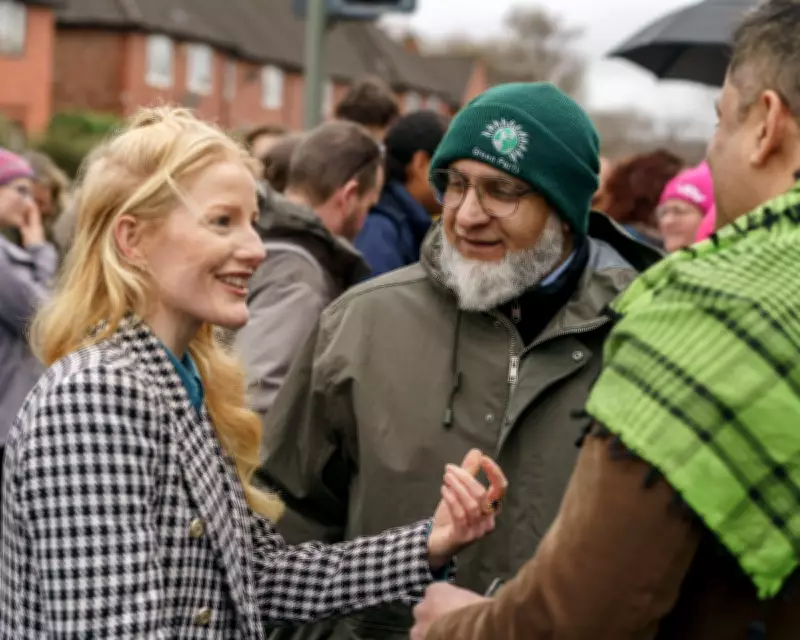
The Green party's unexpected success in securing Muslim votes during the recent byelections in Gorton and Denton has sent significant tremors through Westminster, prompting intense recriminations and accusations from opposition parties. This development signals another potential major realignment in British politics, as experts attribute Hannah Spencer's wide margin of victory partly to a substantial shift of Muslim voters away from Labour towards the Greens.
Labour's Concerns and Accusations of Sectarian Politics
Labour and Reform UK have leveled serious accusations against the Greens, alleging the use of sectarian politics in their campaign strategies. These claims focus on the Greens' deployment of campaign materials featuring Indian Prime Minister Narendra Modi, an endorsement by George Galloway, and allegations of voter manipulation. Keir Starmer, in a communication to Labour MPs, criticized what he termed "divisive, sectarian politics", suggesting the Greens are not the harmless environmentalists they portray themselves to be.
Despite these accusations, senior Labour figures privately acknowledge that the Greens' ability to mobilize the Muslim vote indicates the leftwing party is beginning to construct a finely tuned political machine, similar to the one Labour has long relied upon. A Labour source noted, "The Greens were engaging extensively with mosques, convincing people they were best positioned to defeat Reform. This strategic outreach to Muslim community networks made a crucial difference in coalescing progressive voters."

Shifts in Muslim Voting Patterns and Labour's Traditional Base
Historically, Labour has depended heavily on Muslim voters, with pre-election polls showing nearly two-thirds of the UK's approximately 4 million Muslims intending to support the party. However, post-election, anger over Labour's stance on Gaza and its immigration policies has intensified. Labour MPs report encountering frustration among Muslim voters, particularly regarding Home Secretary Shabana Mahmood and the government's plans to tighten settled status rules for migrants. One MP stated, "Many expressed anger, noting these rules would have prevented their parents from building lives here."
Specific Accusations and Broader Implications
The accusations of sectarian campaigning center on several key details. First, a Green campaign video in Urdu criticized the government's closeness to Narendra Modi, a polarizing figure for many of Pakistani heritage. Second, George Galloway's last-minute endorsement of the Greens raised concerns due to his history of divisive campaigns. Third, Reform and the Conservatives highlighted a report by Democracy Volunteers warning of "family voting" in ballot boxes, though it provided no specifics on identities involved.
Reform candidate Matt Goodwin claimed a "dangerous Muslim sectarianism" had emerged, while Nigel Farage questioned democratic integrity in predominantly Muslim areas. These statements have sparked backlash from British Muslim leaders, who accuse Reform of undermining community legitimacy. Wajid Akhter of the Muslim Council of Britain condemned the rhetoric as "gutter" tactics, and Shaista Gohir of Muslim Women's Network UK emphasized Muslims' right to vote based on alignment with their issues.
Historical Context and Expert Analysis
Concerns about family and religious networks influencing votes among British Muslims are not new; a 2015 academic report noted these networks can be hierarchical and patriarchal, potentially compromising individual voter choice. However, Green officials counter that voter fraud is more common in postal ballots, which Labour won in this instance. Experts agree that any manipulation was unlikely to affect Spencer's 4,402-vote majority significantly.
A Green spokesperson asserted, "Our victory reflects support across all areas and demographics, promoting unity over division." Both Labour and Green sources concur that in an election where progressive voters sought to block Reform, Muslim community networks served as vital messaging tools. This dynamic could become even more critical in a general election framed as a referendum on Reform and Farage.

Future Political Landscape and Labour's Vulnerability
The real danger for Labour, as one source highlighted, is reaching a tipping point where traditional voters abandon the party en masse while still keeping Reform at bay. This scenario underscores the evolving political landscape, where the Greens' nascent leftwing machine and effective community engagement pose a significant threat to Labour's longstanding dominance among Muslim voters.