Psychologist Exposes Manipulative Framework in Trump's Historic State of the Union Address
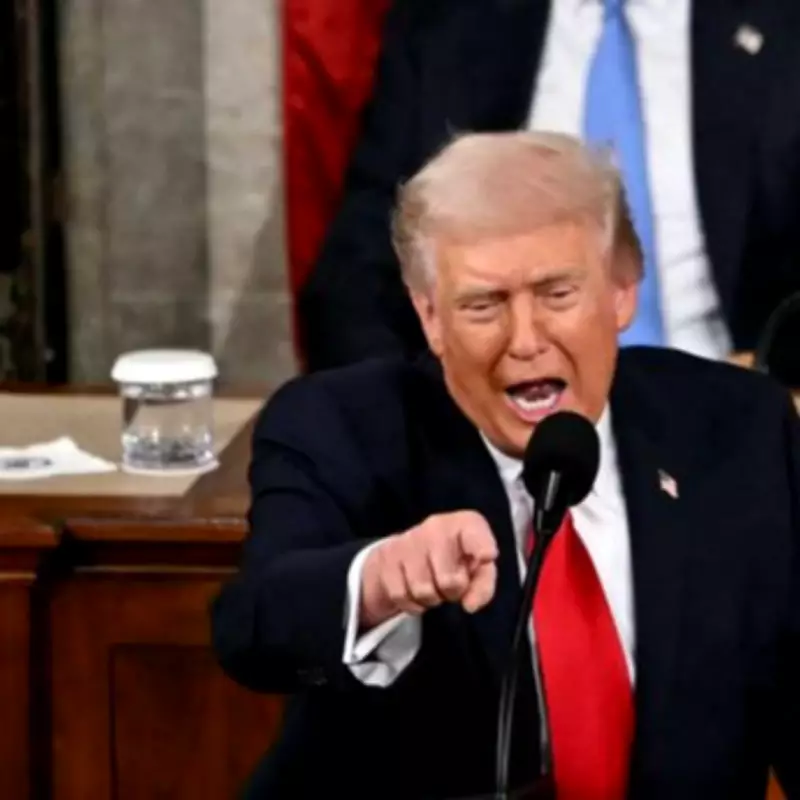
Donald Trump's recent State of the Union address, delivered in Washington DC's House Chamber, has emerged as one of the most scrutinised speeches of his second presidential term. Lasting nearly two hours and setting a new record for length, the address covered critical topics including tariffs, immigration, economic policy, and allegations of corruption. While Republicans offered enthusiastic applause throughout, Democratic members remained largely silent, with only occasional interruptions breaking the tense atmosphere.
The Victim-Persecutor-Rescuer Psychological Pattern
According to clinical psychologist Dr Tracy King, substantial portions of Trump's address followed a well-established political psychological framework known as the Victim-Persecutor-Rescuer pattern. Originally developed by Stephen Karpman in 1968, this triangular drama model was clearly evident throughout the presidential speech.
Dr King explained the victim component first: "The victim moment appears through wounded, obstructed framing. Phrases like 'an unfortunate ruling... very unfortunate ruling' and 'Democrats in this Chamber have cut off all funding' don't merely state problems exist. Instead, they suggest something valuable has been taken away or blocked. This wording intentionally invites viewers to feel that either the country or the speaker himself is being treated unfairly."

The psychologist then detailed how the persecutor element follows rapidly. "Sometimes the persecutor is a named opponent within the chamber. Other times it manifests as an abstract enemy, such as when Trump declared 'corruption is plundering America.' He frequently identifies external threats, mentioning Iran and missiles 'that can threaten Europe and soon reach the United States.' The emotional effect keeps the audience in a perpetual state of siege, with multiple targets available depending on individual anxieties."
The Rescue Promise and Crucial Linguistic Distinction
Dr King highlighted how Trump then presents himself as the rescuer with straightforward solutions. "You can hear the rescuer switch in the verbs he employs. Statements like 'I am officially announcing the war on fraud,' 'Tonight I'm demanding the full and immediate restoration,' and 'I used these tariffs, took in hundreds of billions' attempt to portray his actions as decisive and immediate. This becomes the crucial part of the pattern: once people have been emotionally guided into believing 'we are being harmed' and 'here is who is harming us,' the promise of rescue becomes significantly more persuasive."
Among all these psychological techniques, however, Dr King identified a particularly subtle linguistic trick involving a single word that Trump deploys with maximum effect. She noted that threats are consistently framed as affecting the entire nation, fostering a powerful sense of collective identity and shared vulnerability.
"But the fixing, the solution, is almost always voiced using 'I,'" Dr King emphasised. "Phrases like 'I'm announcing,' 'I'm demanding,' 'I used' create simultaneous bonding and ownership. The audience experiences 'we' for belonging and collective identity, while being offered 'I' for agency and decisive action. This creates psychological tidiness: viewers feel part of something larger while receiving one clear, trustworthy person as the ultimate solution to their perceived problems."
The analysis suggests that beyond the policy announcements and political theatre, Trump's address employed sophisticated psychological mechanisms designed to influence audience perception and emotional response at a fundamental level.